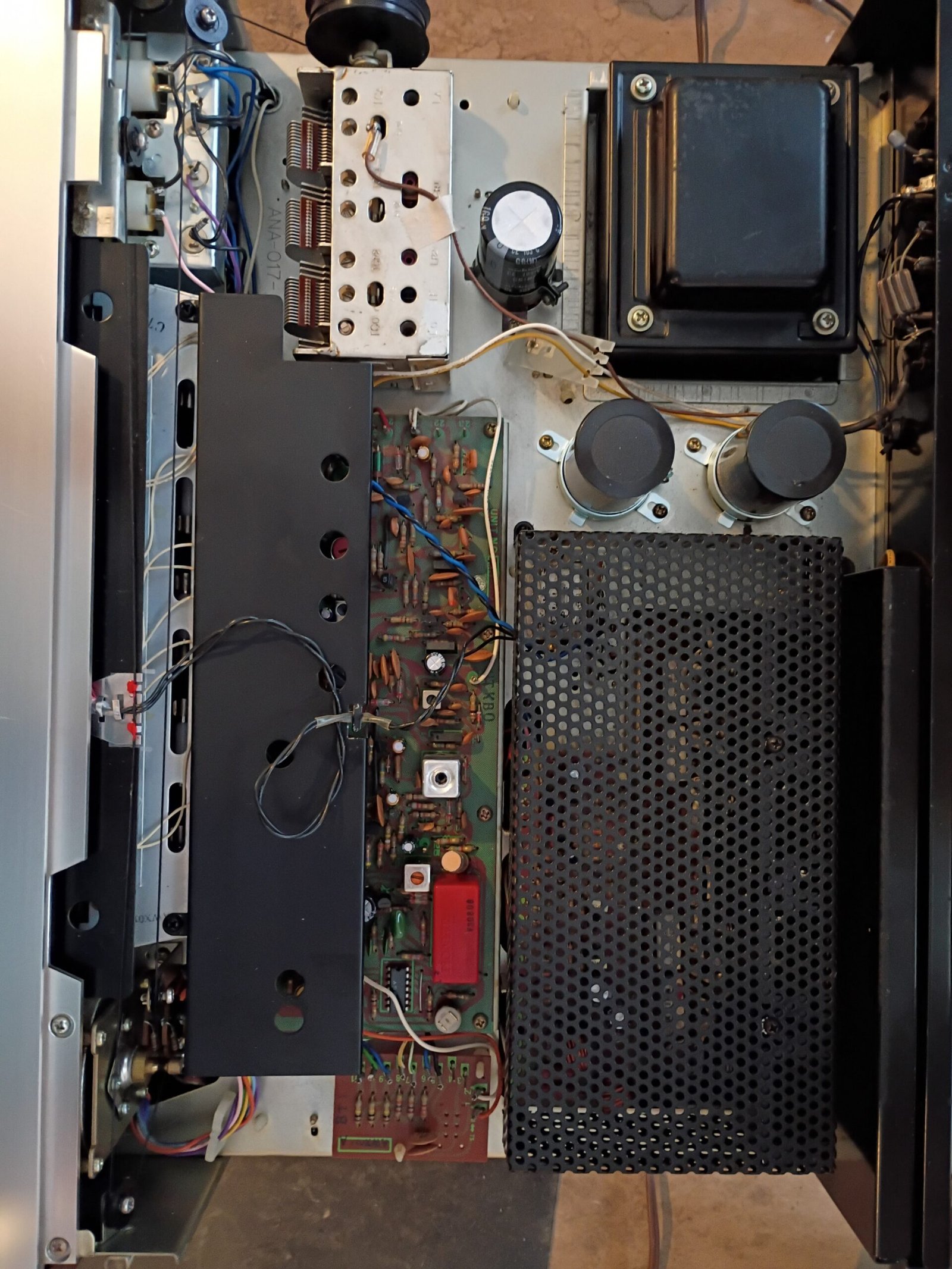
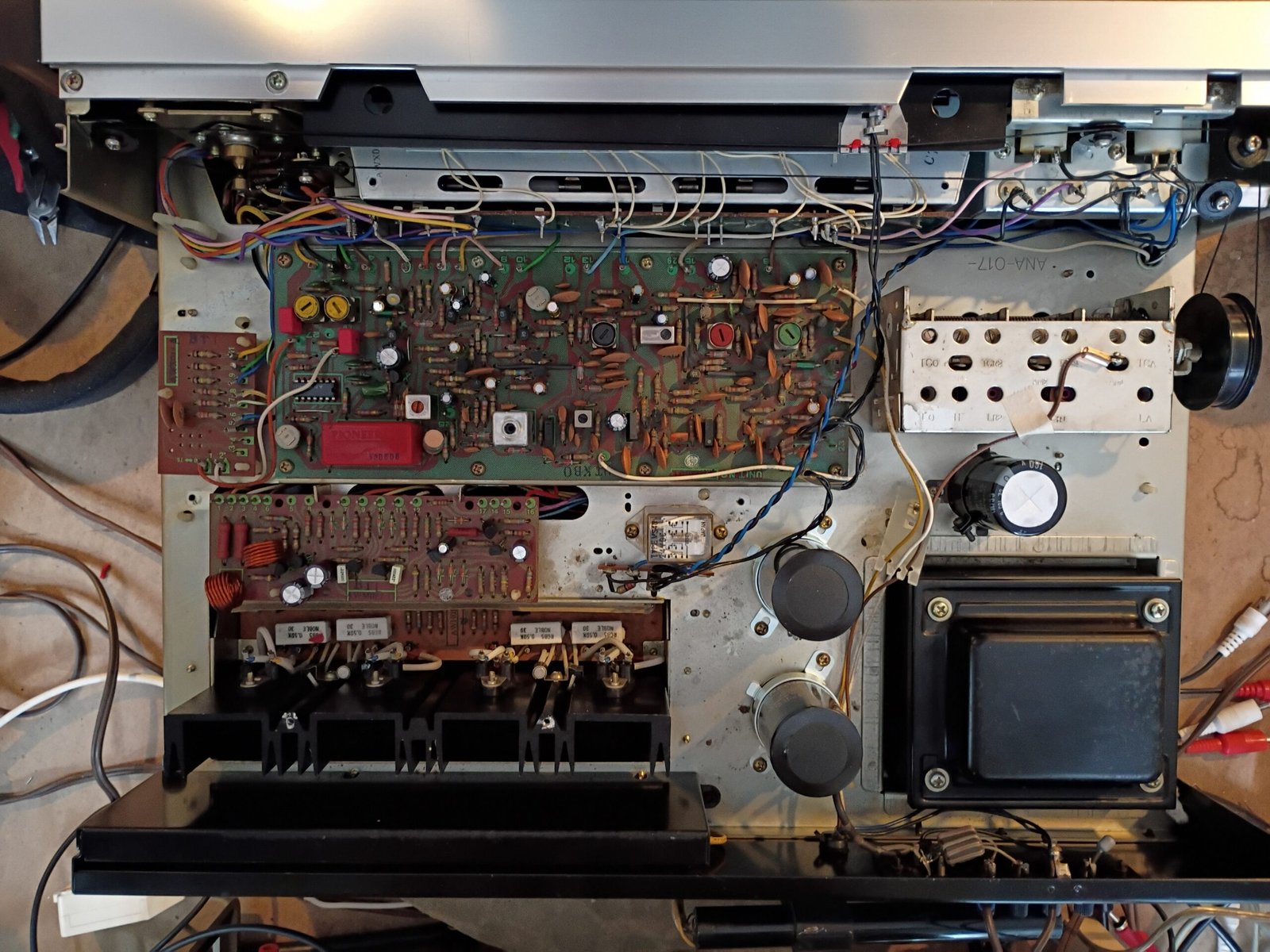
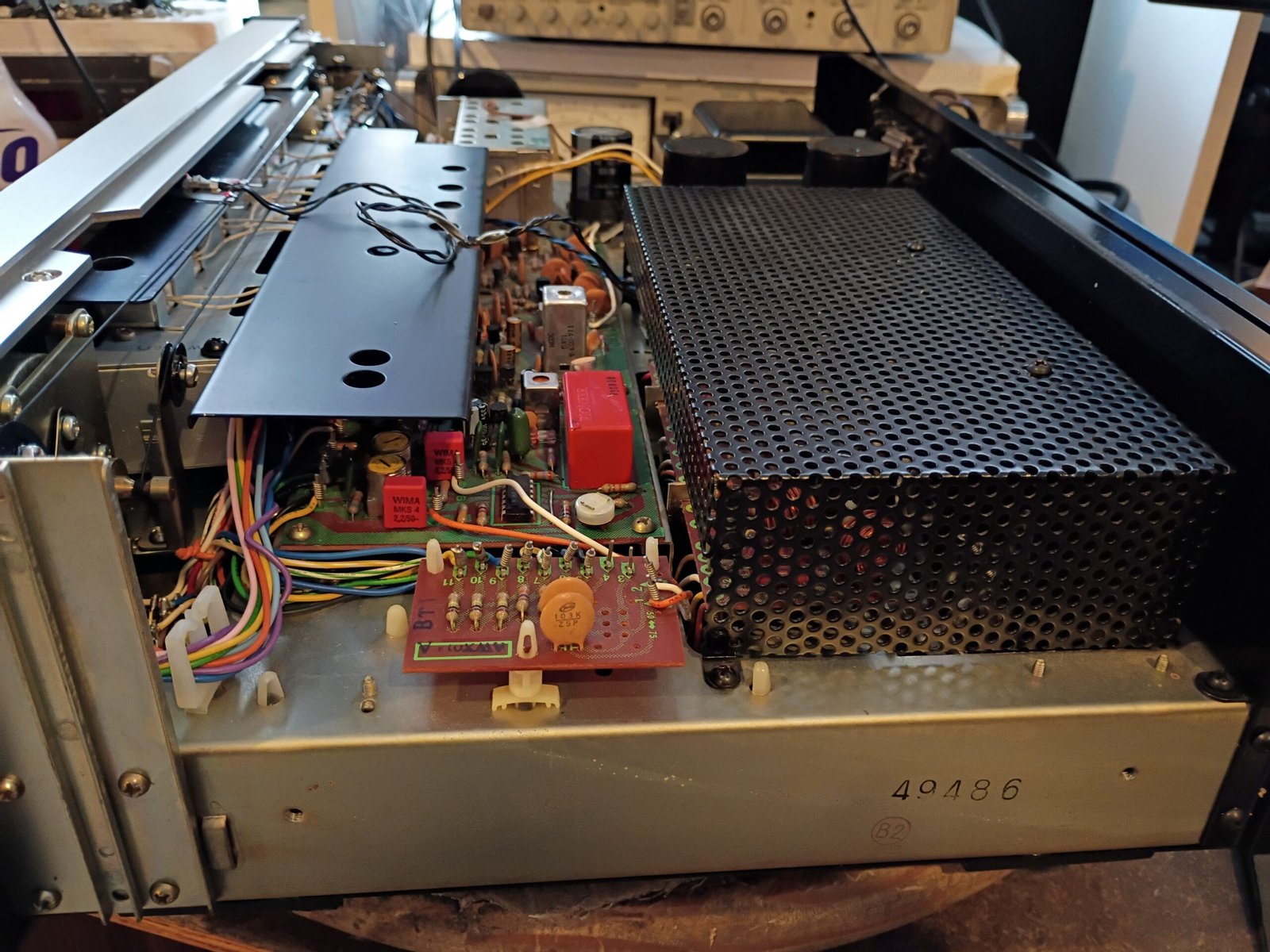
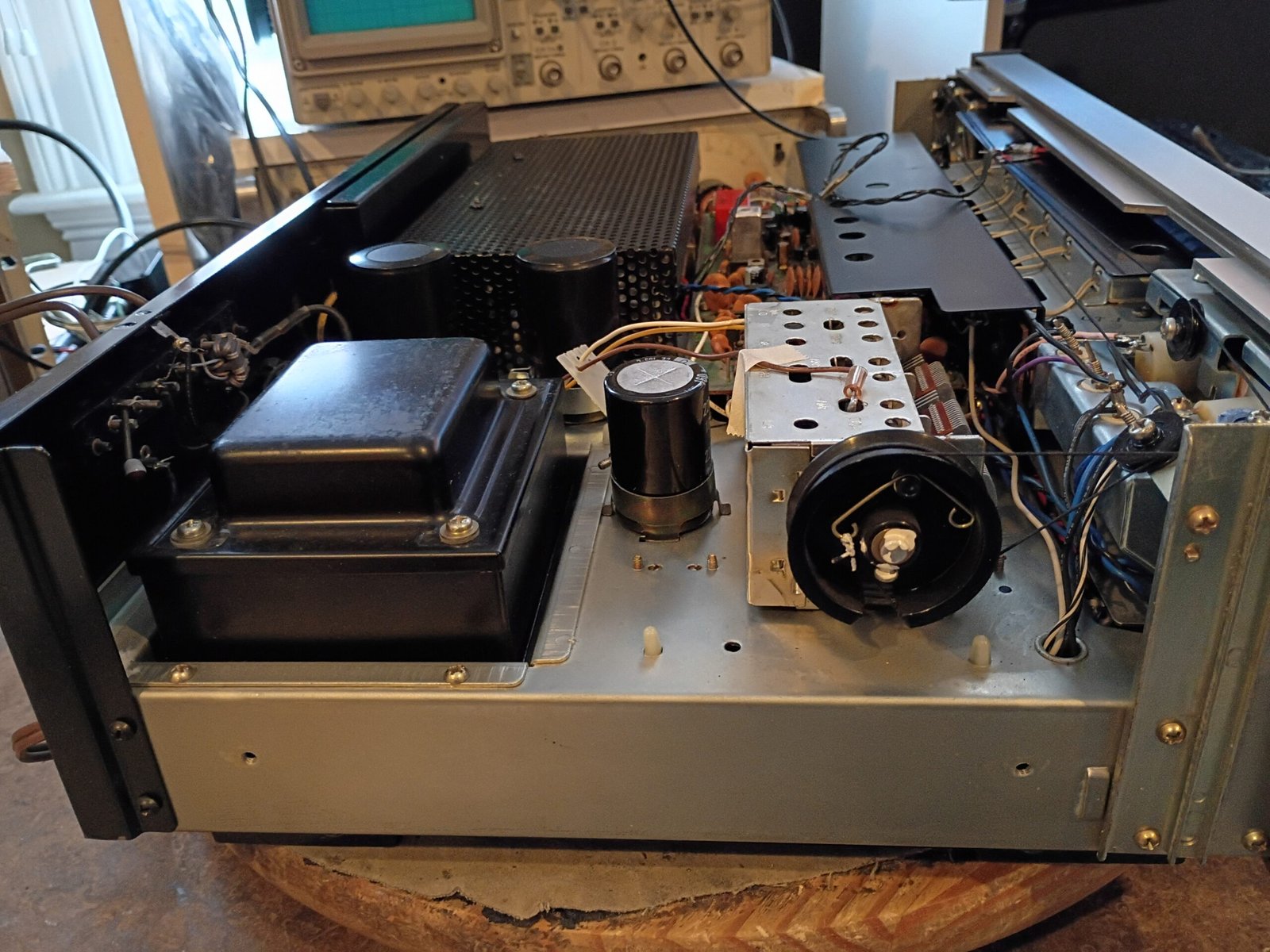
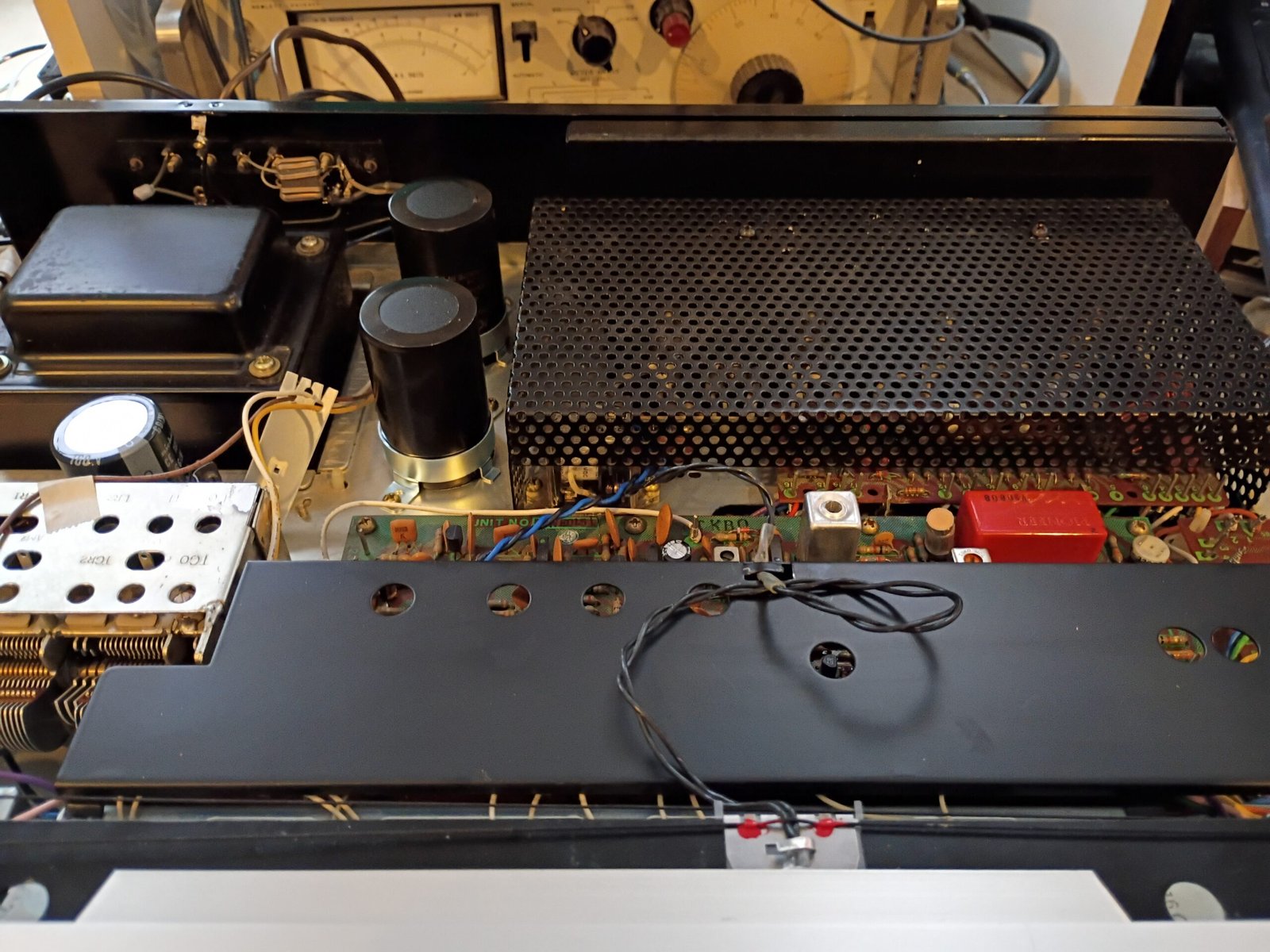
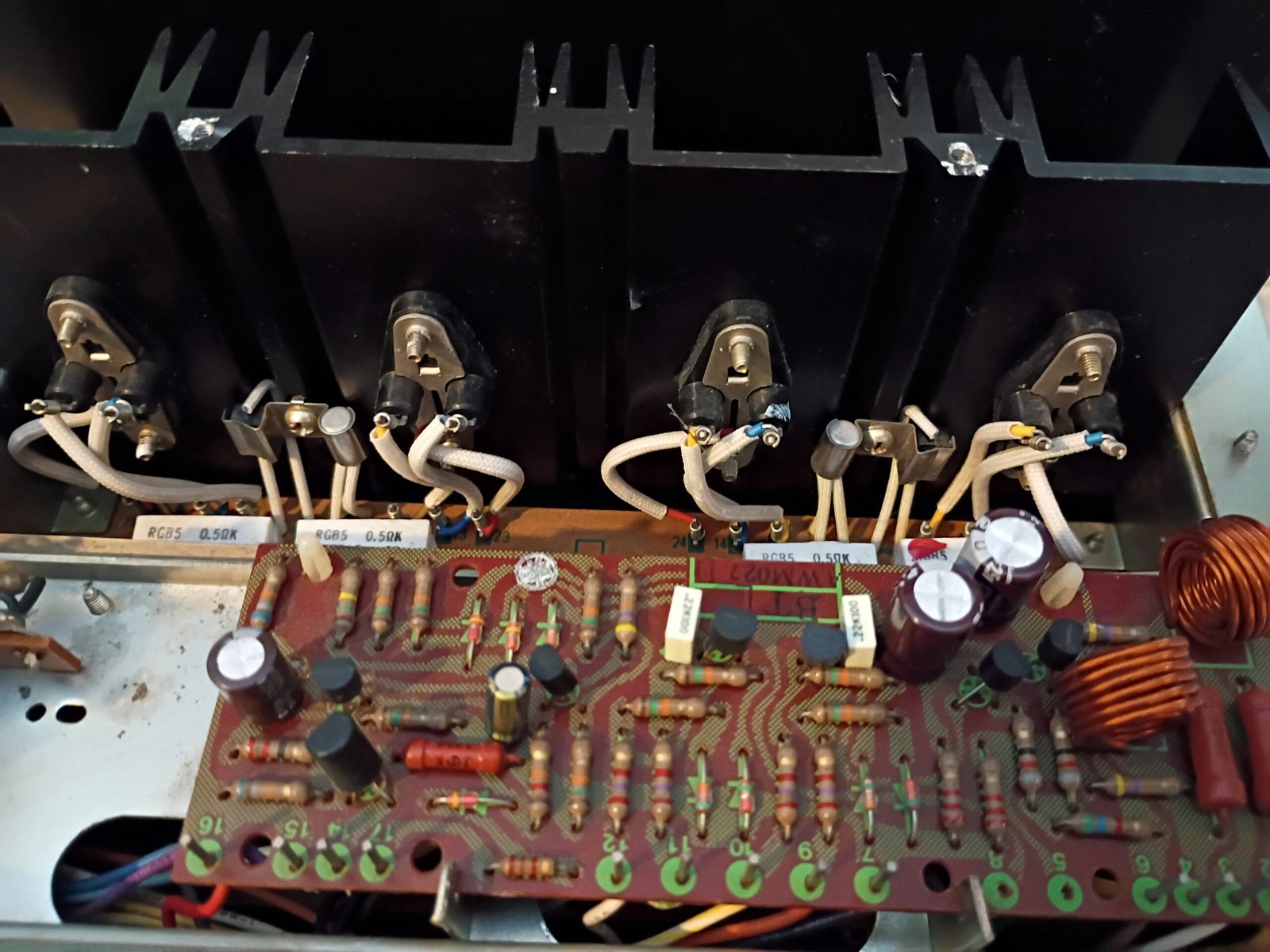
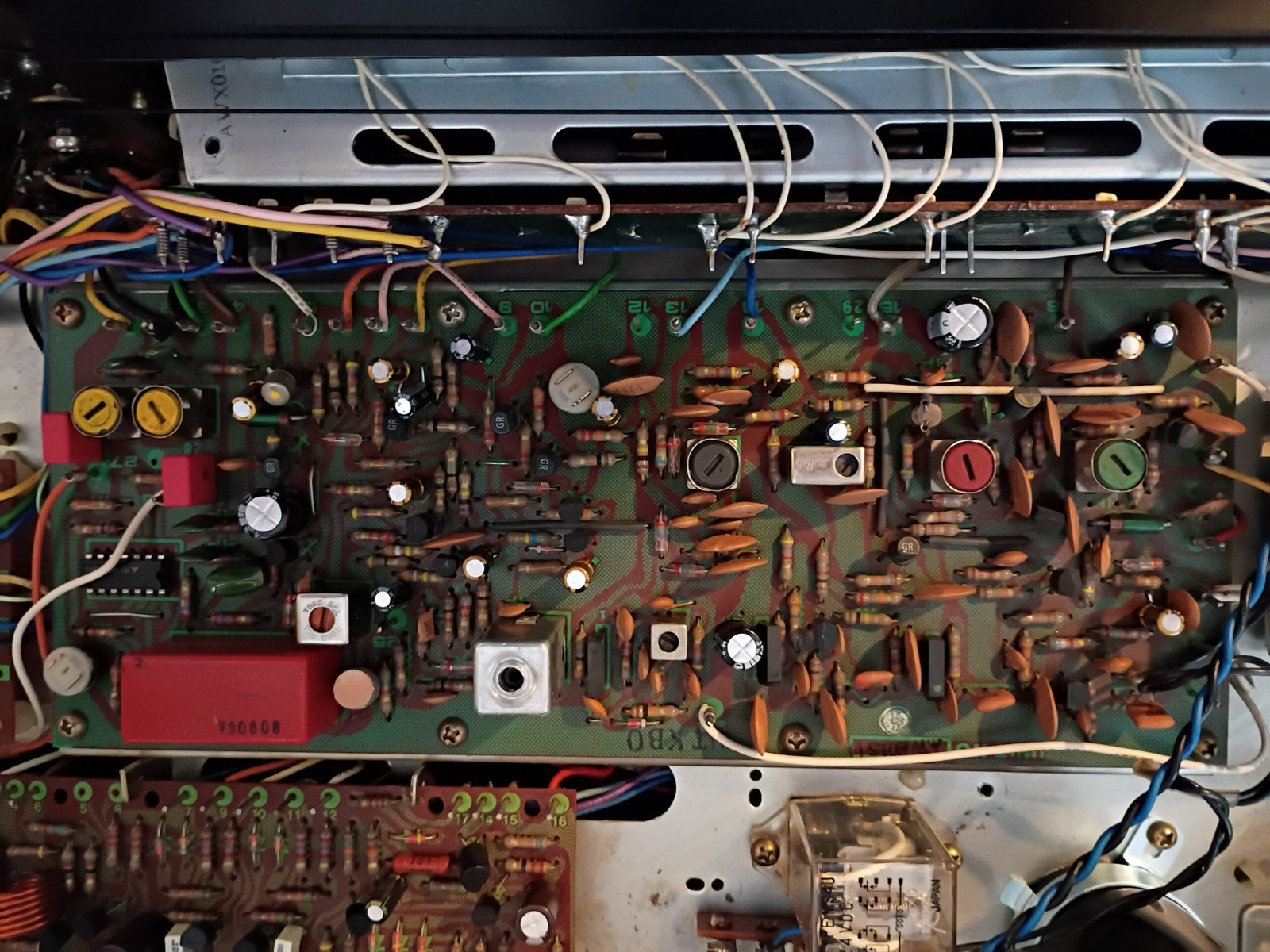
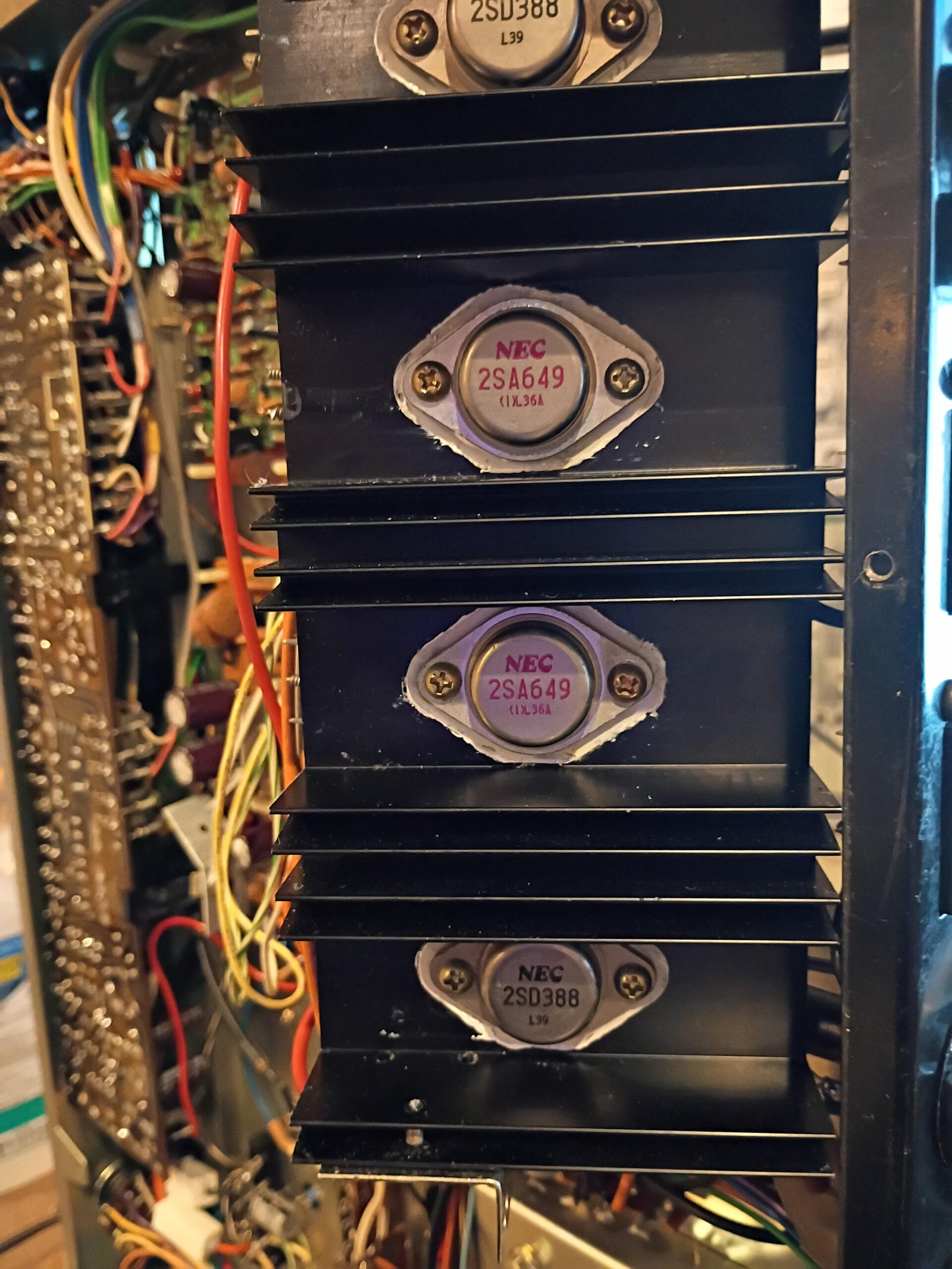
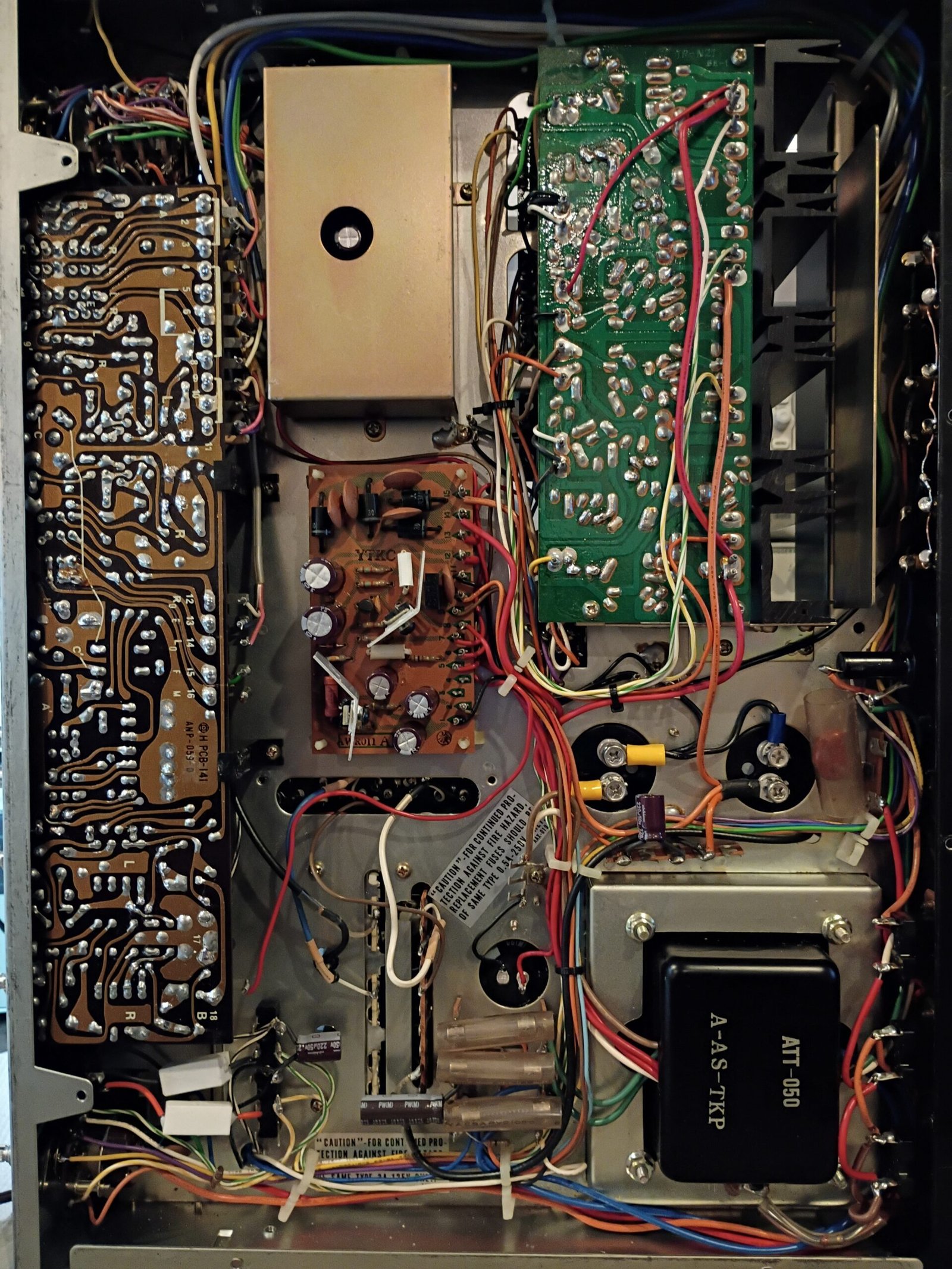
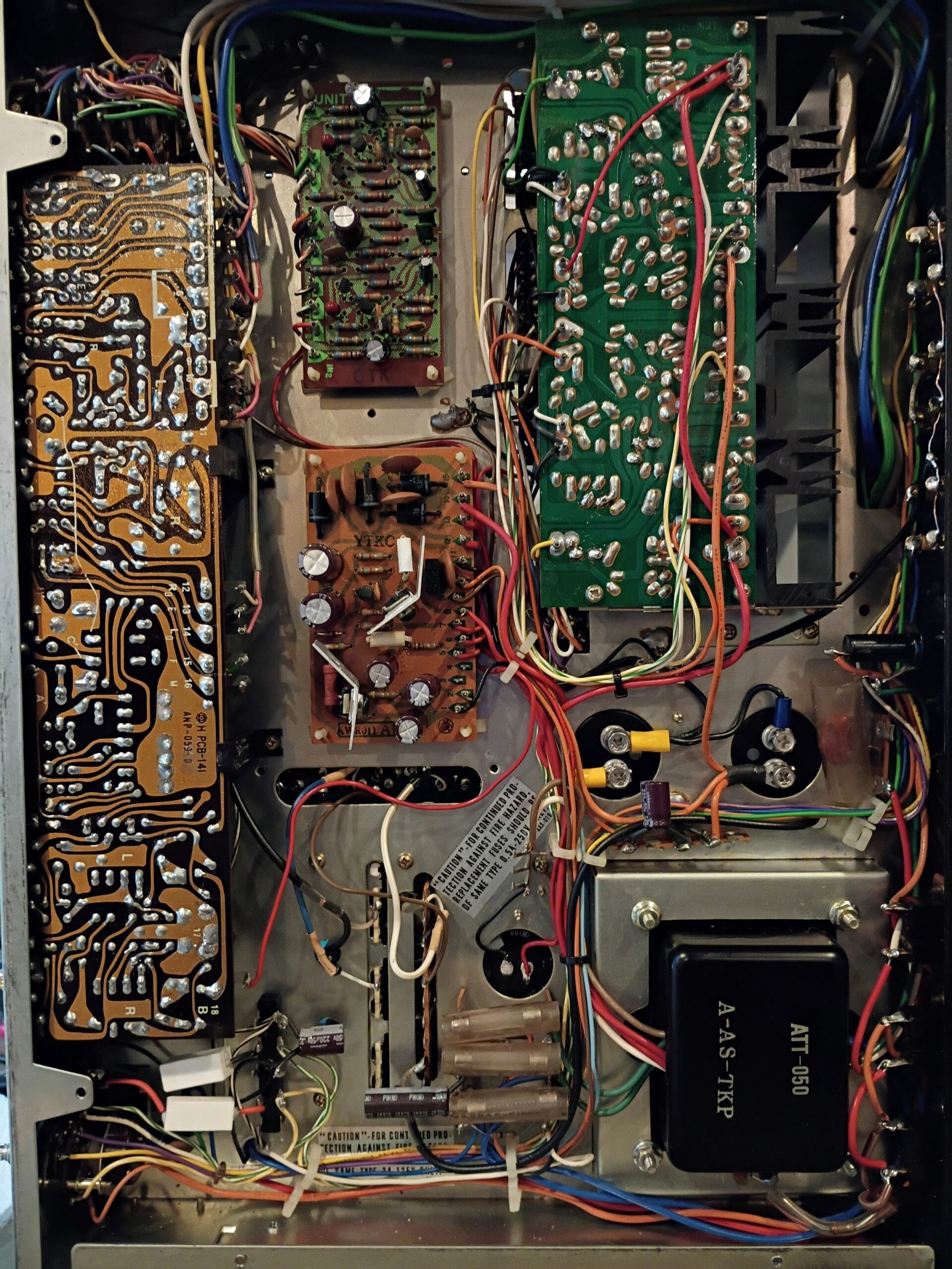
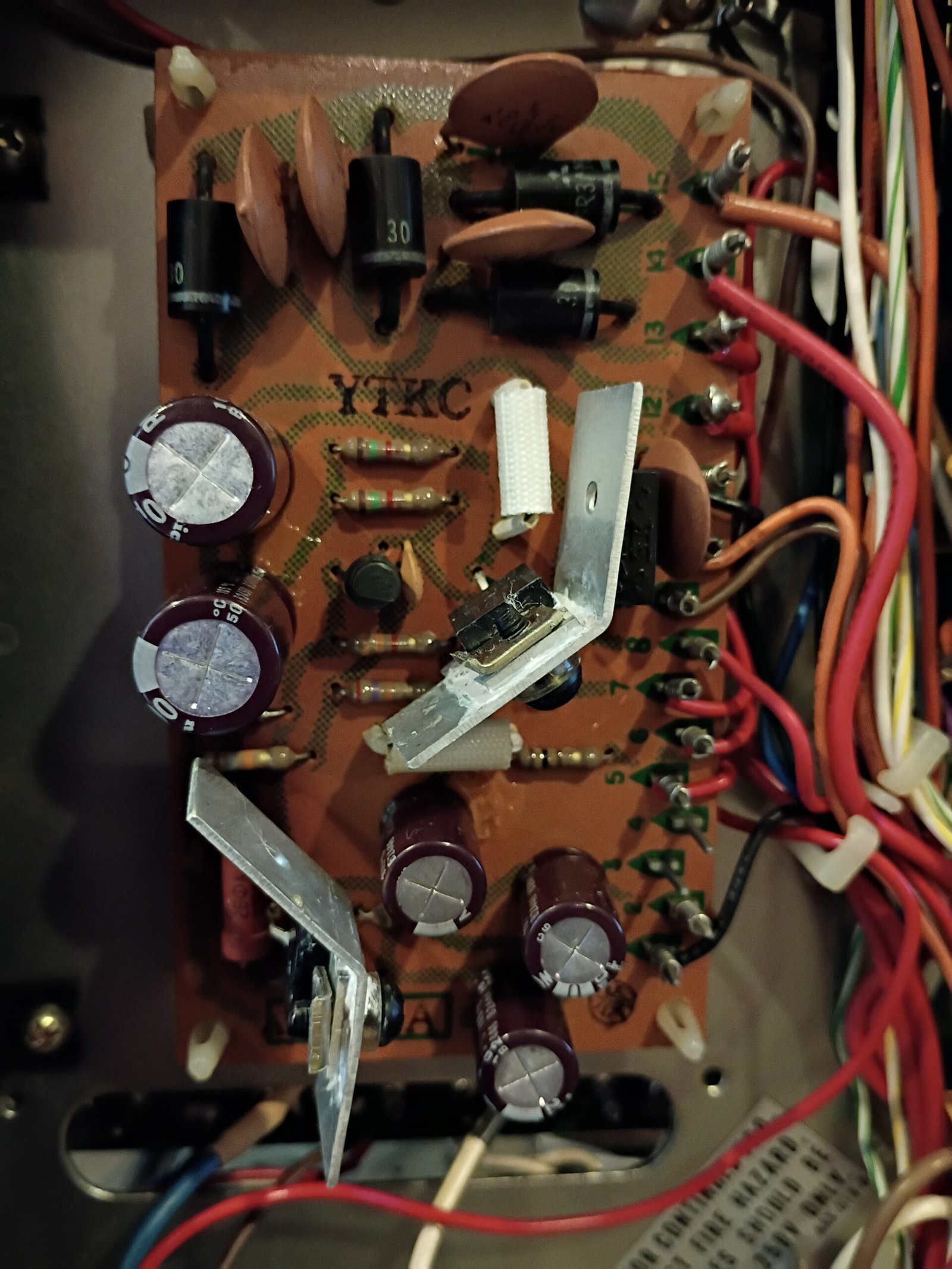
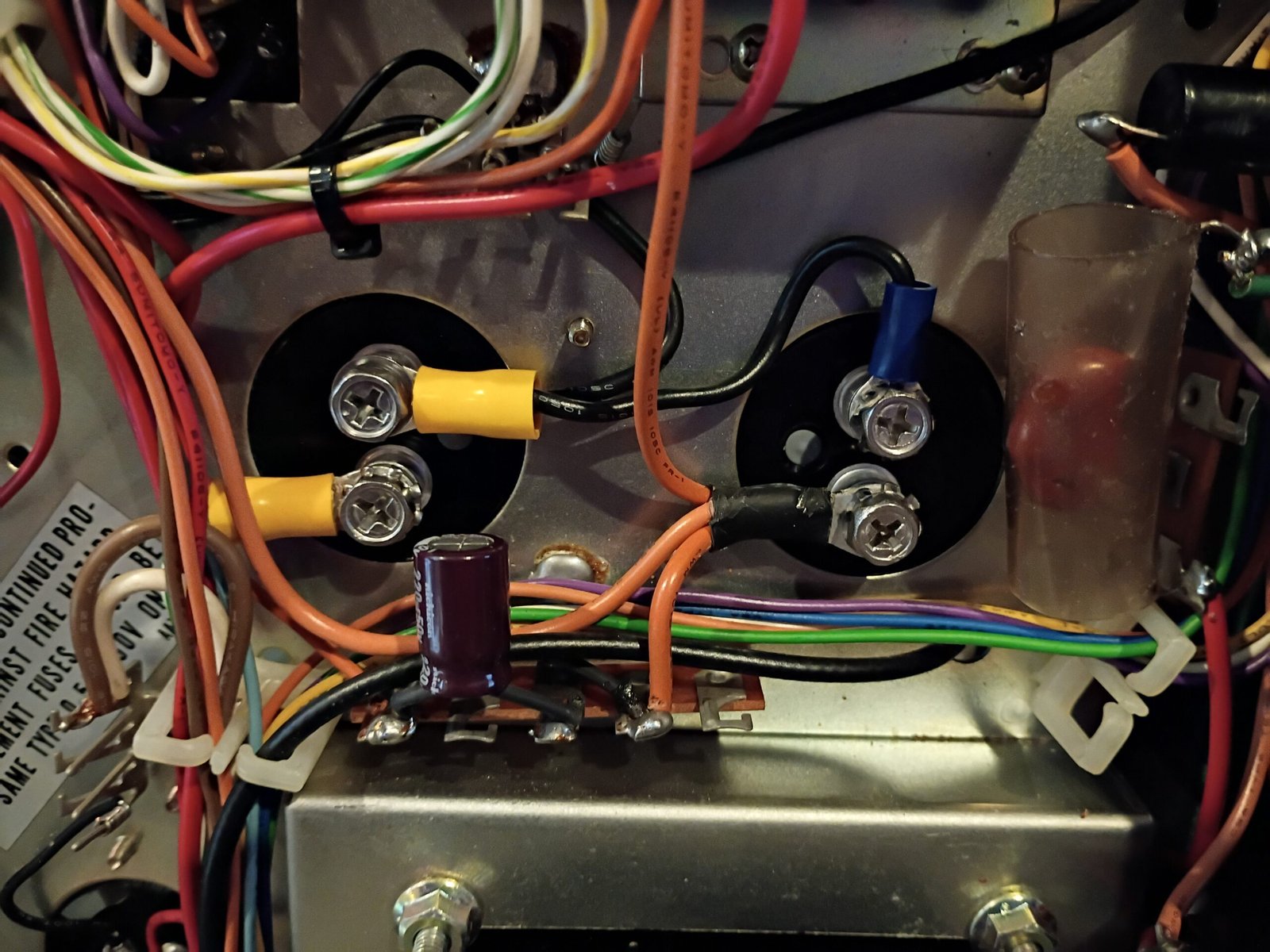
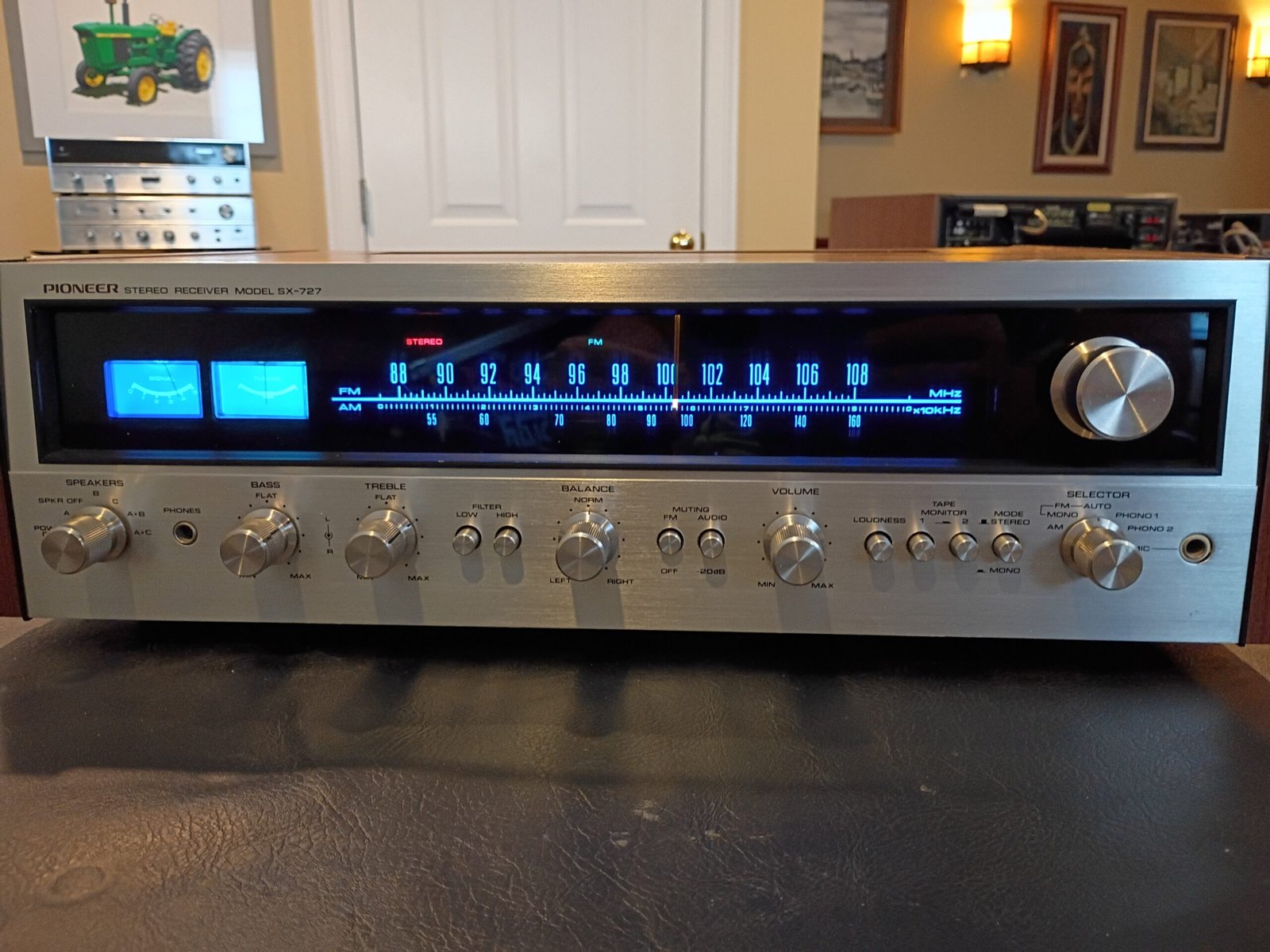
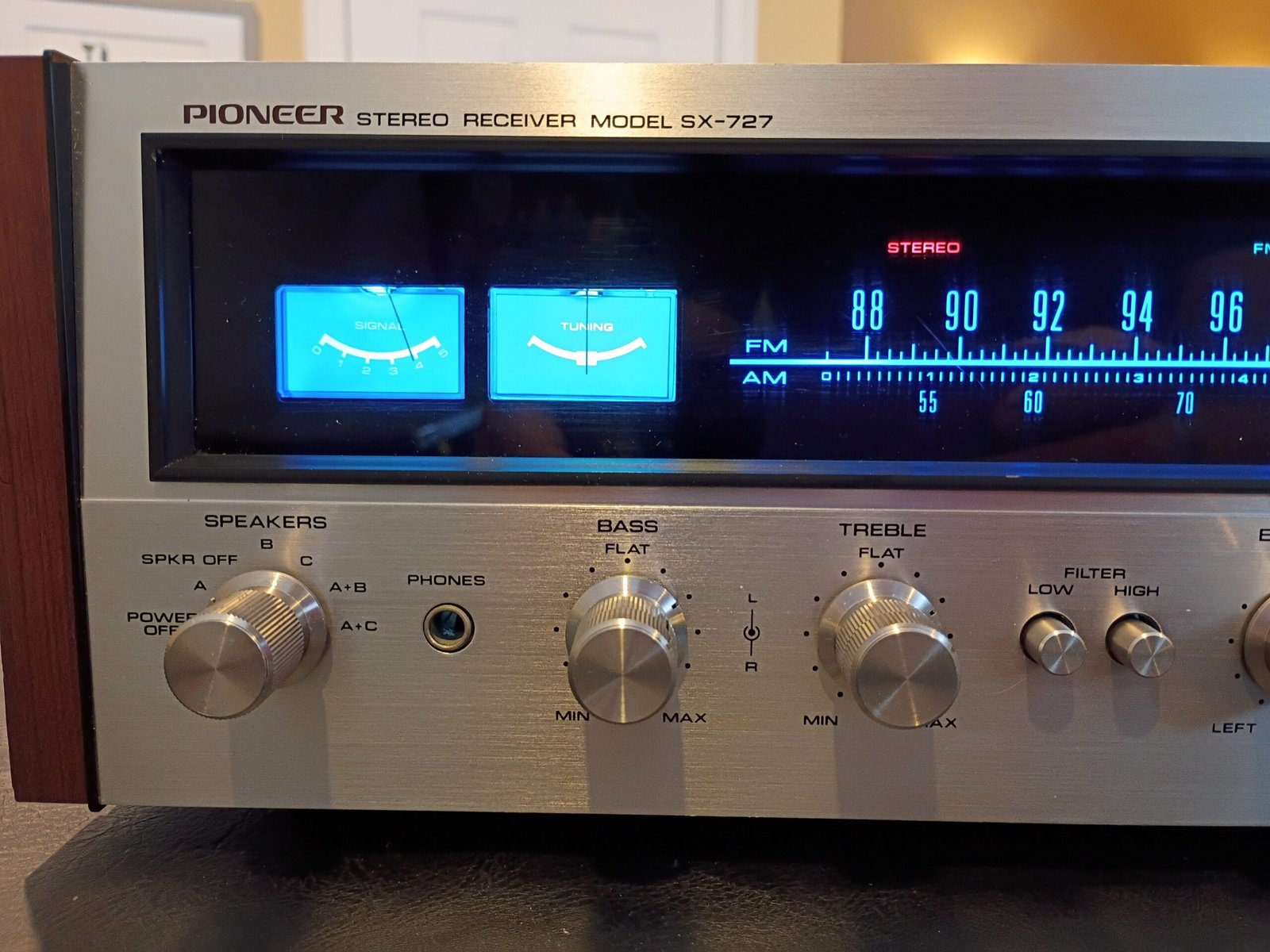
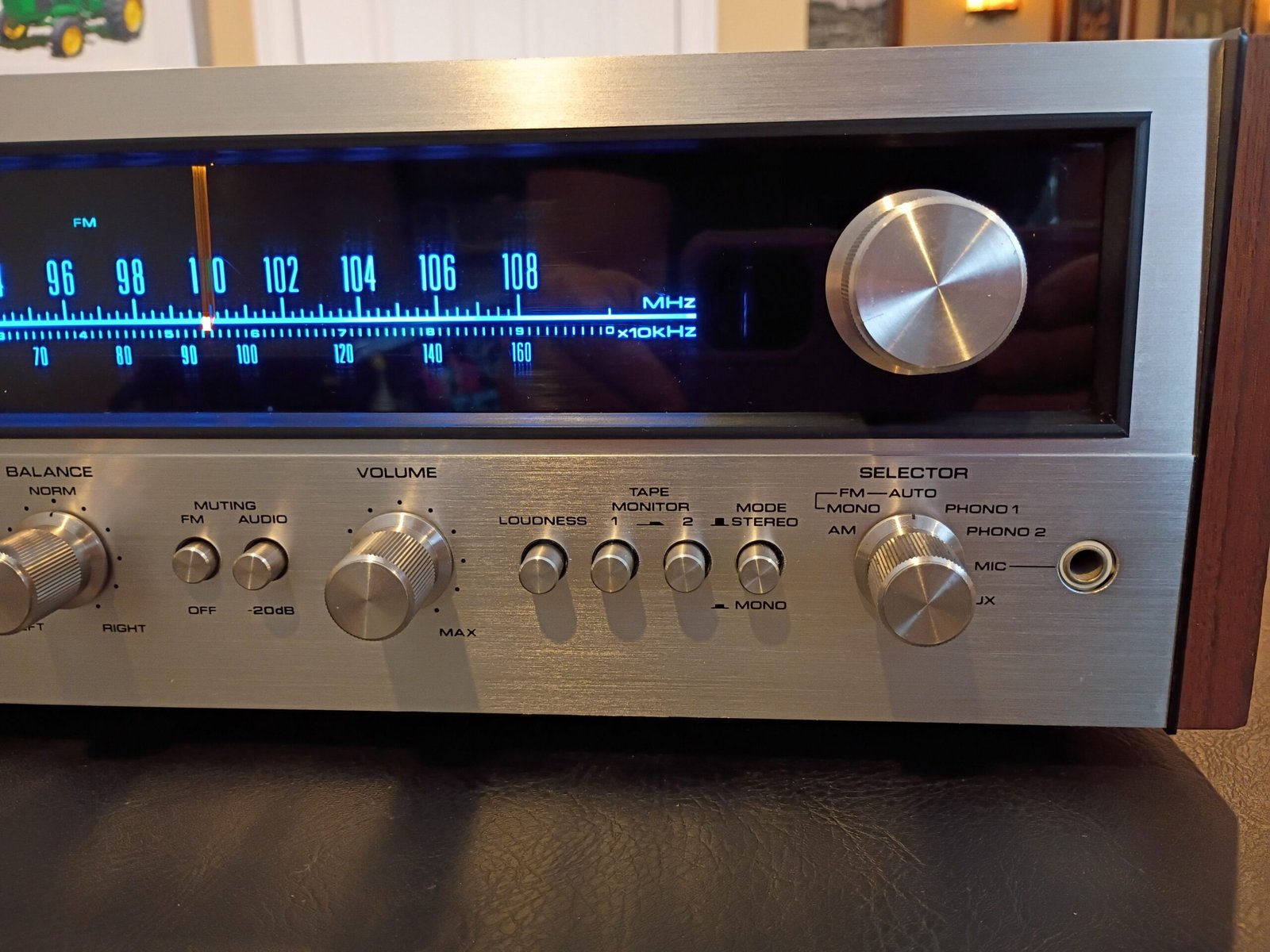
Examples of interior restoration results (click on photos to expand)
top with shields
top no shields
right
left
front
protection
tuner
outputs
bottom with shield
bottom no shield
power supply
main caps
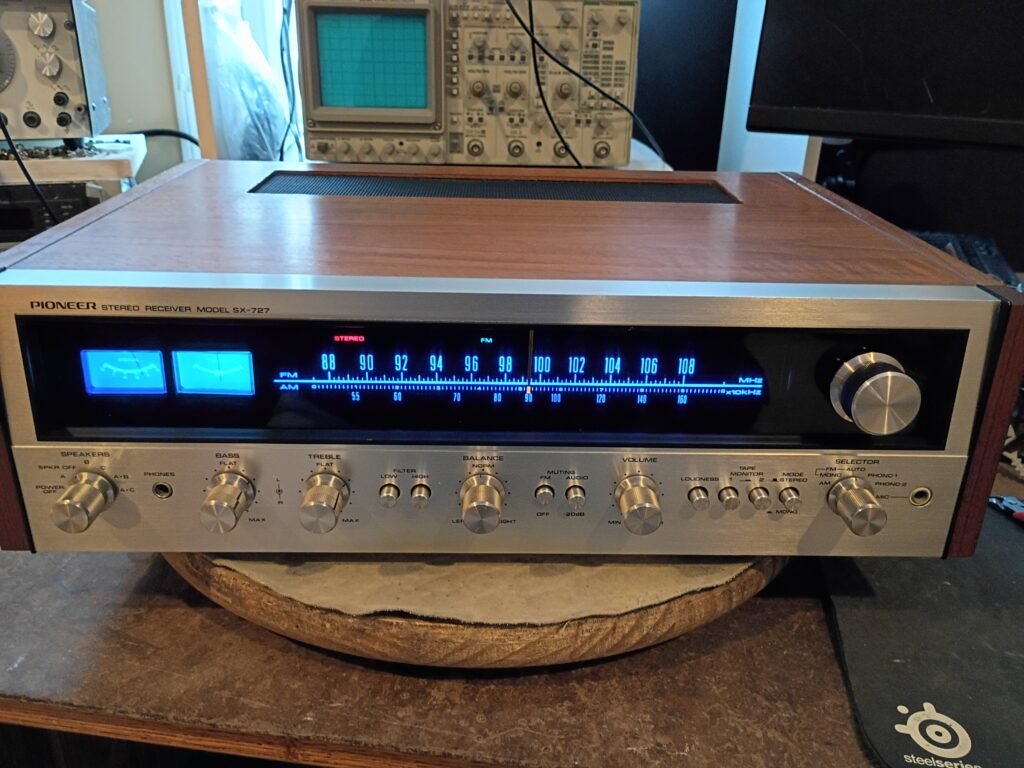
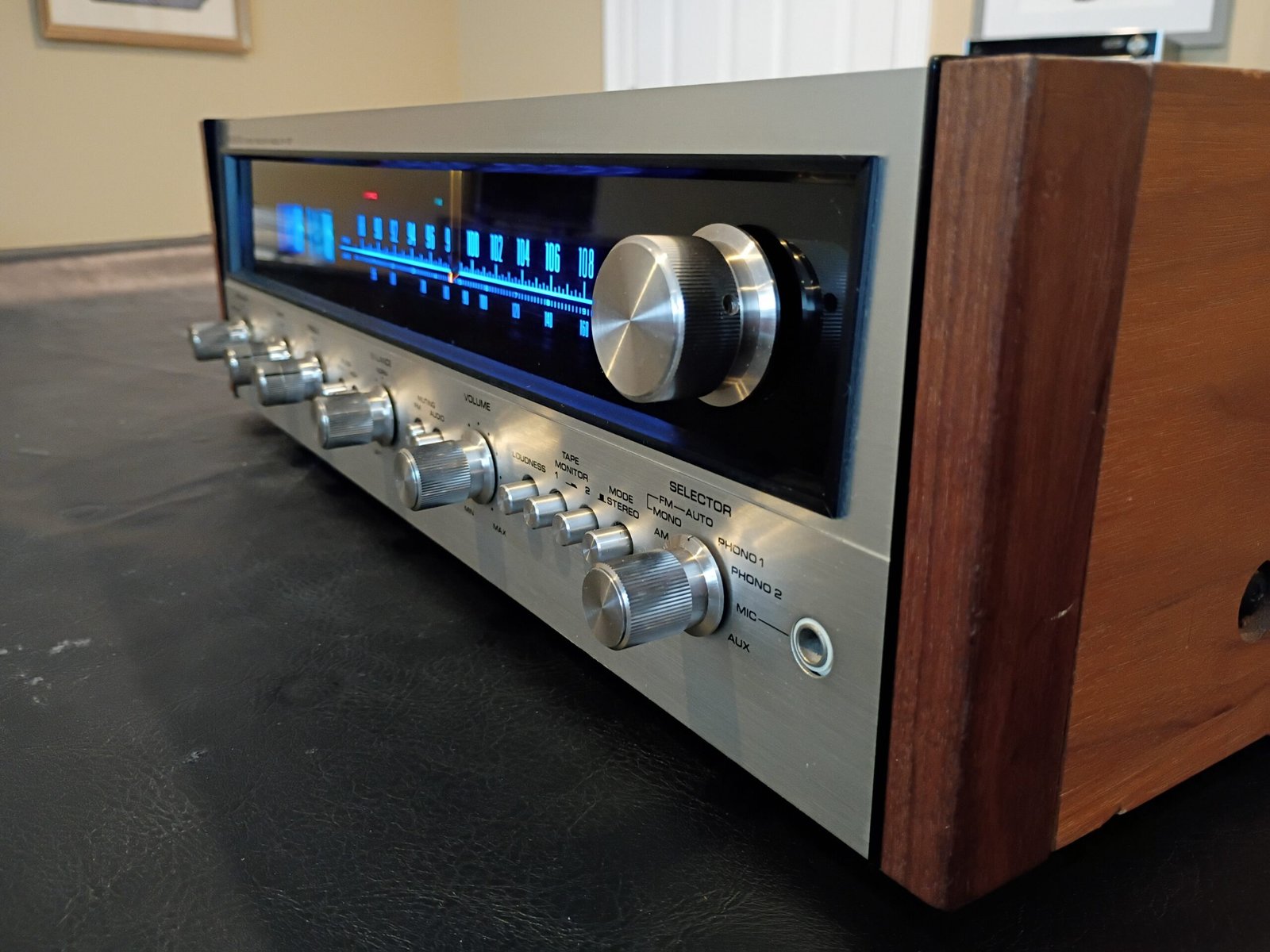
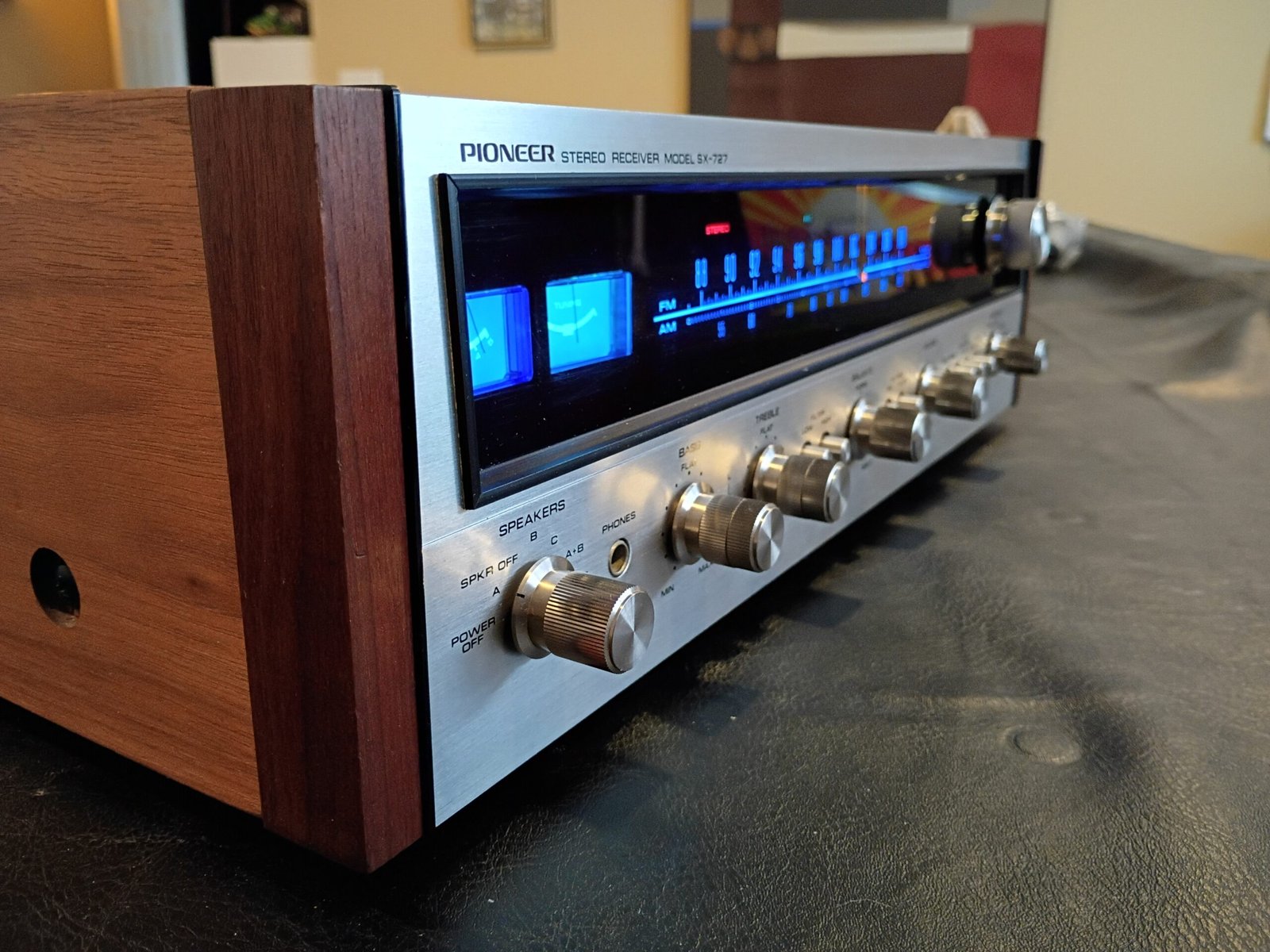
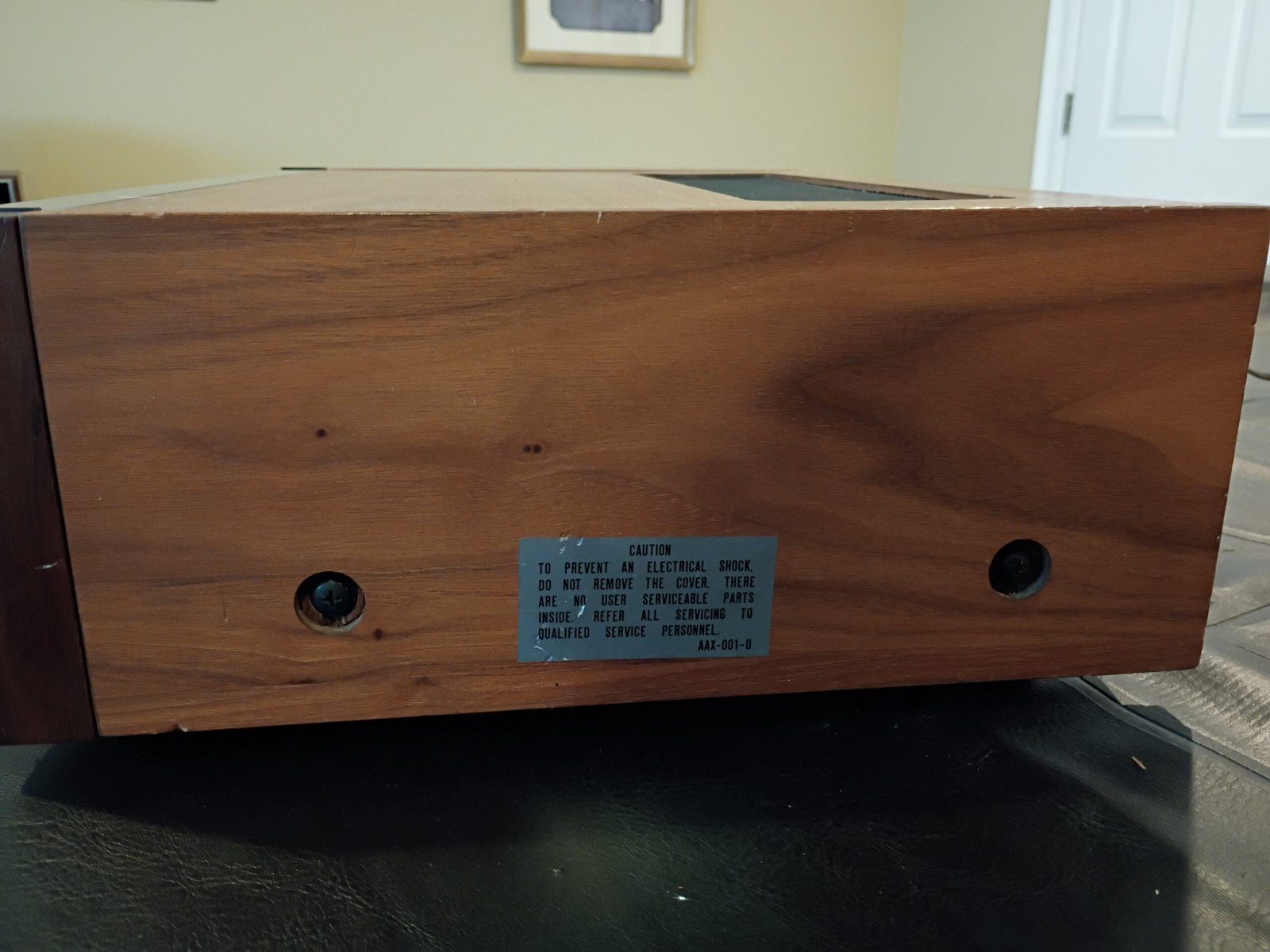
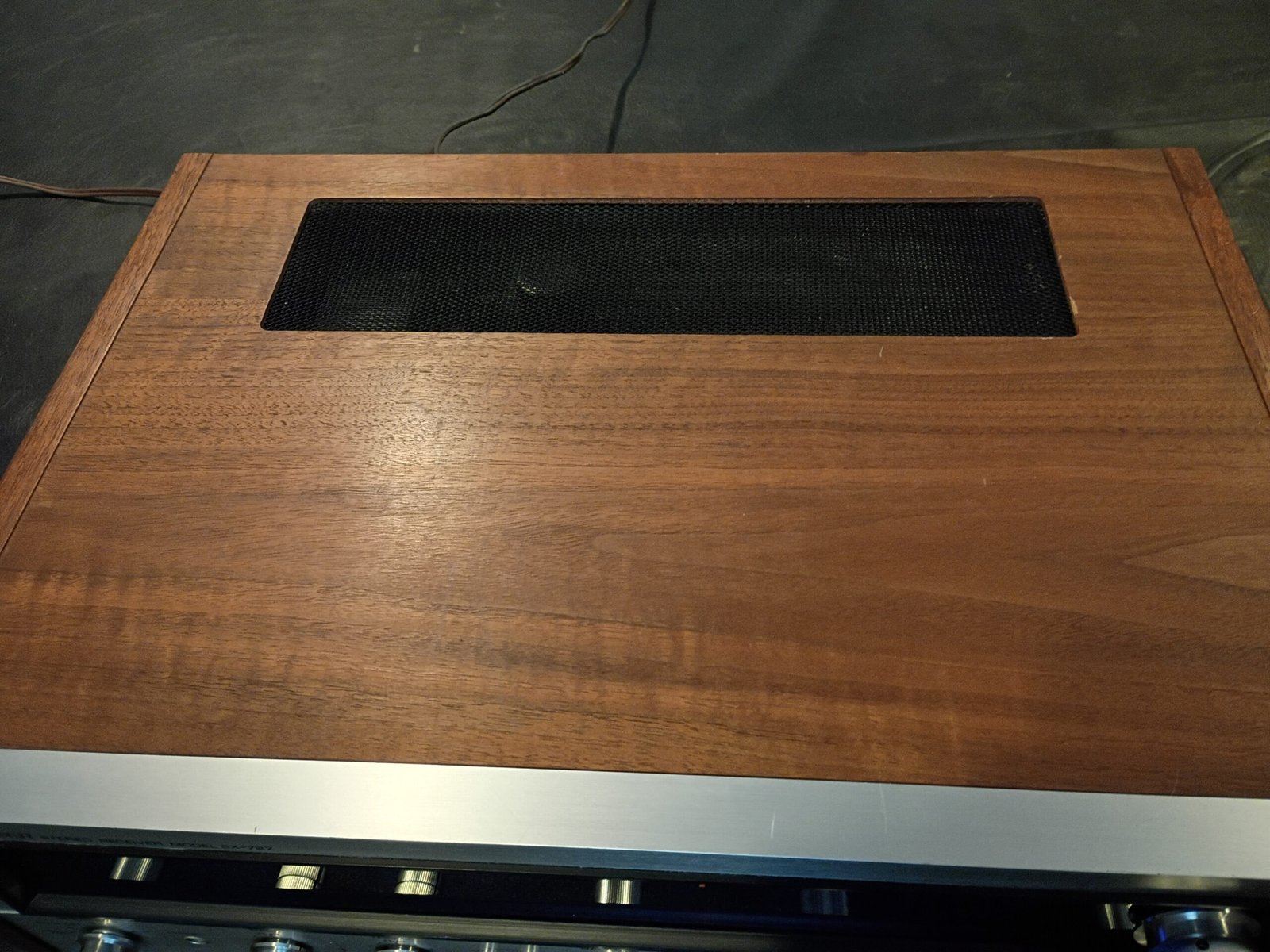
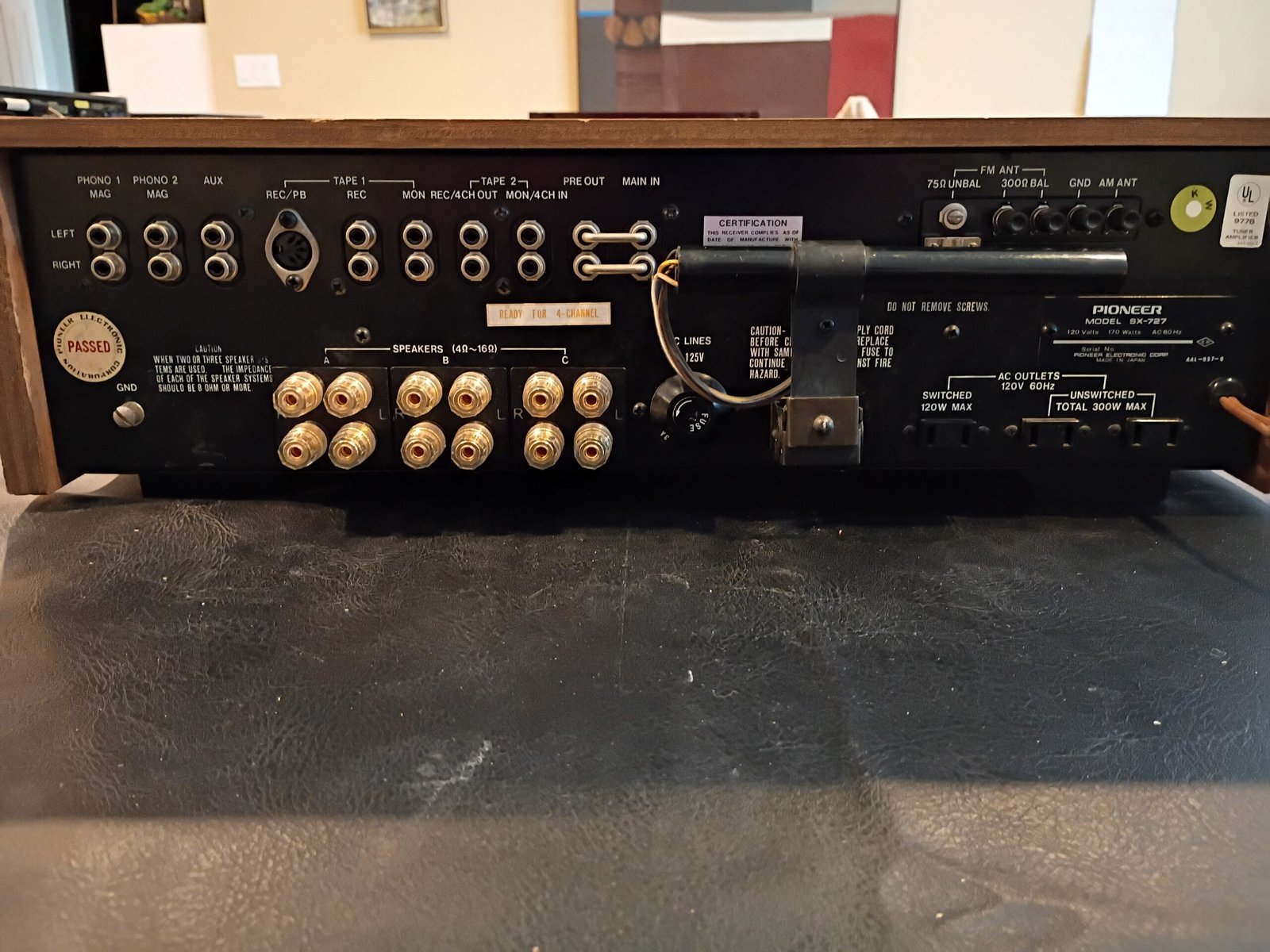
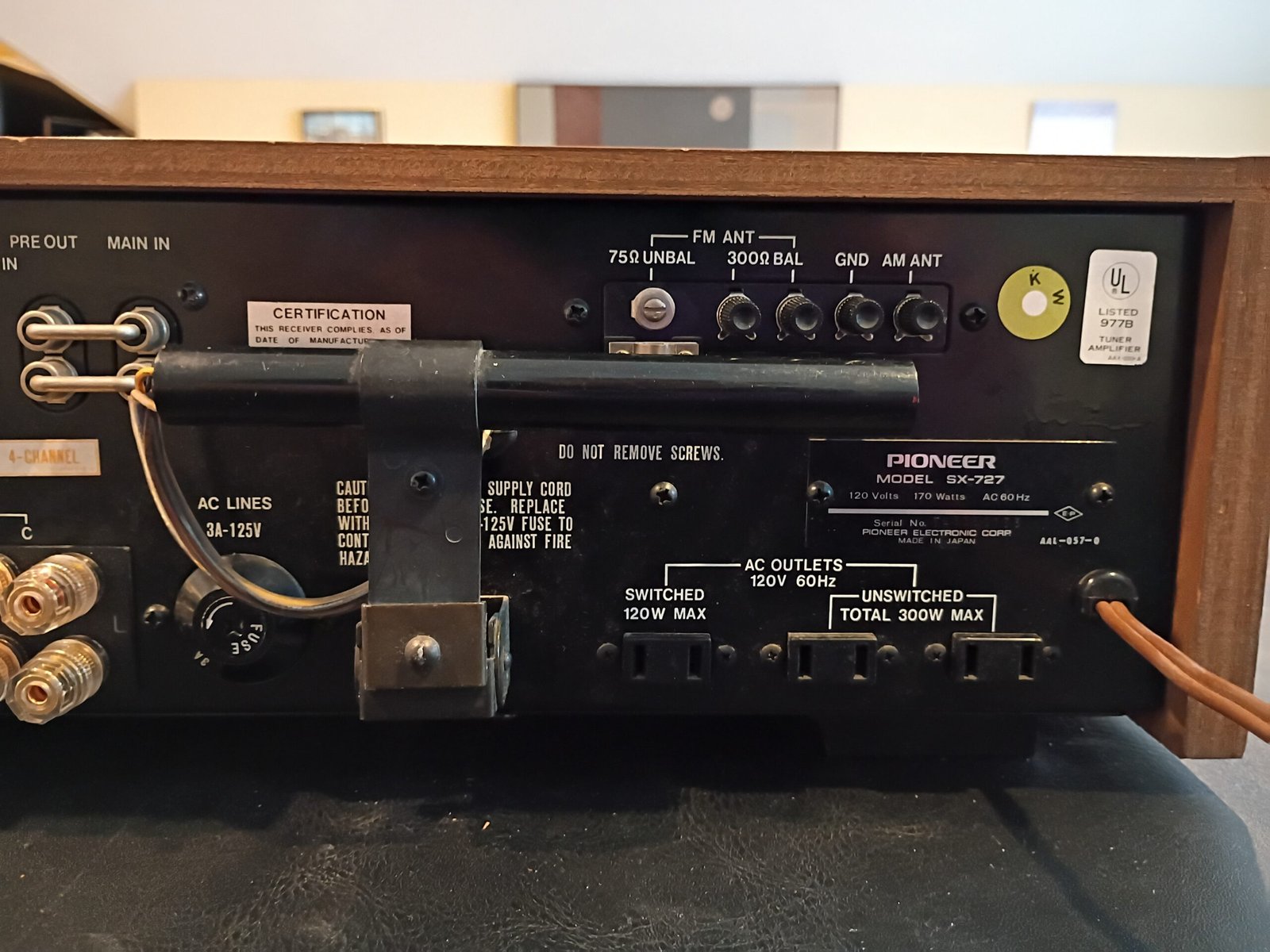
Exterior photos
Restoration notes
Beyond the list of standard restoration steps detailed on the main page, here are some added notes for this unit :
I bought this from a local collector and was told it was fully functional Exterior condition was very good.
The SX727 was Pioneer’s 2nd from the top of the line receiver in 1972. It has a direct-coupled amplifier with speaker protection circuitry and relay. Very well built and last year they used real wood veneer cabinets across the product line. These were sold alongside other Pioneer classics like the SA9100/TX9100 and many argue this was the apex of Pioneer build quality/sound.
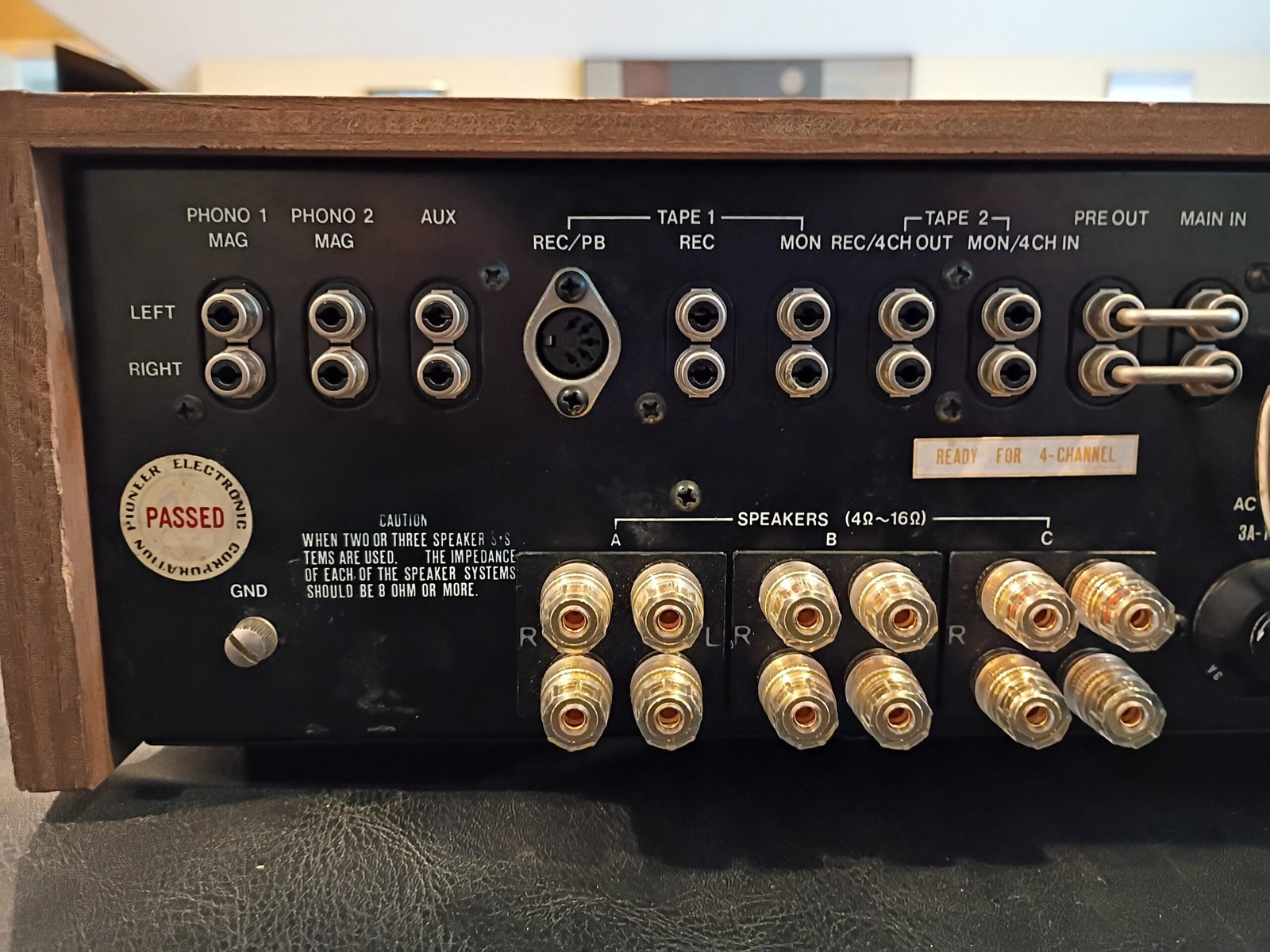
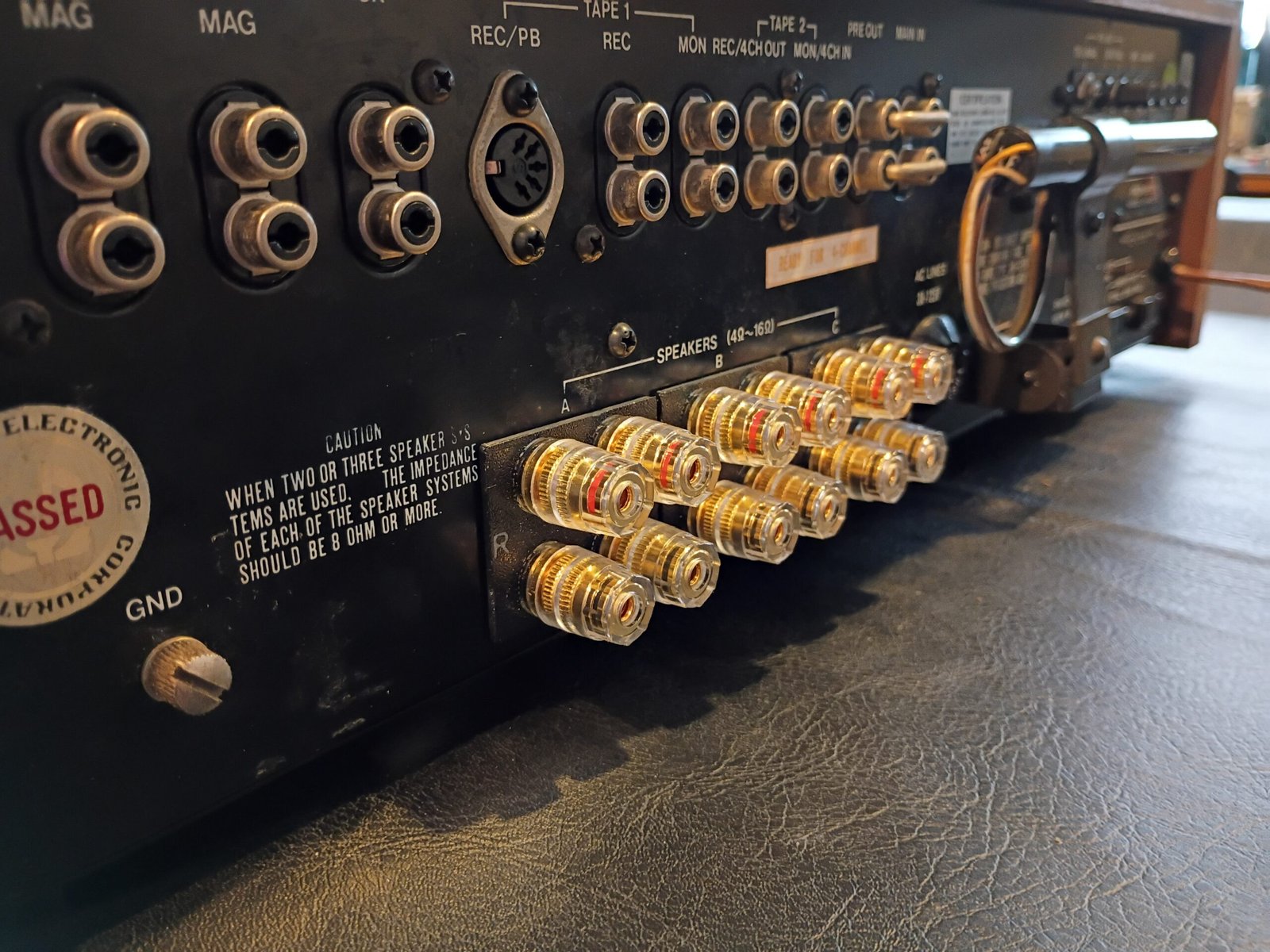
Pioneer was also still pushing their proprietary “speaker plug” scheme which was actually not that bad, but never became a standard. As this is now seen by many as a detriment, I upgraded all 3 speaker systems to modern 5-way terminals (see photos).
Initial visual inspection and power-up were uneventful as this unit was in excellent condition inside and out.
After cleaning all the switches and pots, initial functional testing also went well except for the tuning meter which seemed to be sticking. I installed a replacement meter to remedy this.
The tuner needed some cleaning/tweaking to perform as intended. Sounds quite nice now.
Recap went smoothly with a modest up-capping of the 2 main amplifier supply caps from ~7500uF (measured) to ~9400uF (measured).
Final functional tests all passed.
Note on pricing : SX727s are fairly common with some going for ~$300 (+ shipping). I bought this one for $300 and added another ~ $300 before the restoration was complete. The 5-ways alone cost me $75. You get what you pay for 🙂
Bench measurements
The Pioneer amplifier spec is better than most for 1972 as it does include a power rating of 37 watts per channel, max THD of 0.5% with both channels driving 8 ohms from 20-20,000 Hz (matching what became the industry standard spec conditions after 1974).
My results : This example delivers 43 watts per channel under those same conditions.