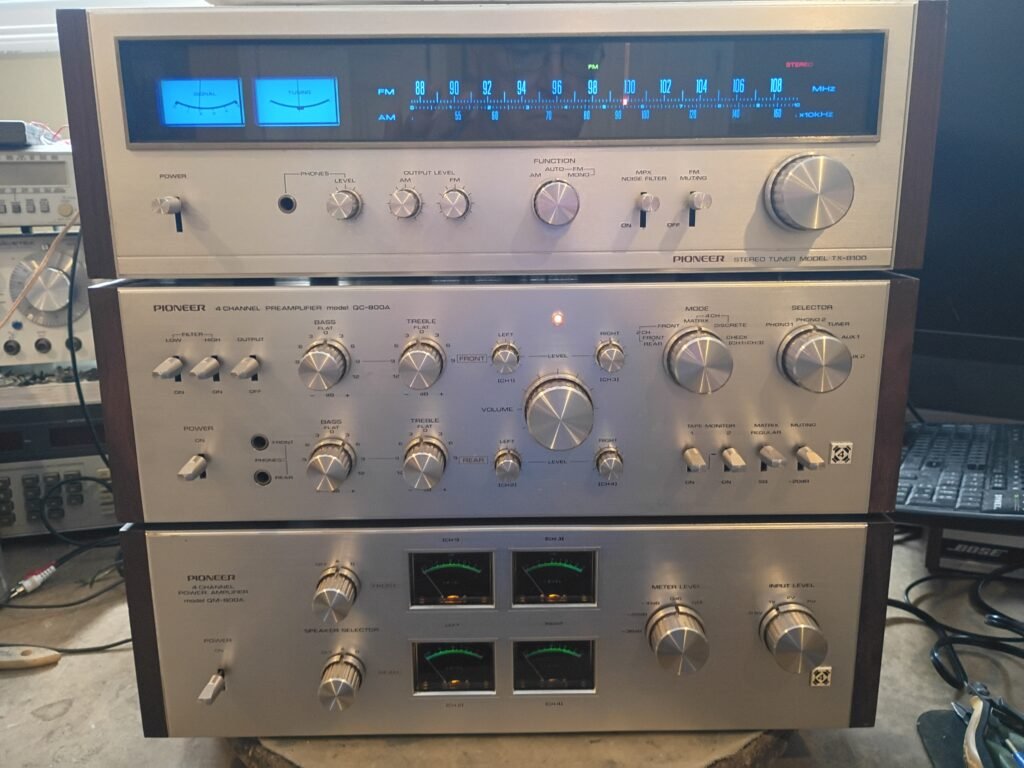
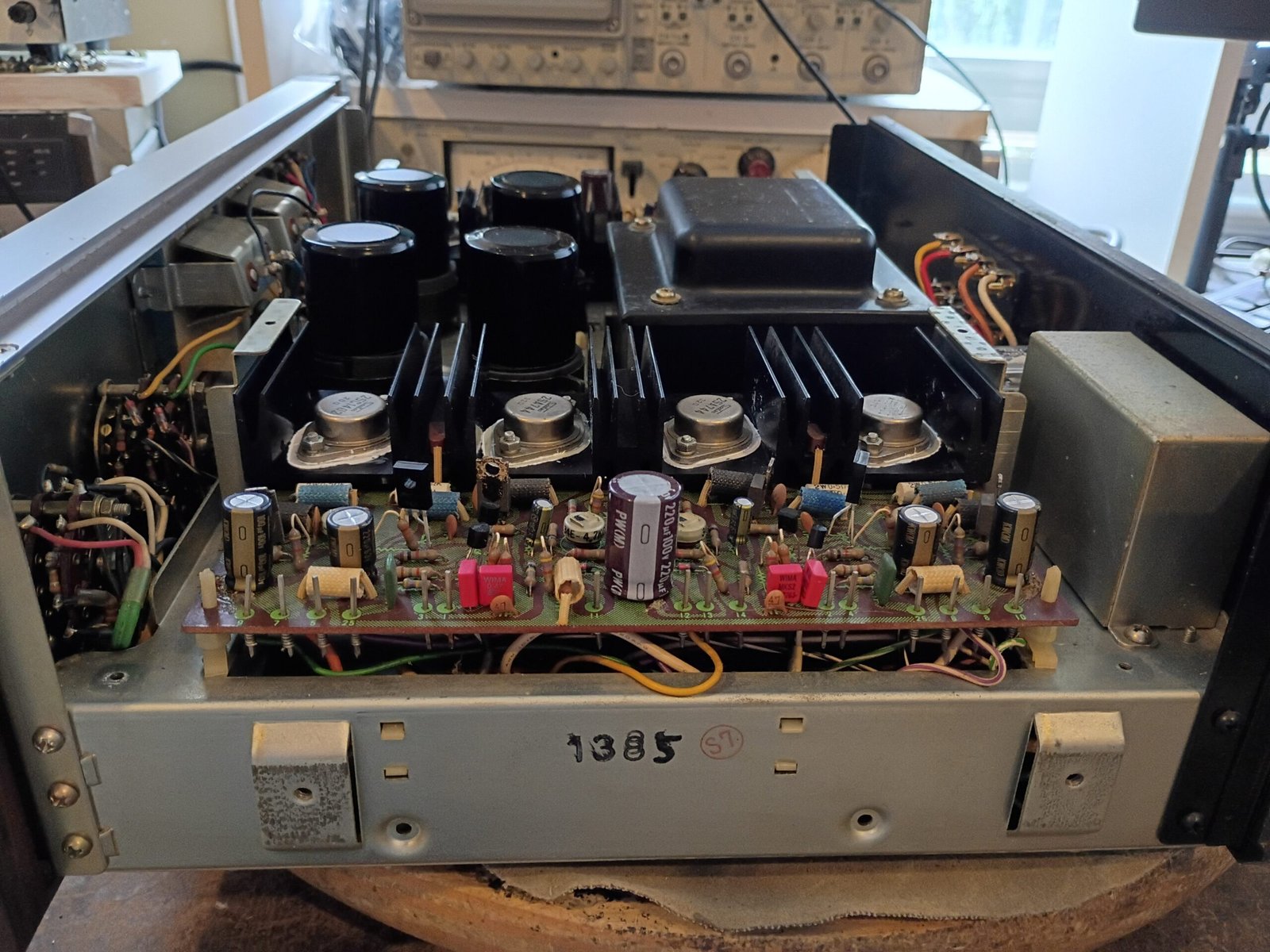
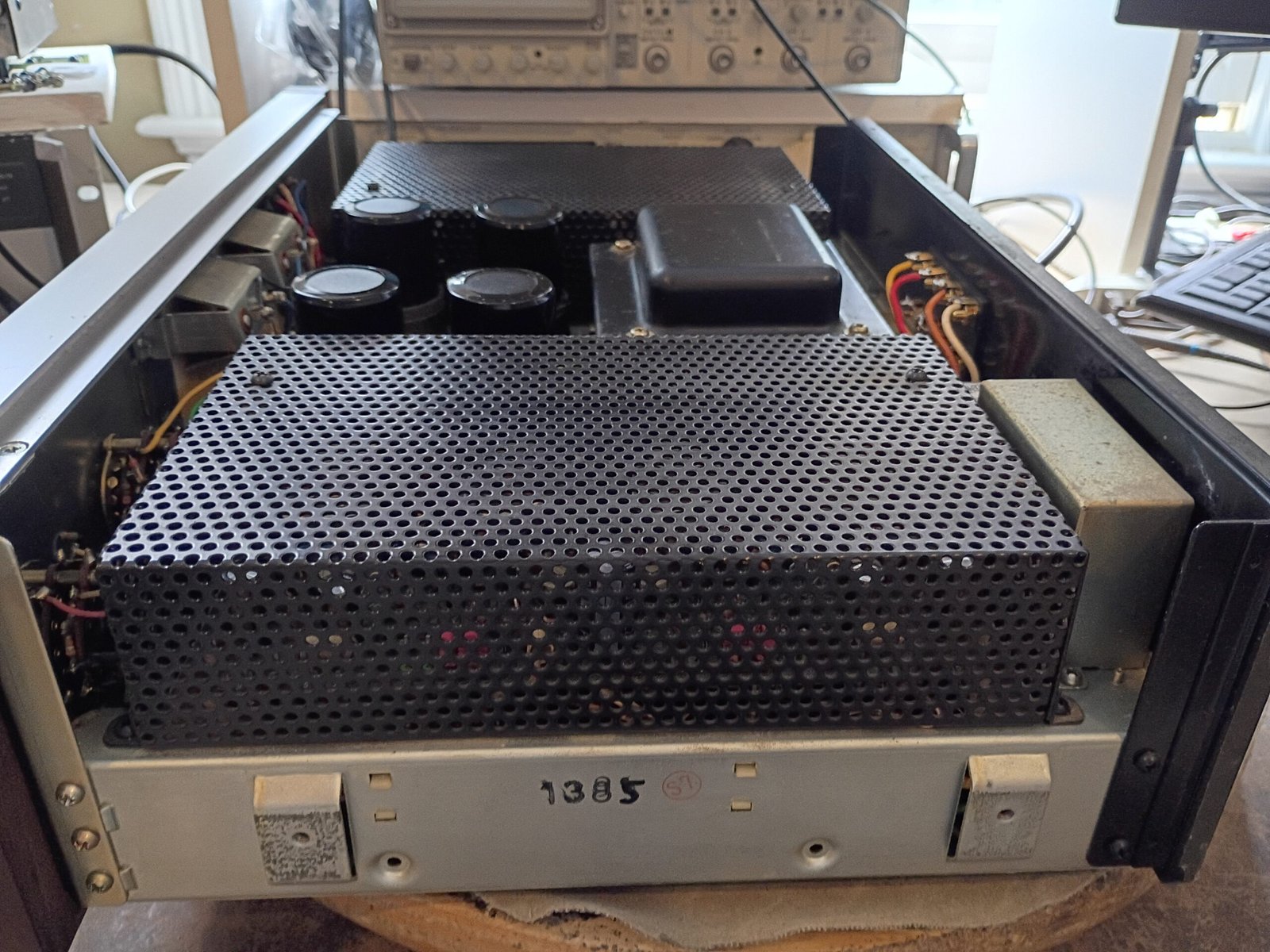
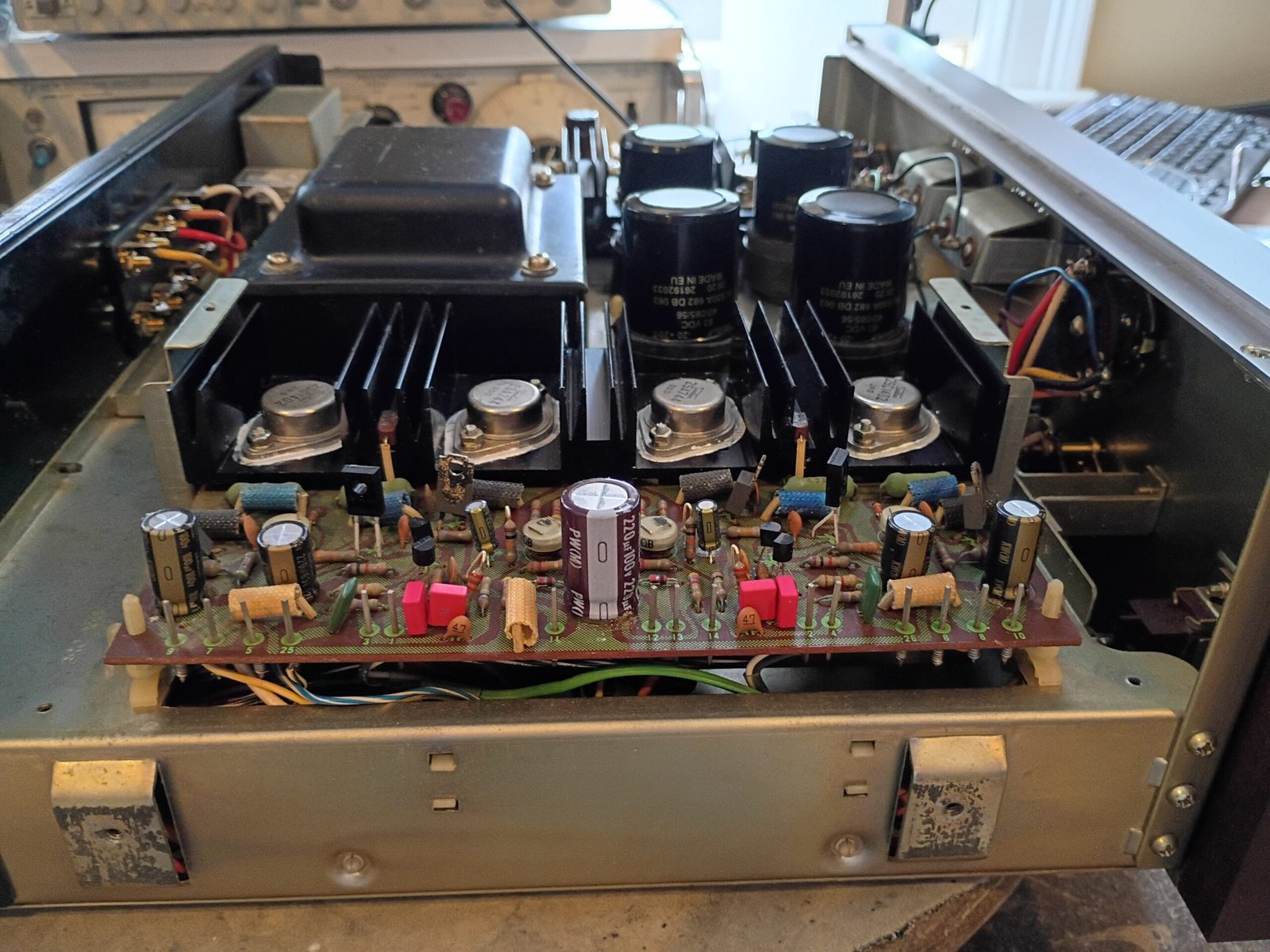
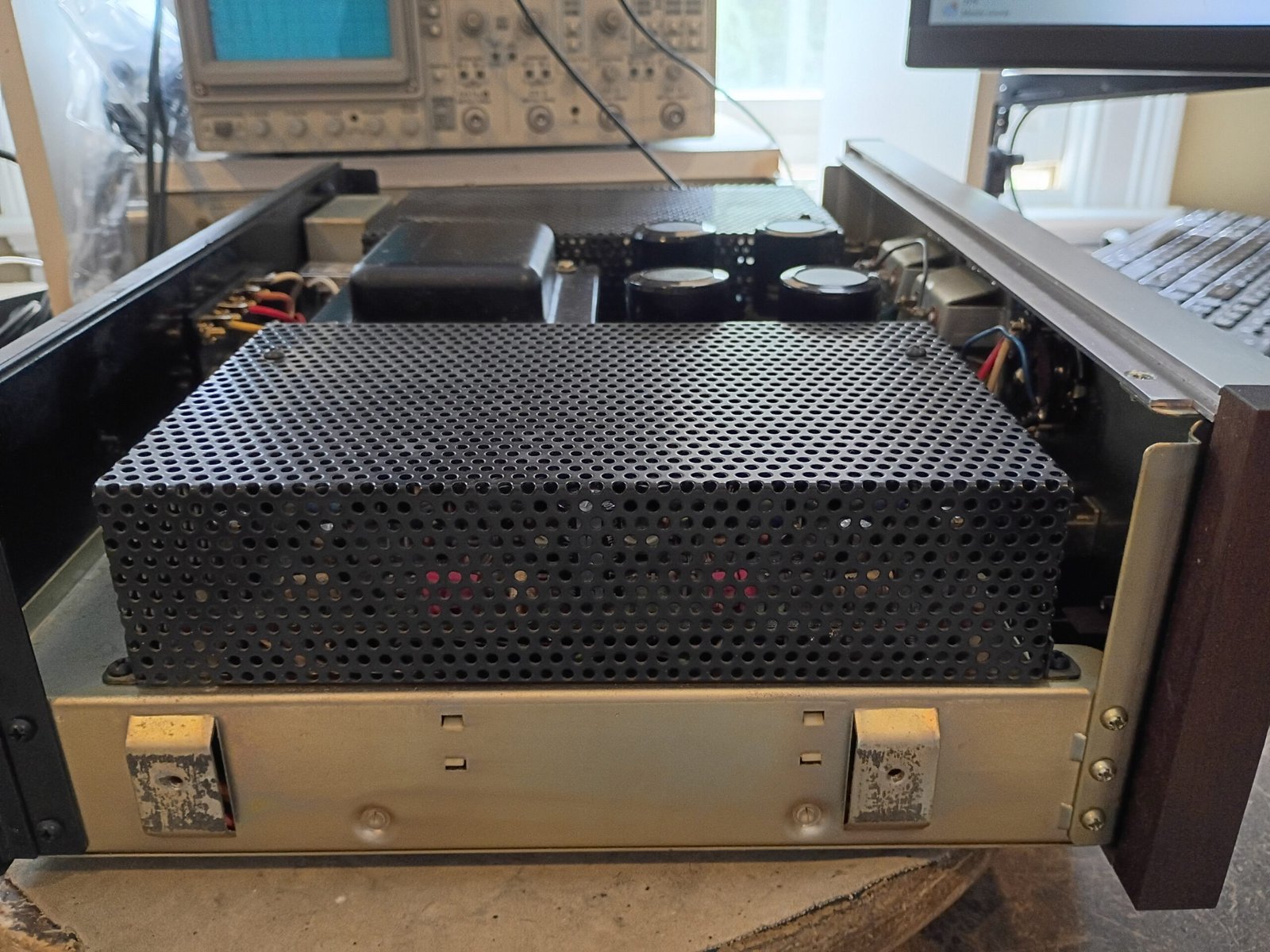
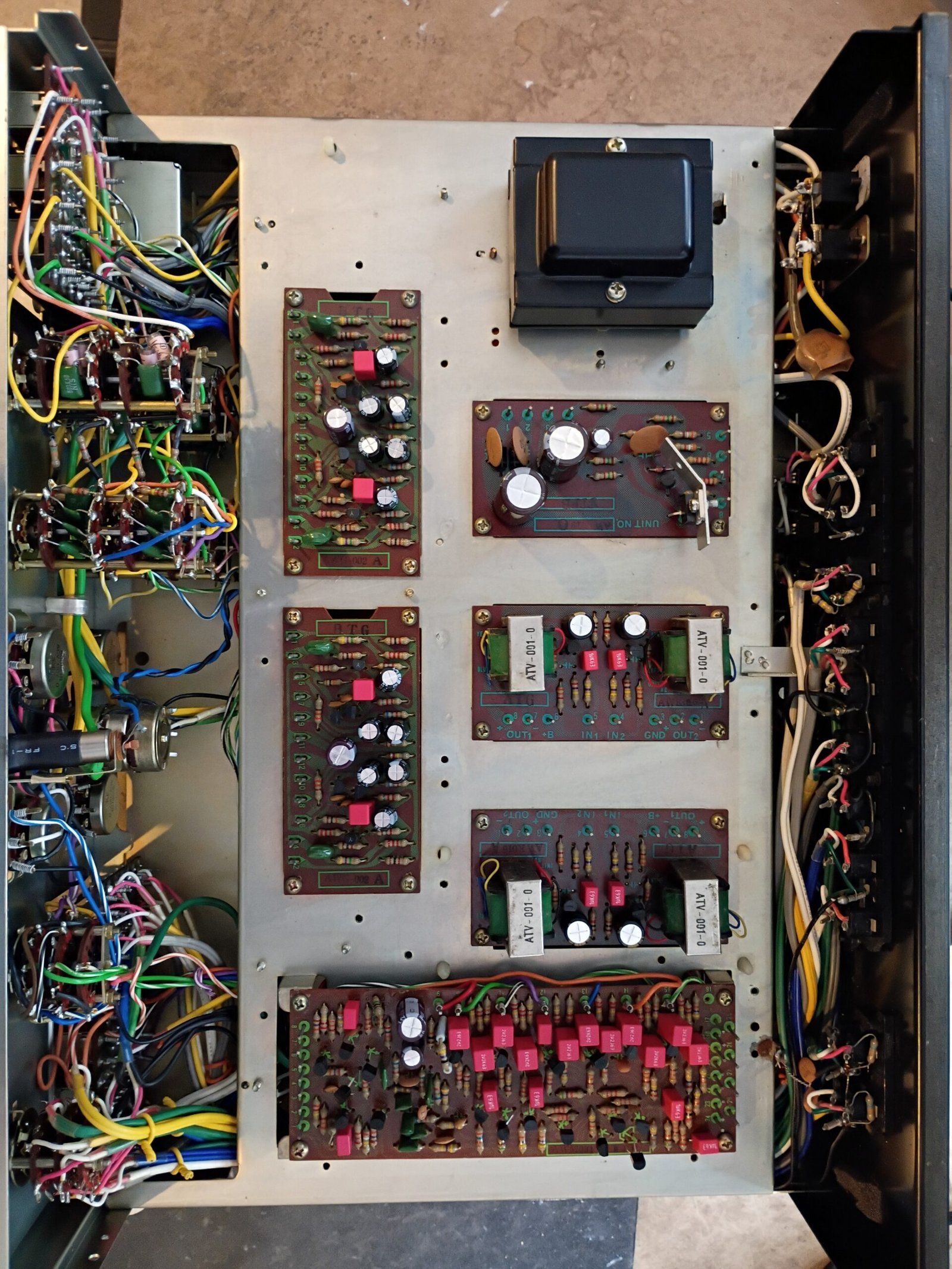
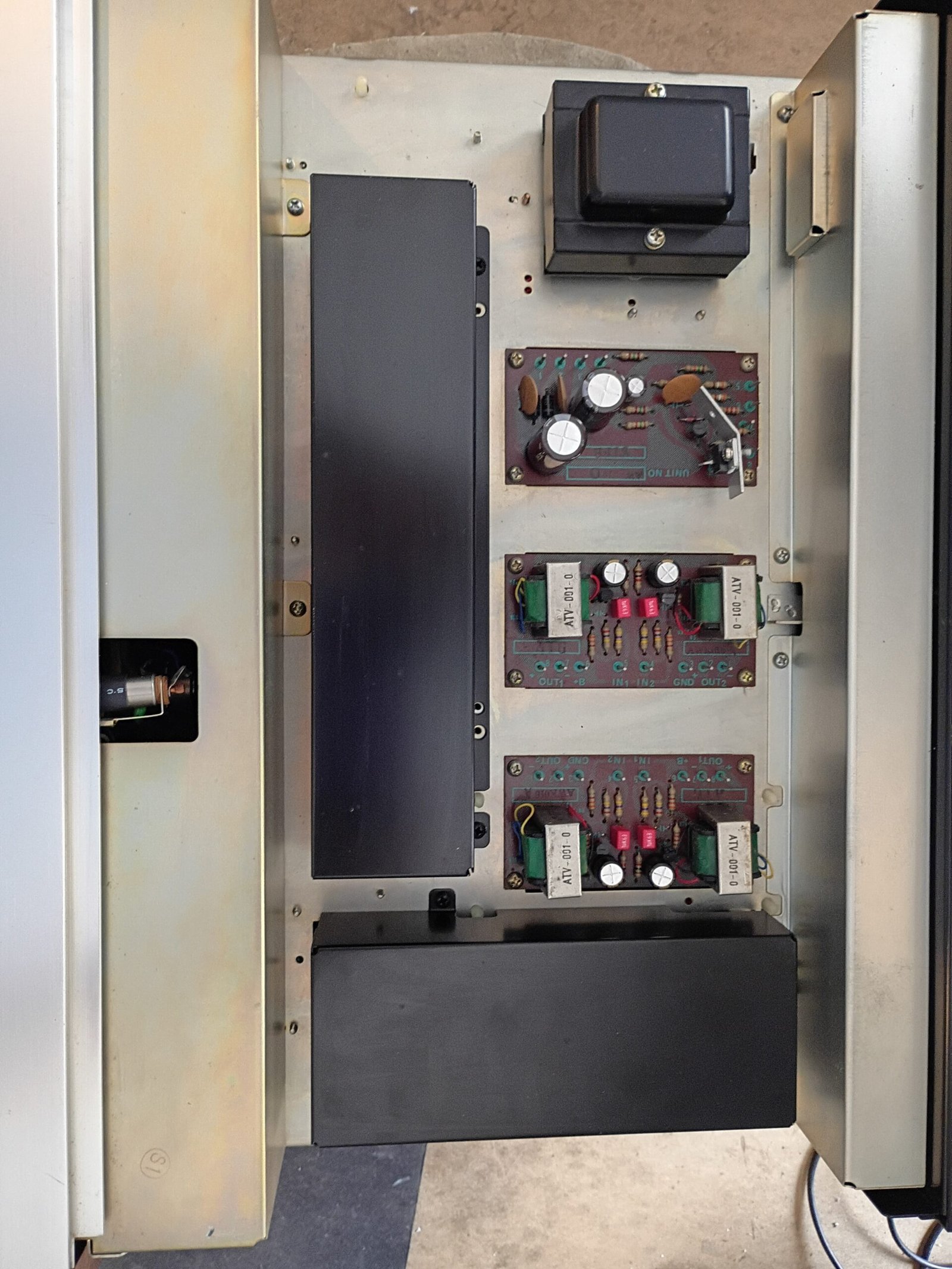
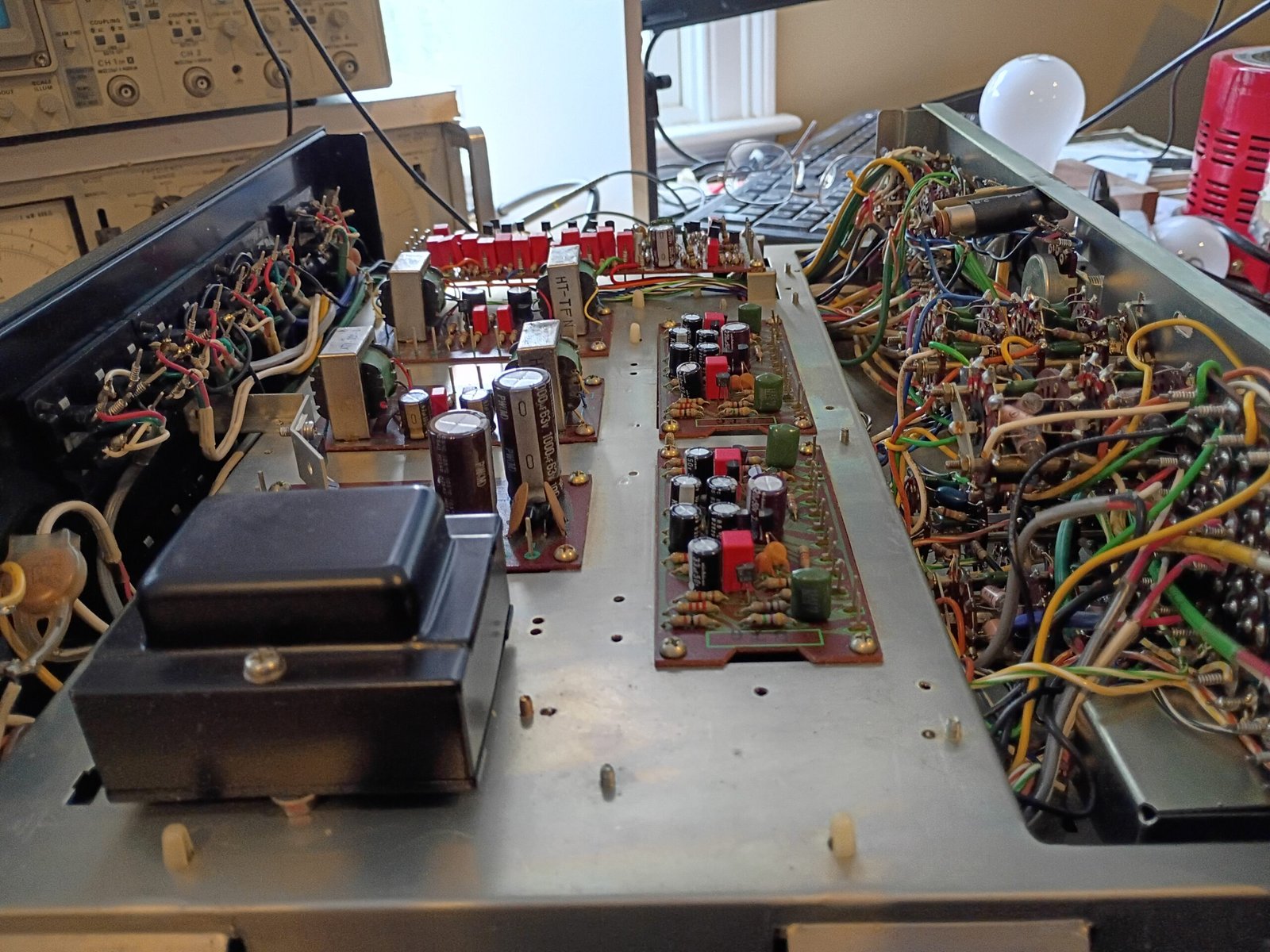
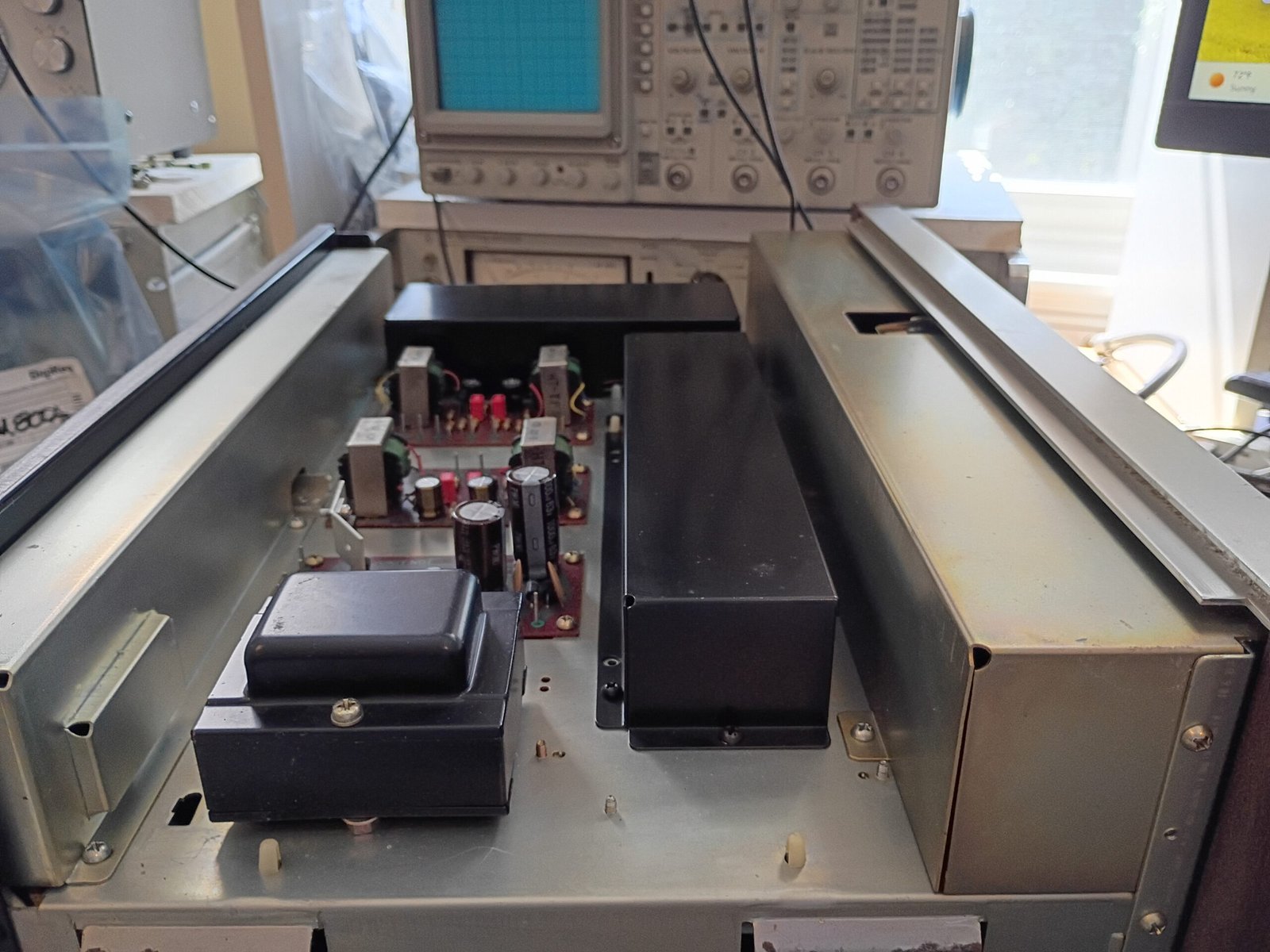
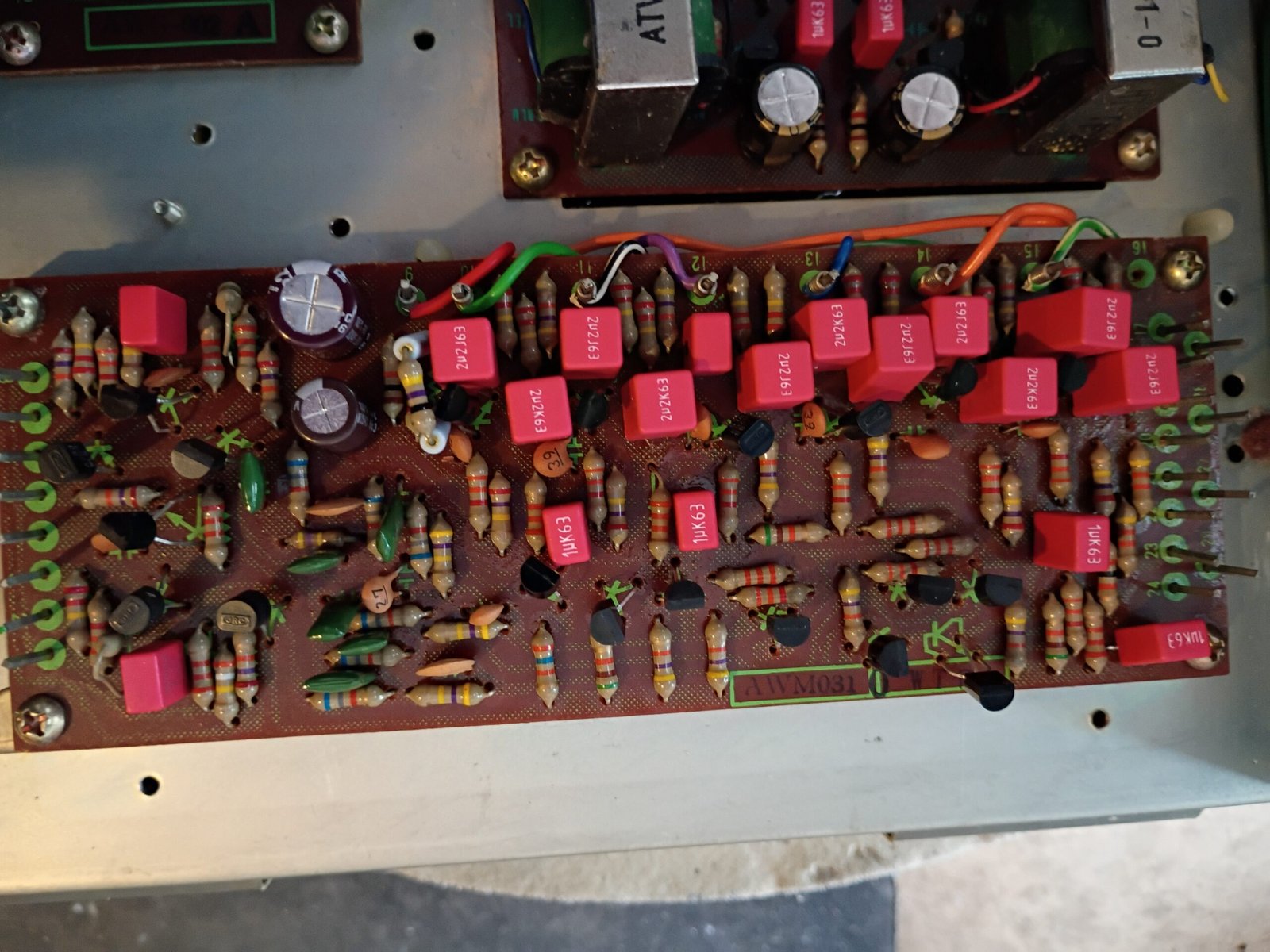
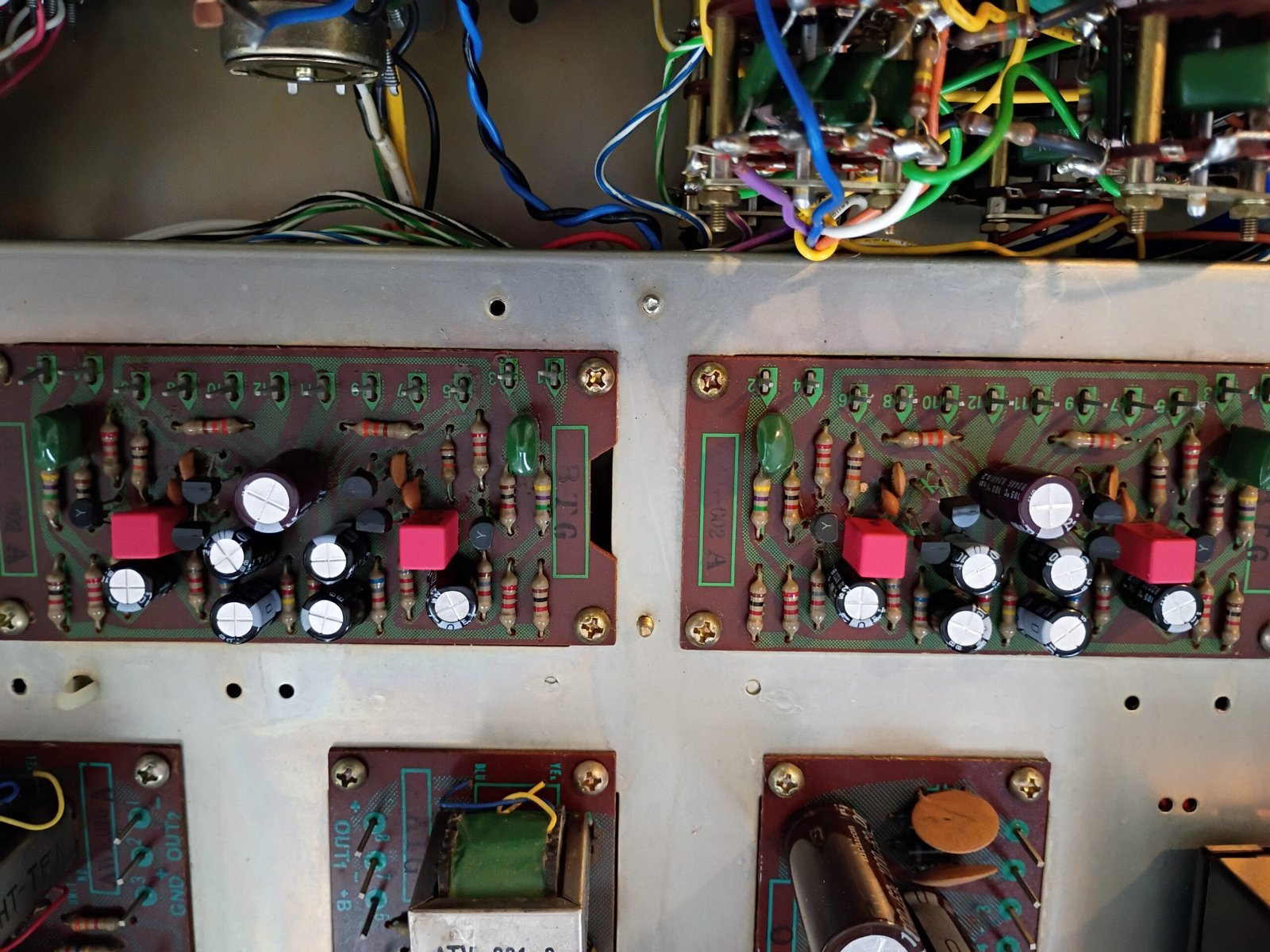
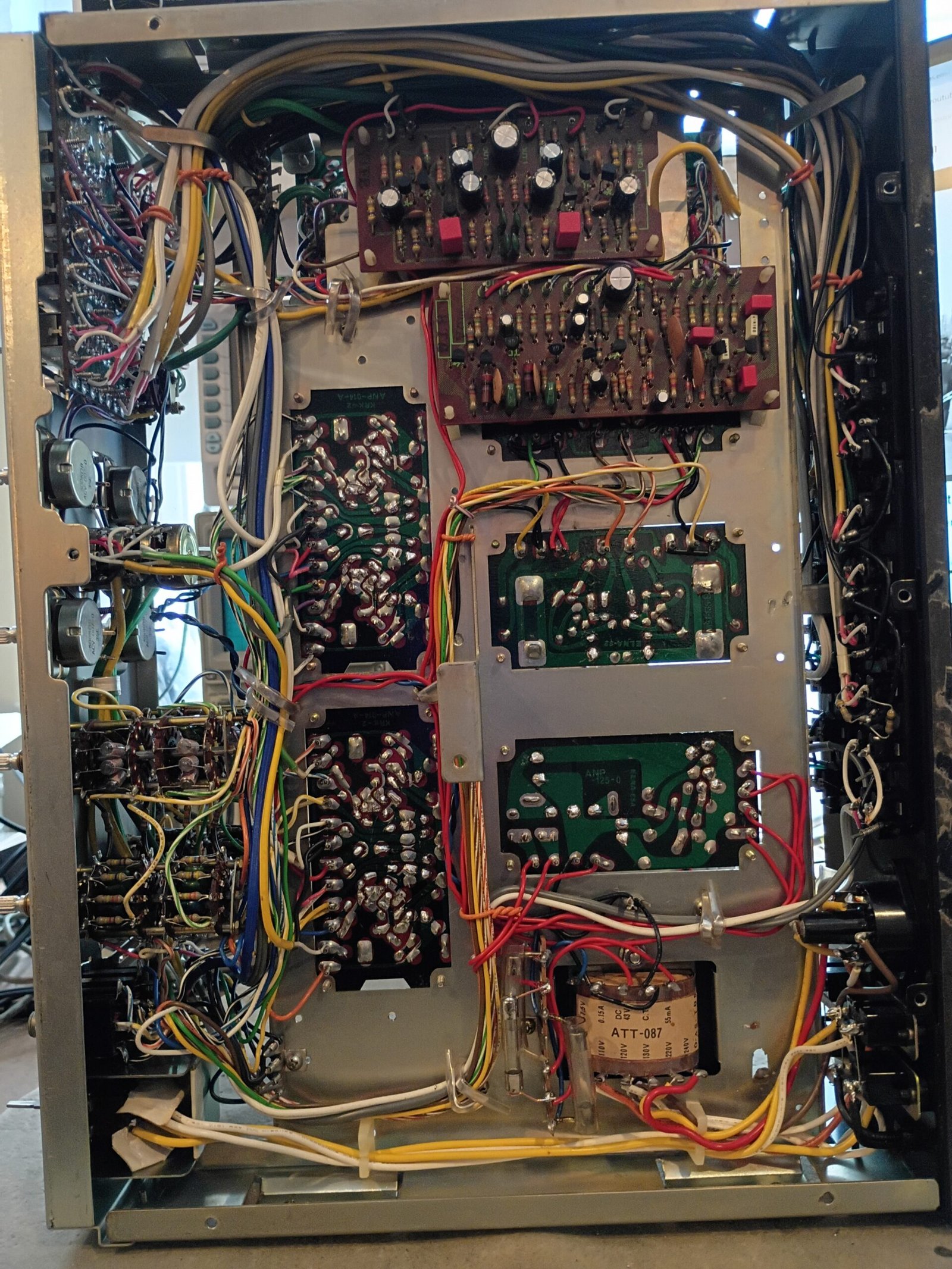
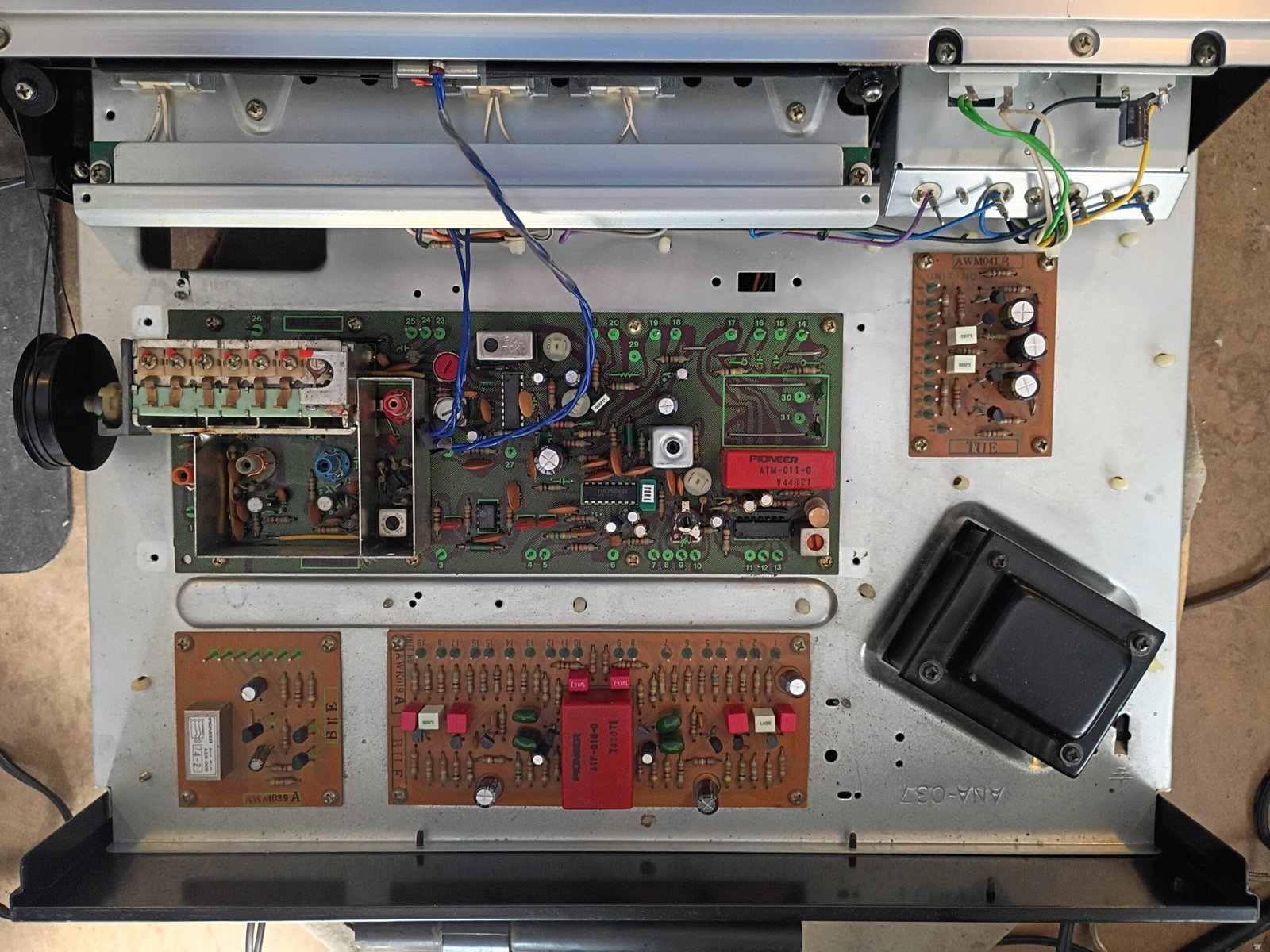
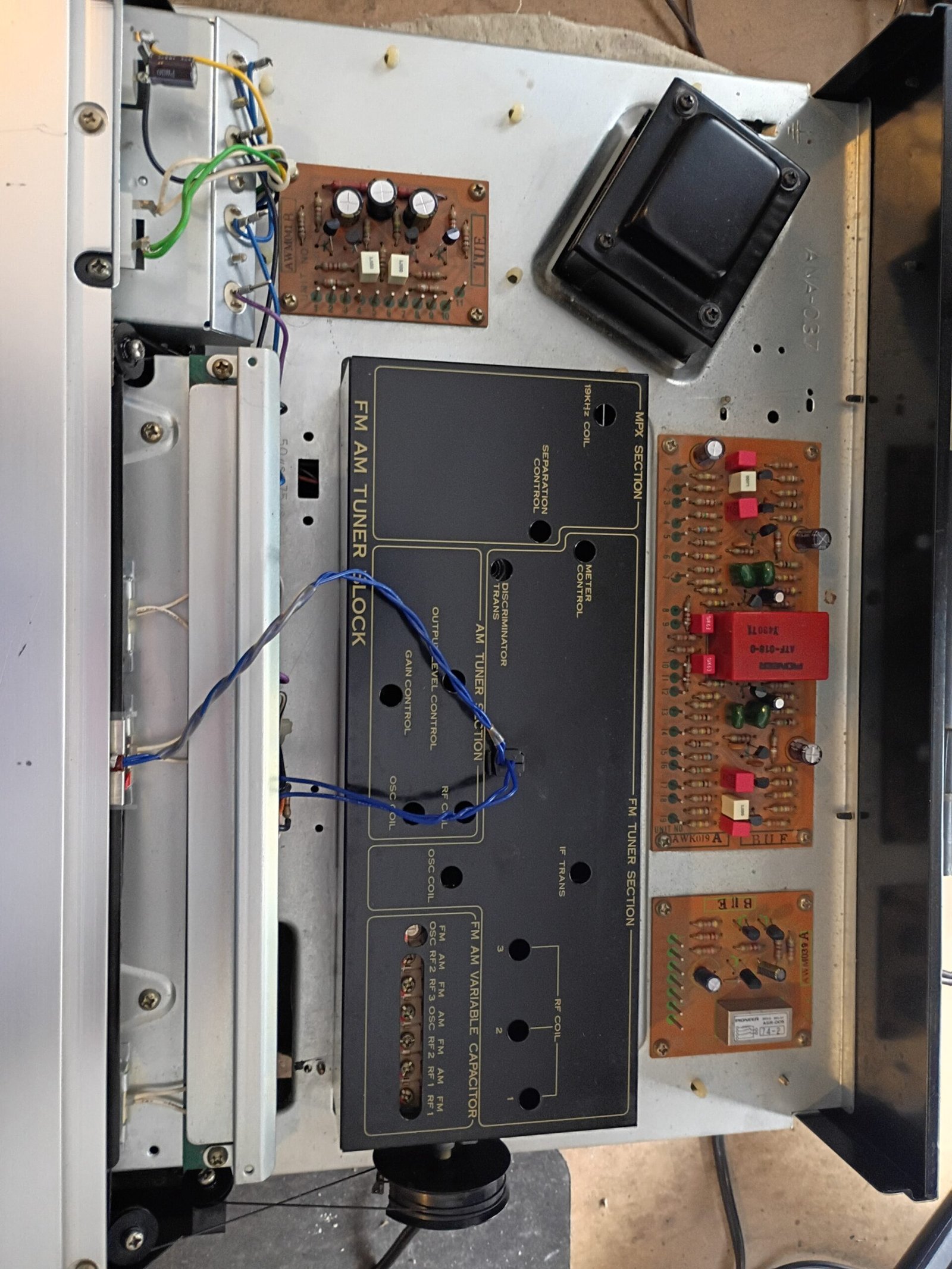
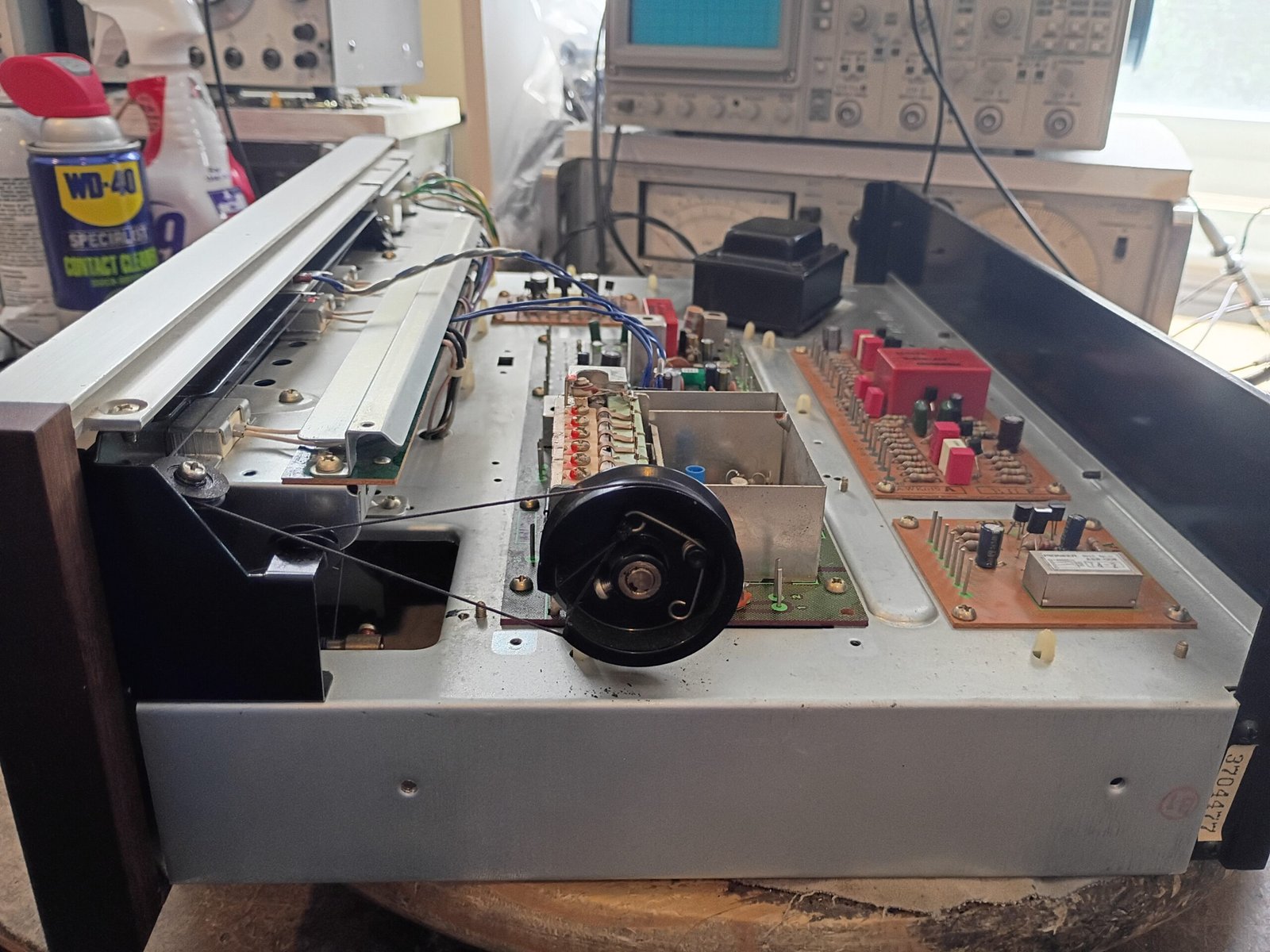
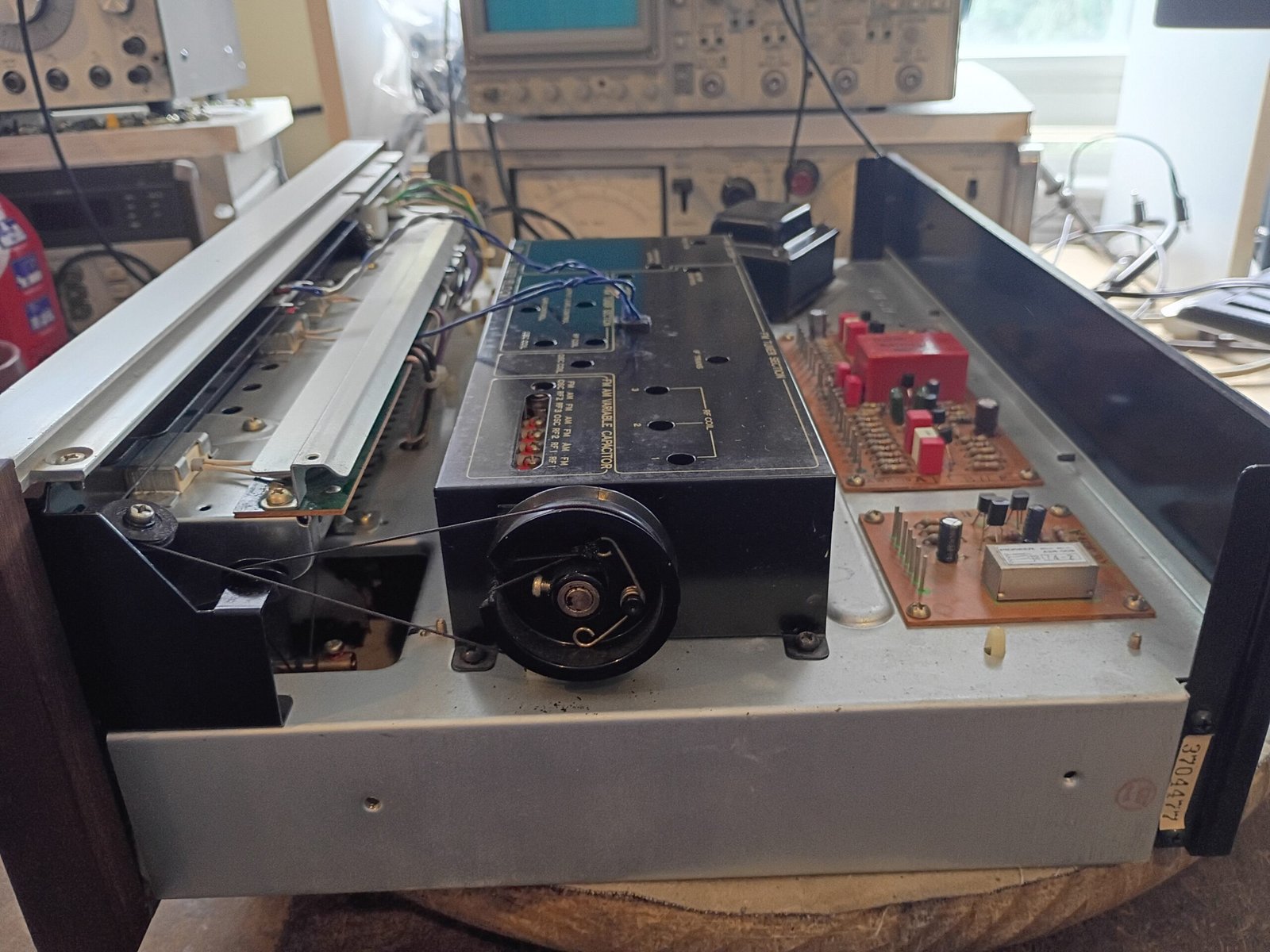
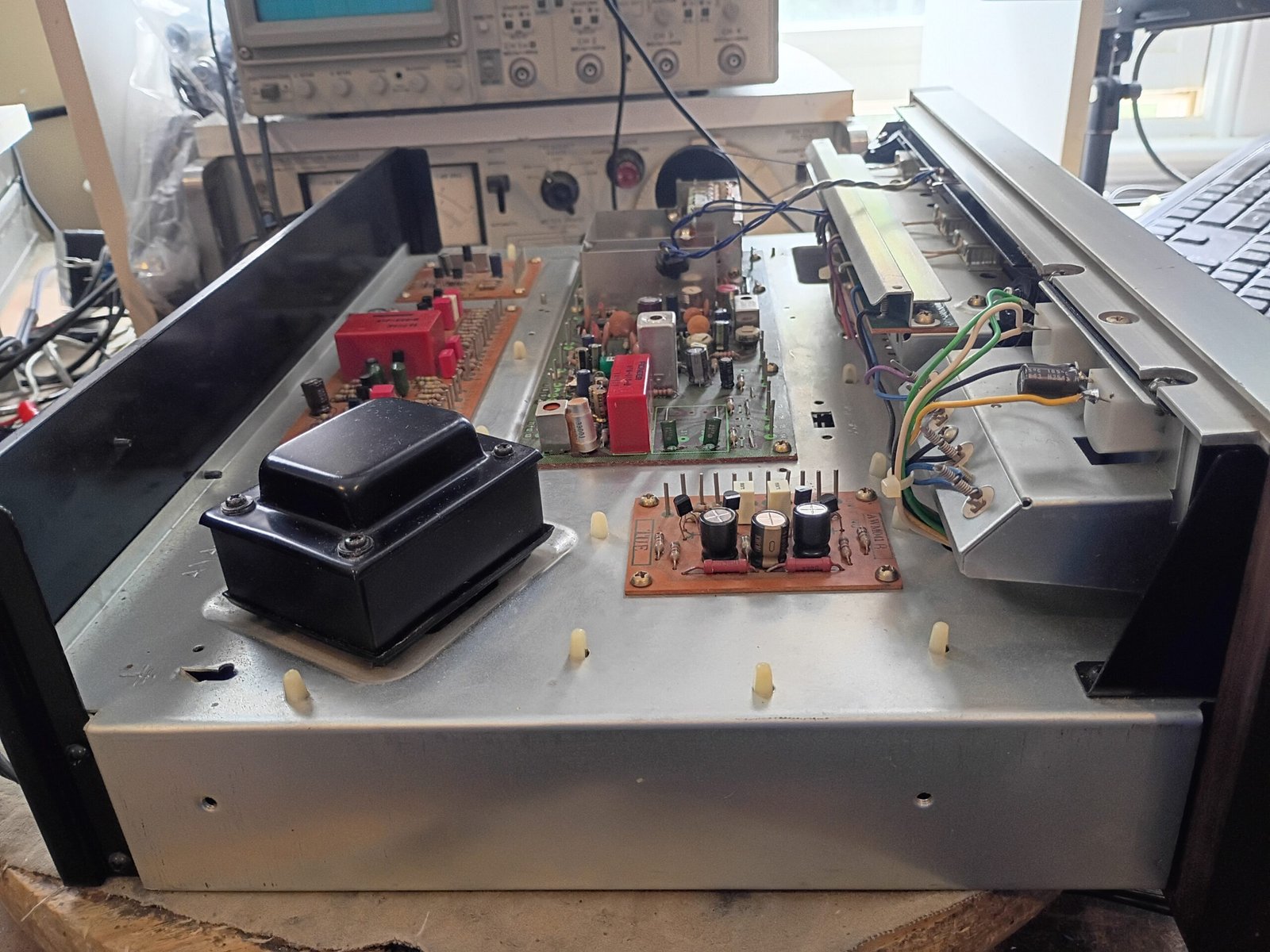
Beyond the list of standard restoration steps detailed on the main page, here are some added notes for these units :
I bought these 3 units from various sources including Goodwill and ebay. While functionality was unclear, all 3 had very good cosmetics.
Background:
The qm800a quad power amp and qc800a quad preamp were sold from 1972 to 1976 to deliver Pioneer’s best quad solution at the time. They were designed and manufactured using the same excellent build quality levels as the well-regarded sa9100 stereo integrated amp sold at the same time. The tx8100 is a contemporary stereo tuner completing the stack.
Besides looking amazing, I would argue these were also the best Pioneer stereo products of this era. First, there are the normal quad advantages when driving 4 speakers from a stereo source
- Four independent amps support using four 4 ohm speakers
- “per corner” volume ratio setting with main volume control using those relative ratios
- front vs rear speaker bass and treble controls
- points 1 and 2 combine to give the ability to mix speaker types for front vs rear pairs
- psuedo-quad option to phase shift rear speakers for “concert hall” sound.
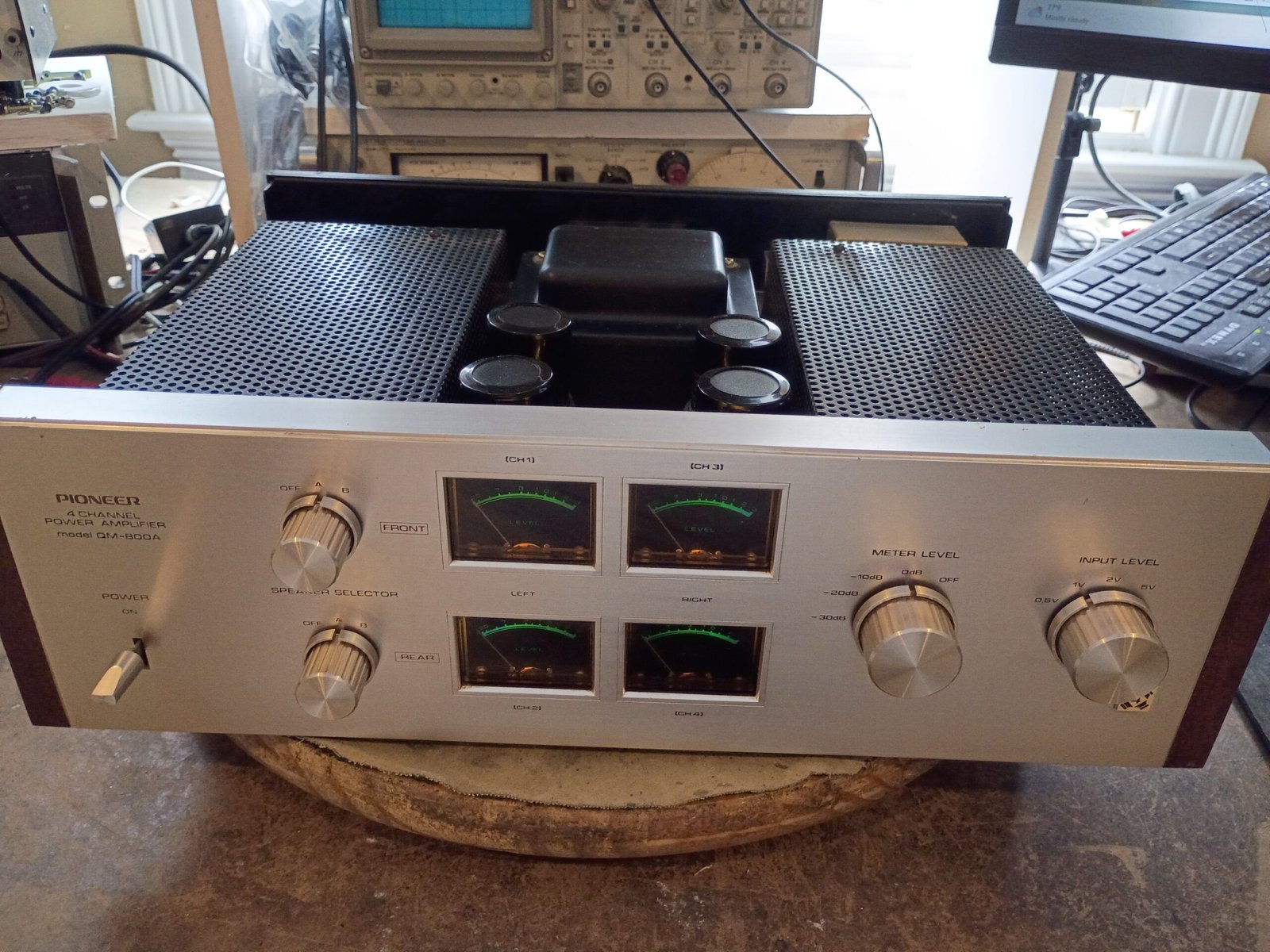
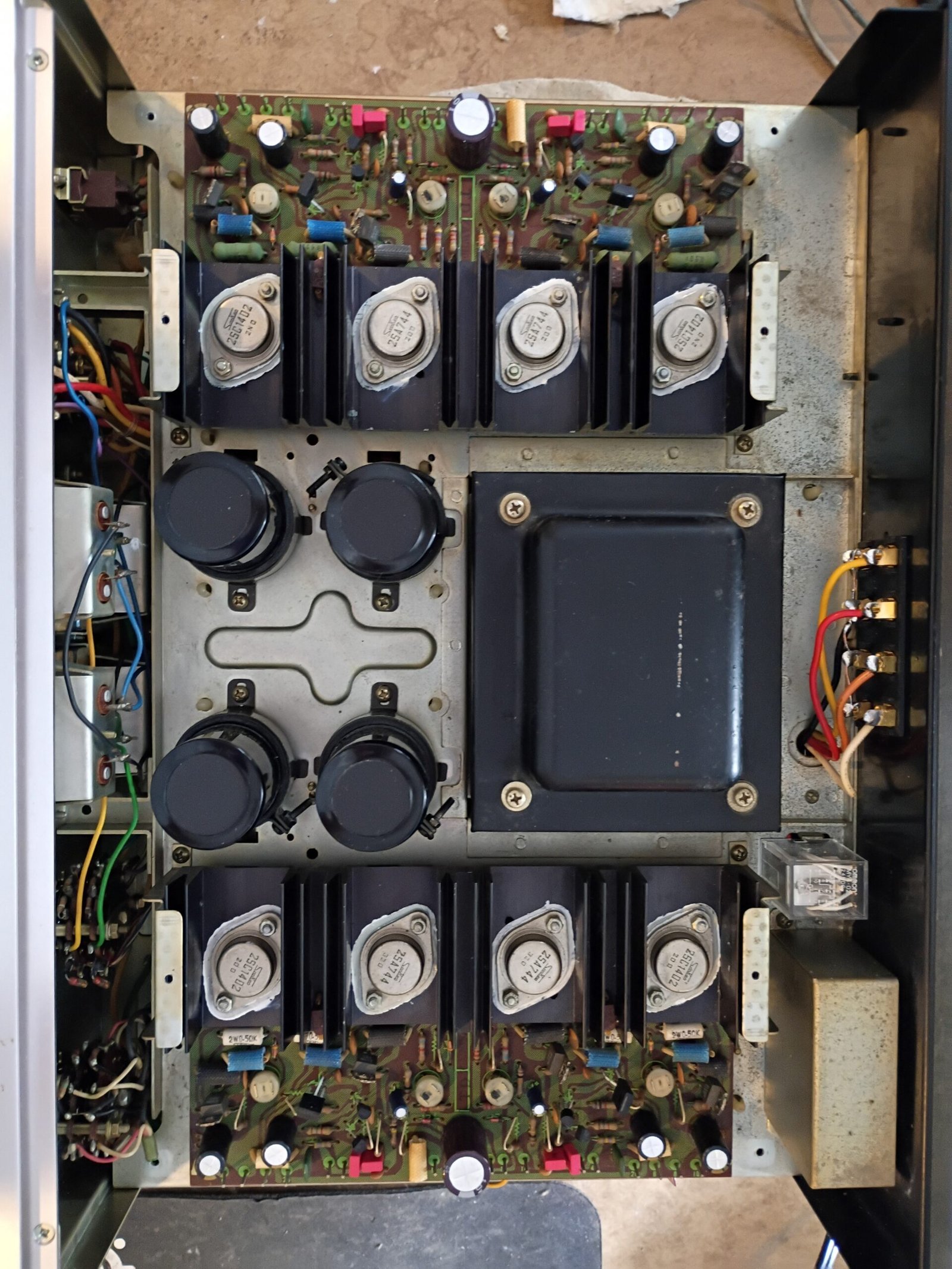
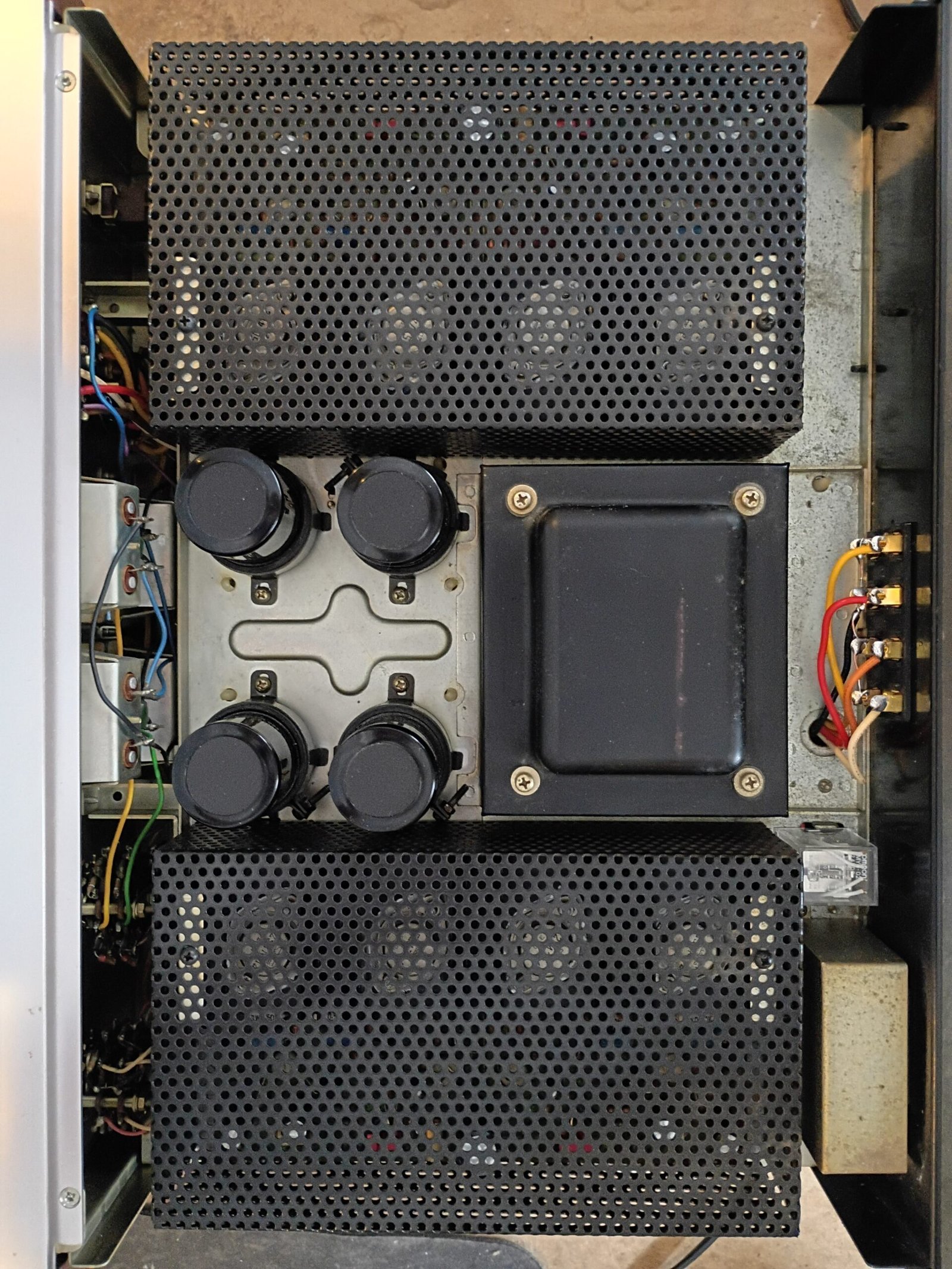
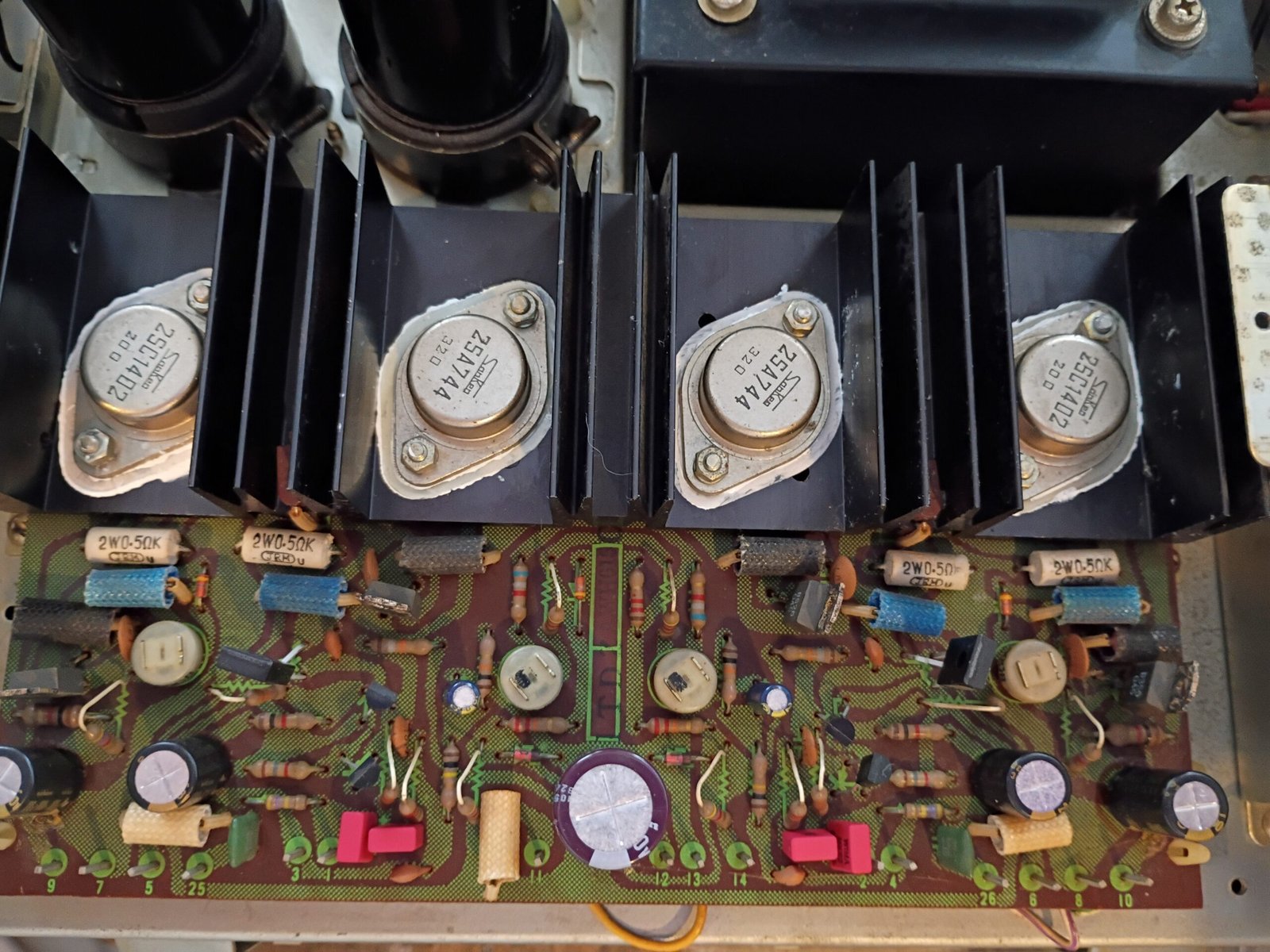
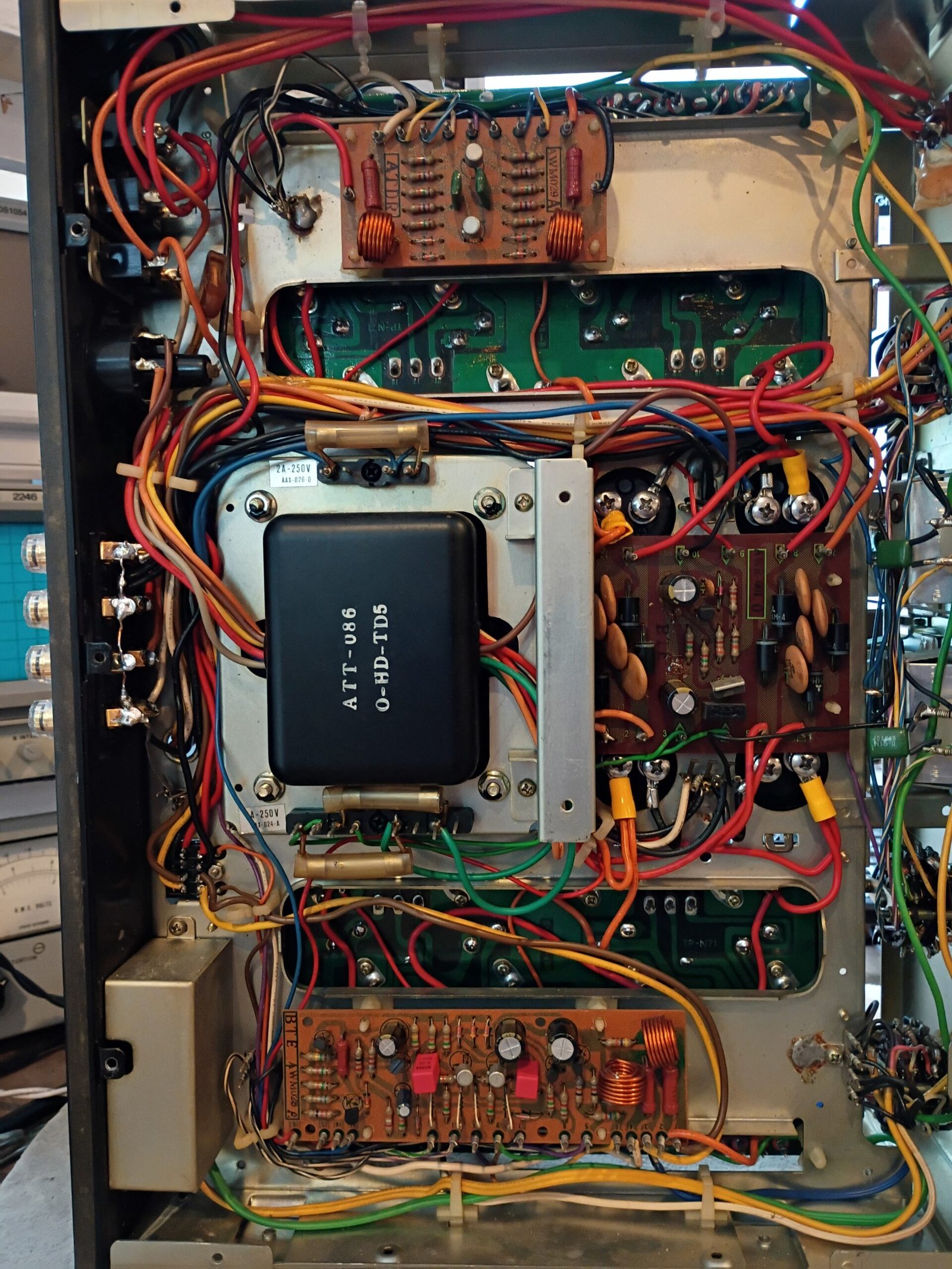
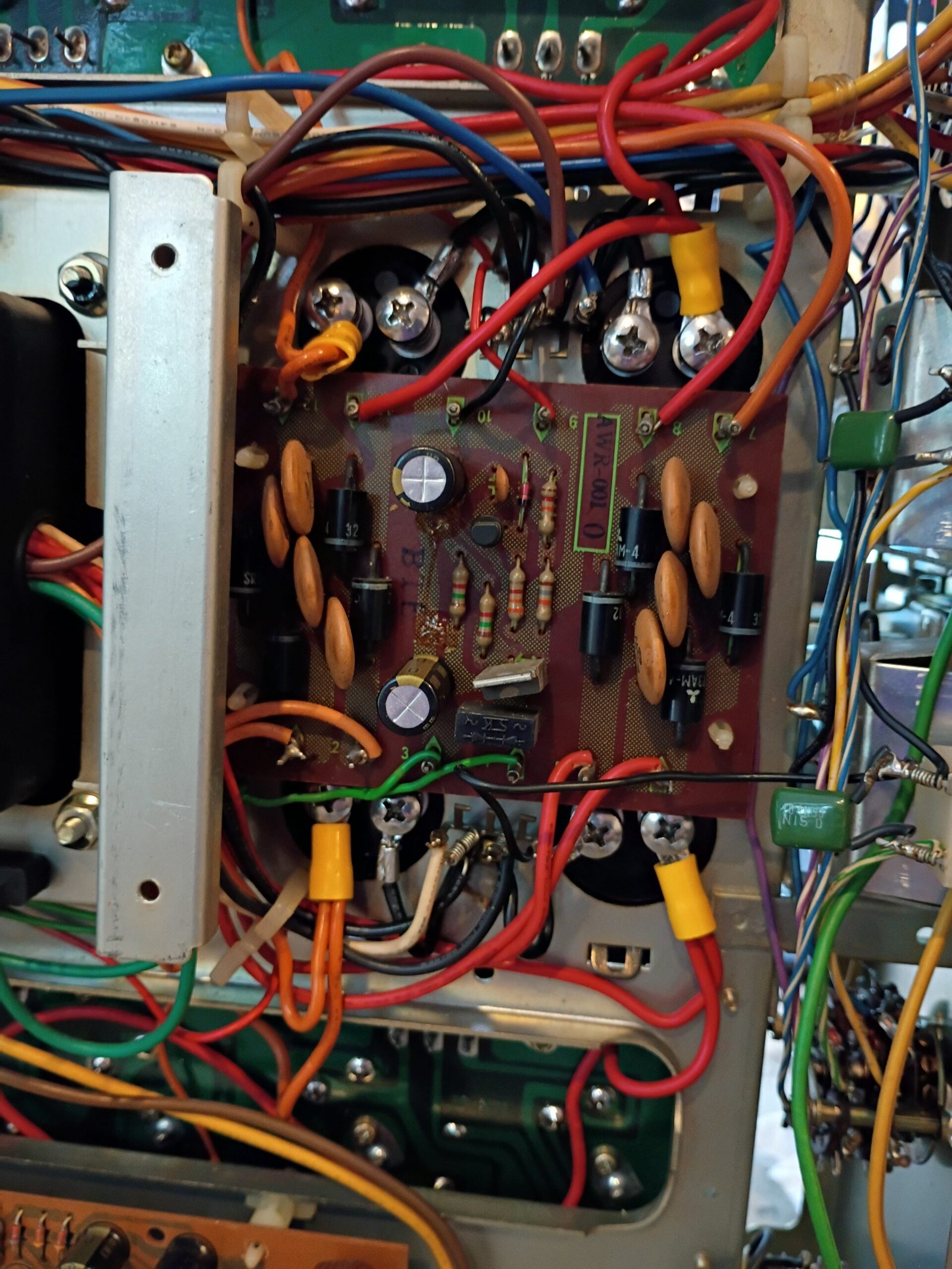
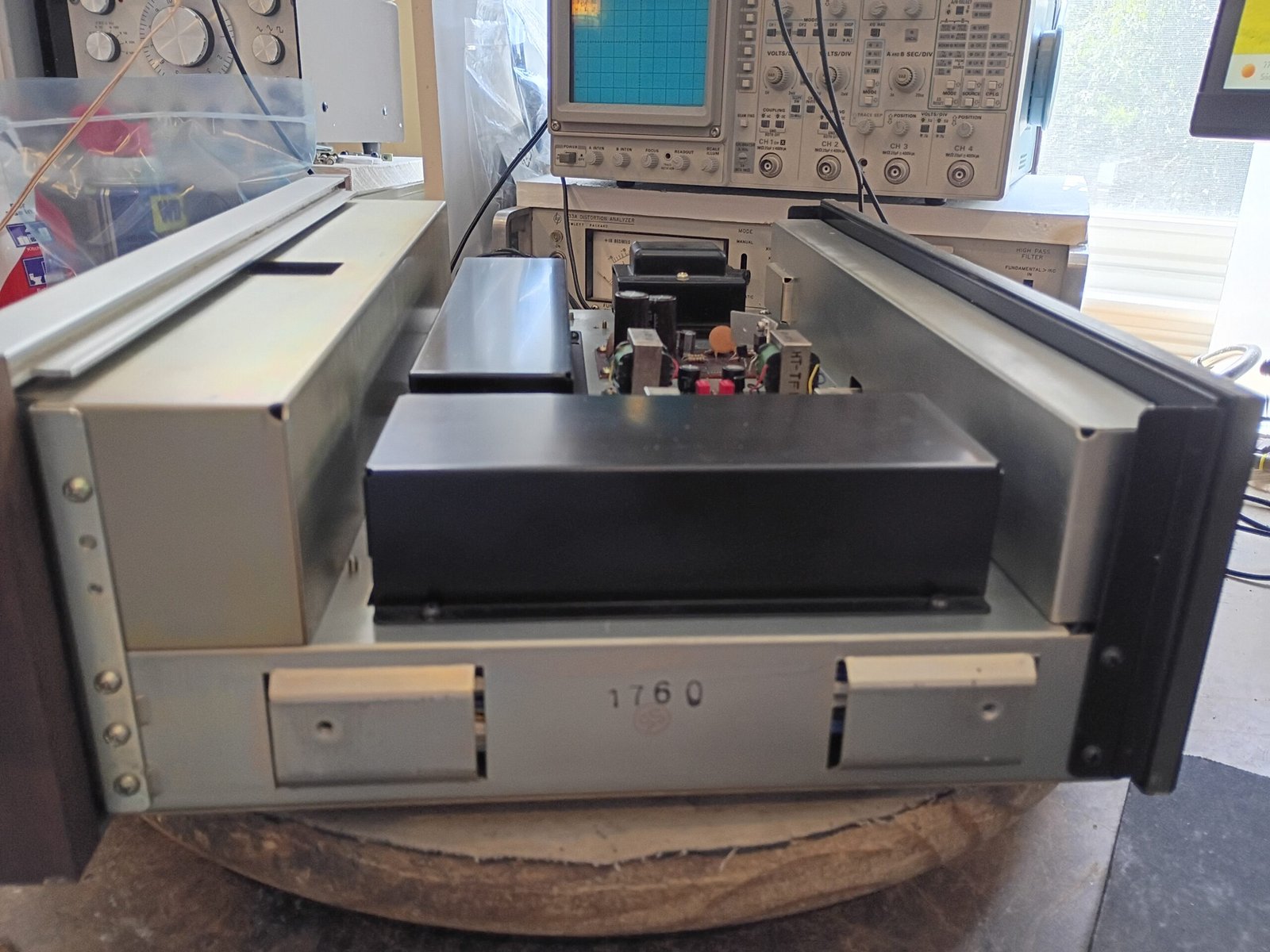
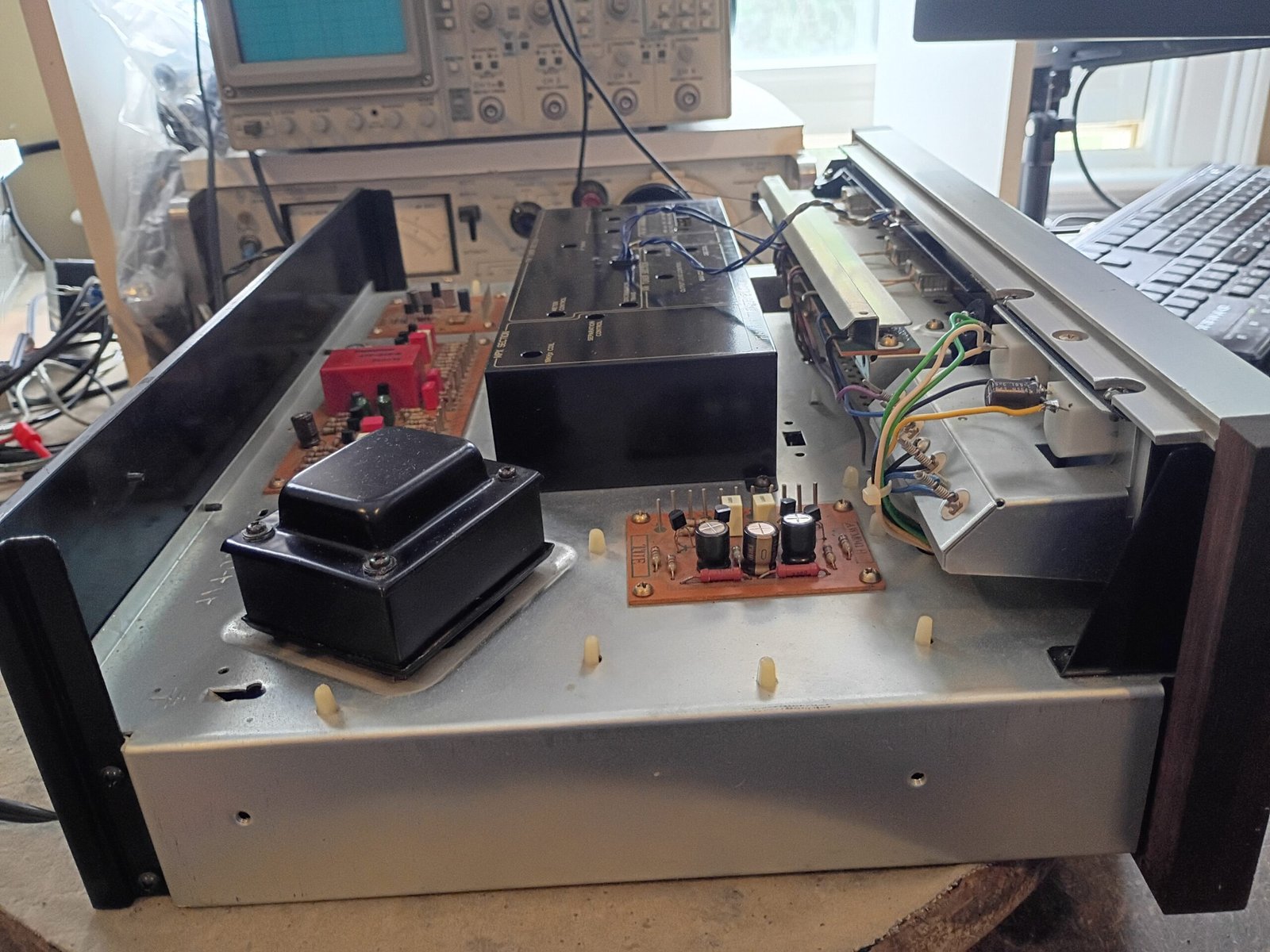
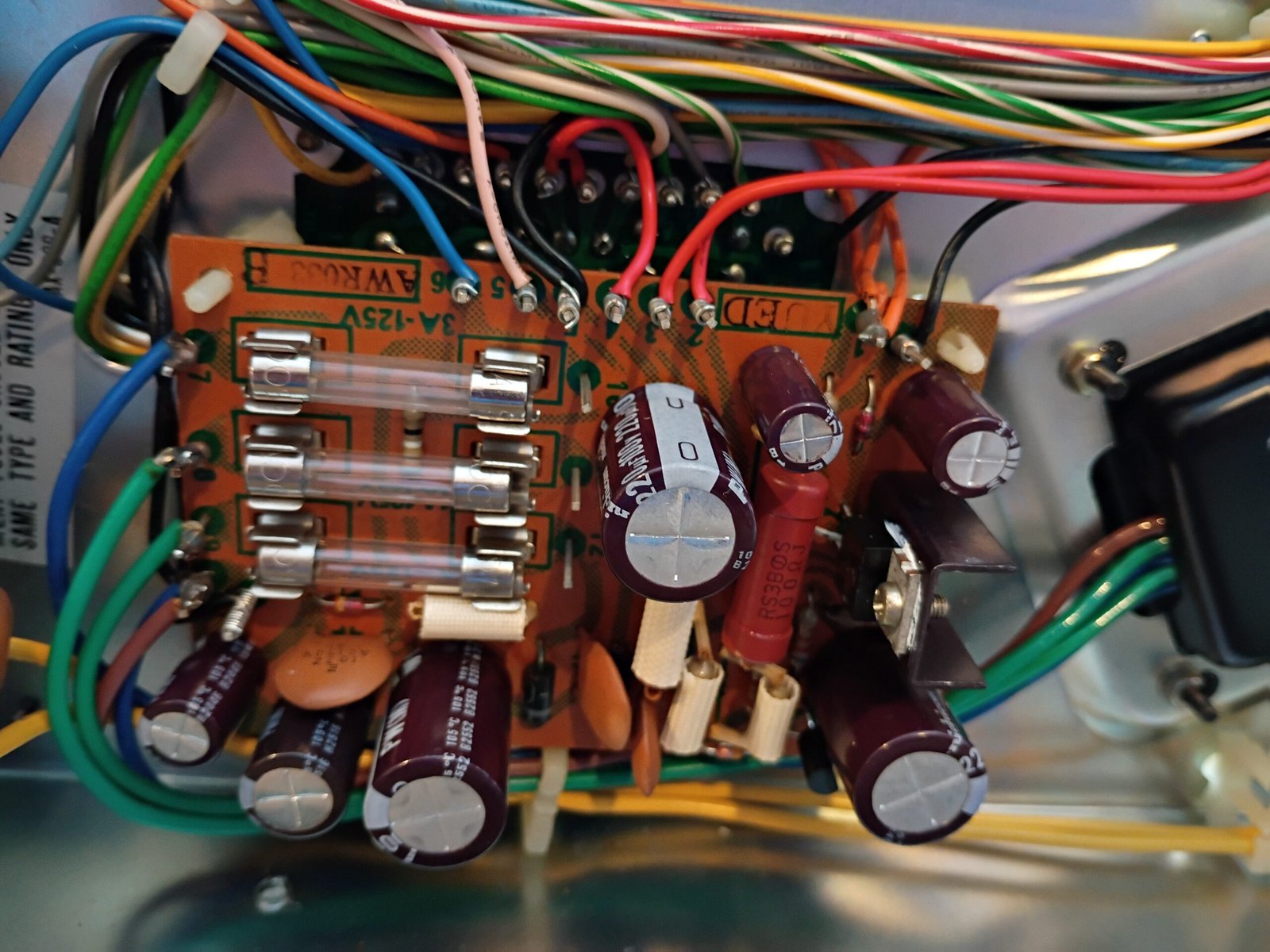
For 2 speaker applications the qm800a features a “twin power” architecture which is clearly shown in the photos. Left vs right channels have unique transformer secondaries, rectifiers and main amp supply caps. In contrast, the sa9100 had 1 shared amp supply for both left and right channels.
Next, when only driving 2 speakers, the user can “bi-amp” with the front outputs driving the woofers and the rear outputs driving the tweeters.
Finally, the qm800a has 4 power meters with 4 sensitivity ranges for lively needle dancing at any output level.
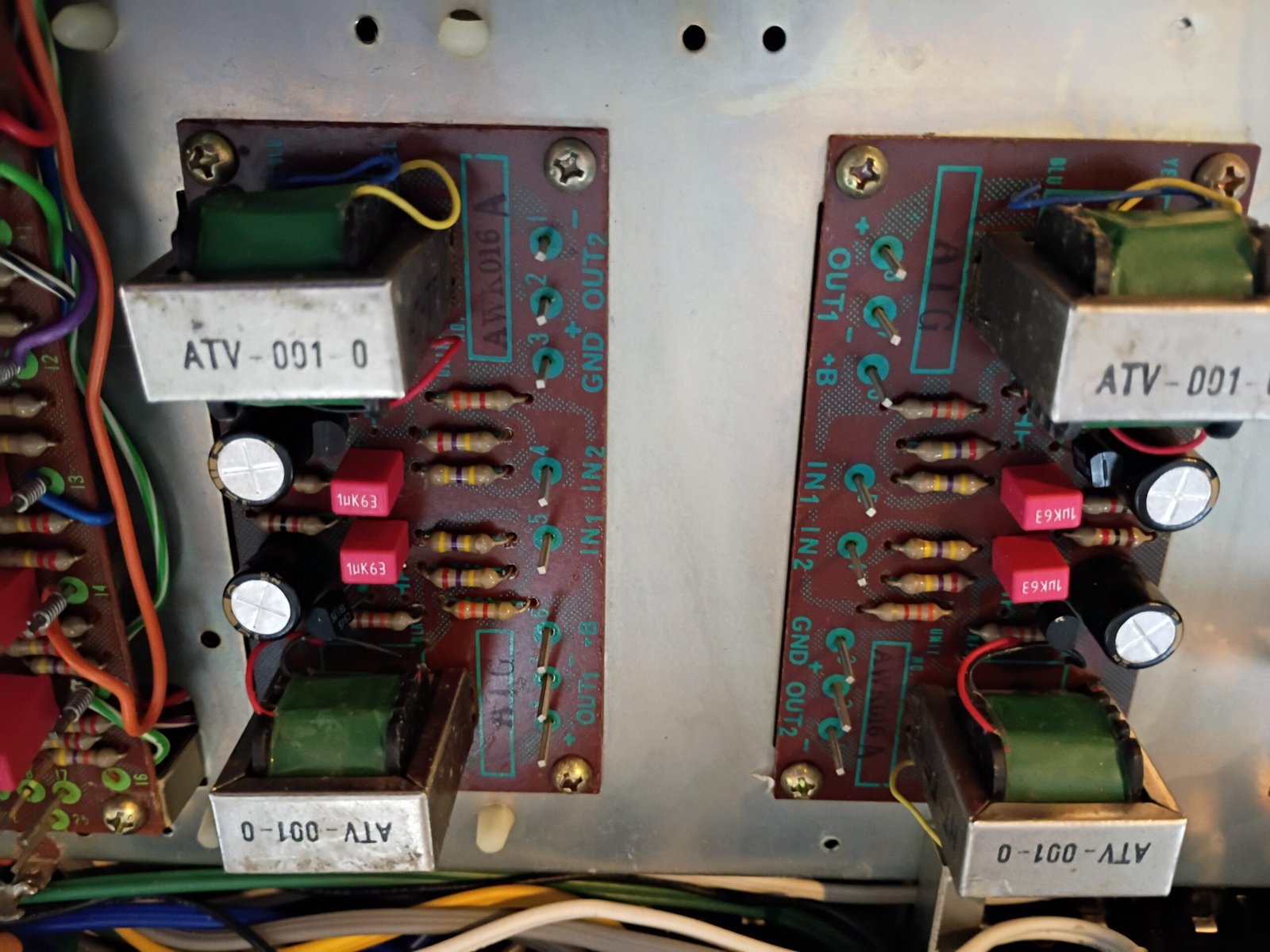
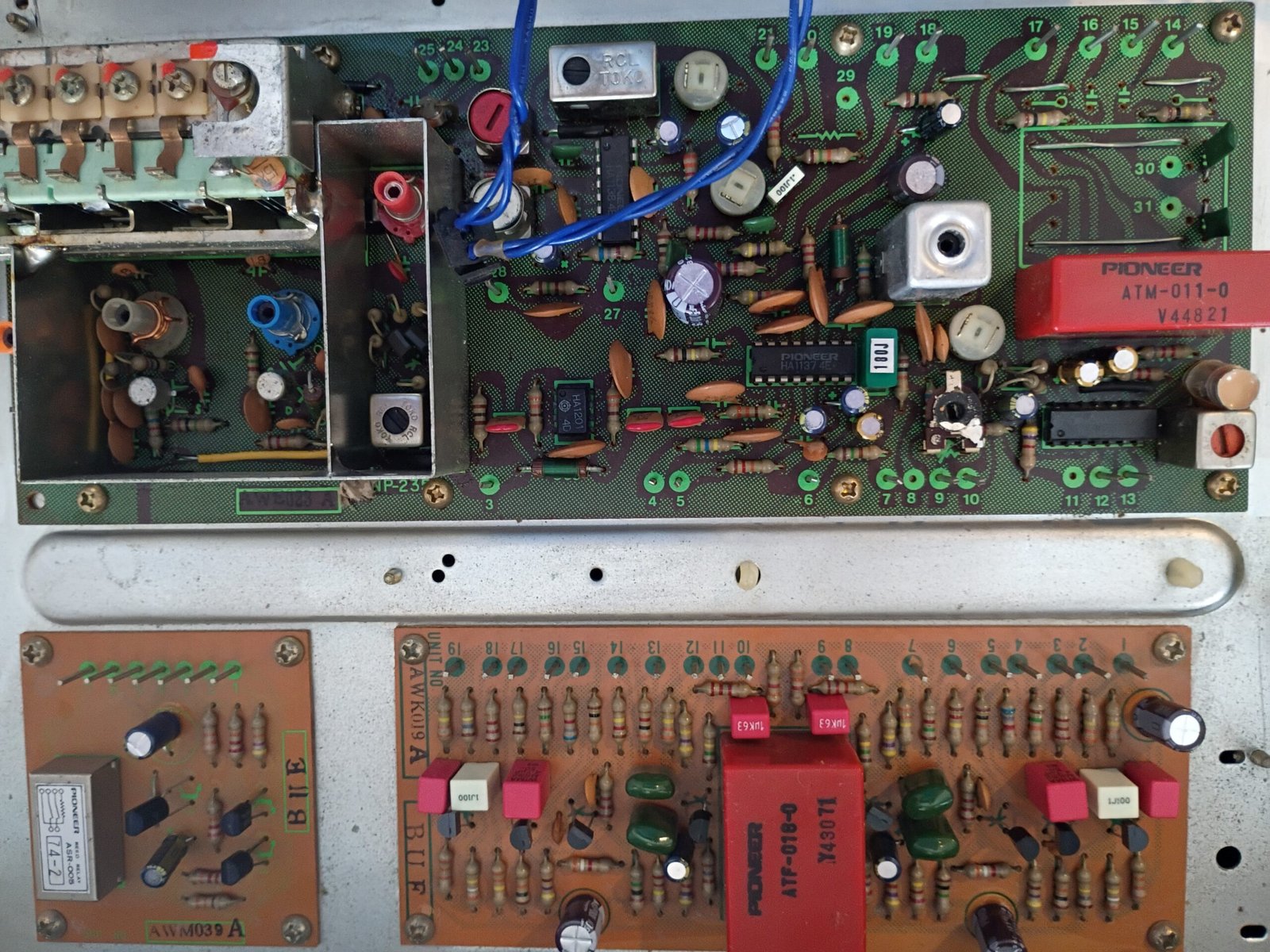
The qc800a preamp has the added controls mentioned above, plus extensive shielding and transformer-coupled amplifier boards just to drive the headphone jack.
The tx8100 tuner is a solid performed with nice features like separate output level control for AM and FM along with its own headphone amp with level control. I liked this last one as someone could enjoy with just this tuner and a pair of headphones while saving up the the amplifier to go with it.
Recap notes :
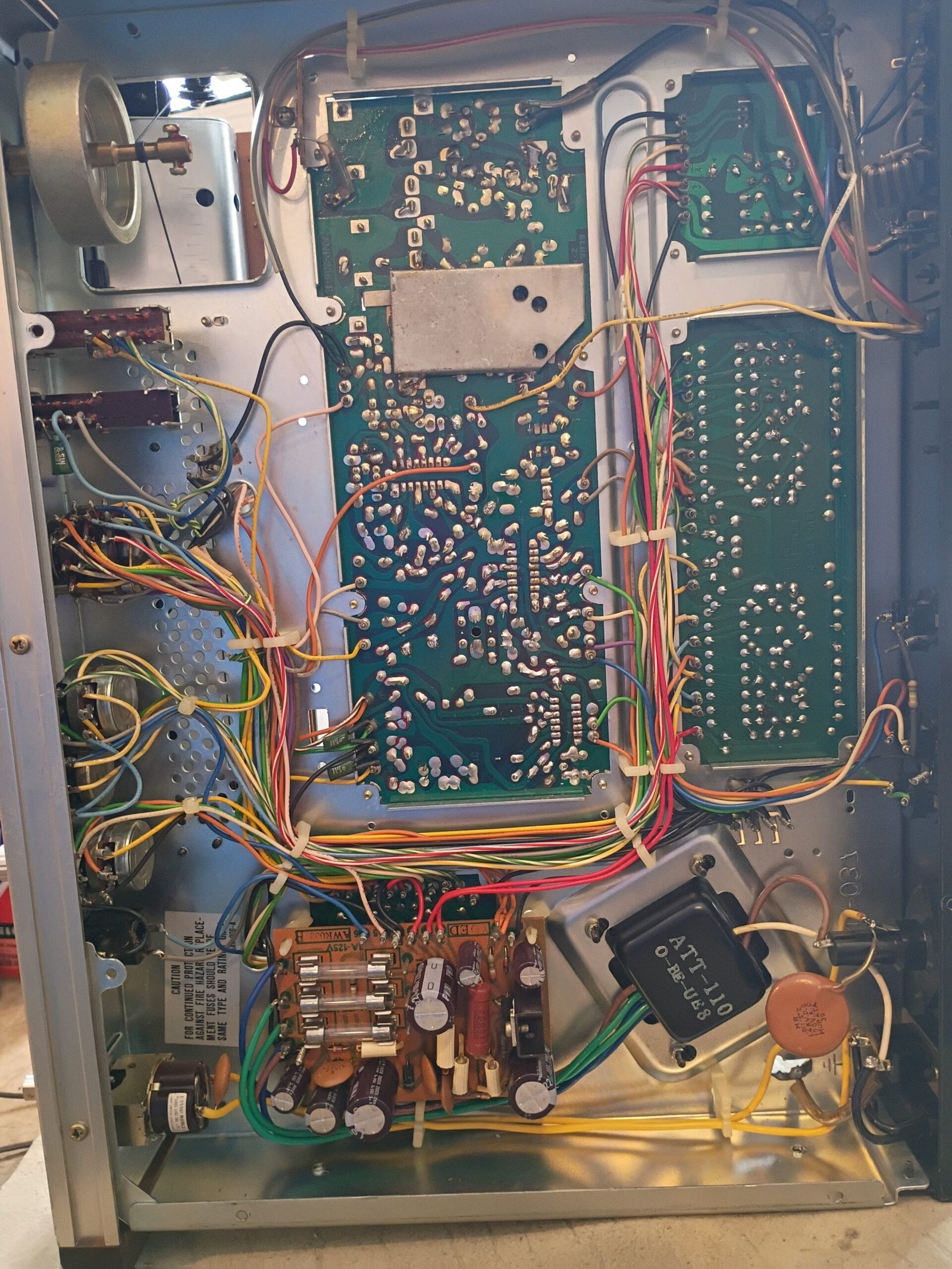
All 3 units were very clean inside and out. The sx8100 was missing the screw-in cap for the rear fuse holder. I installed a replacement I took from a parts unit. The qm800a needed a new power cord as the old one was shot. After normal cleaning of switches and pots, all 3 were highly functional from the start.
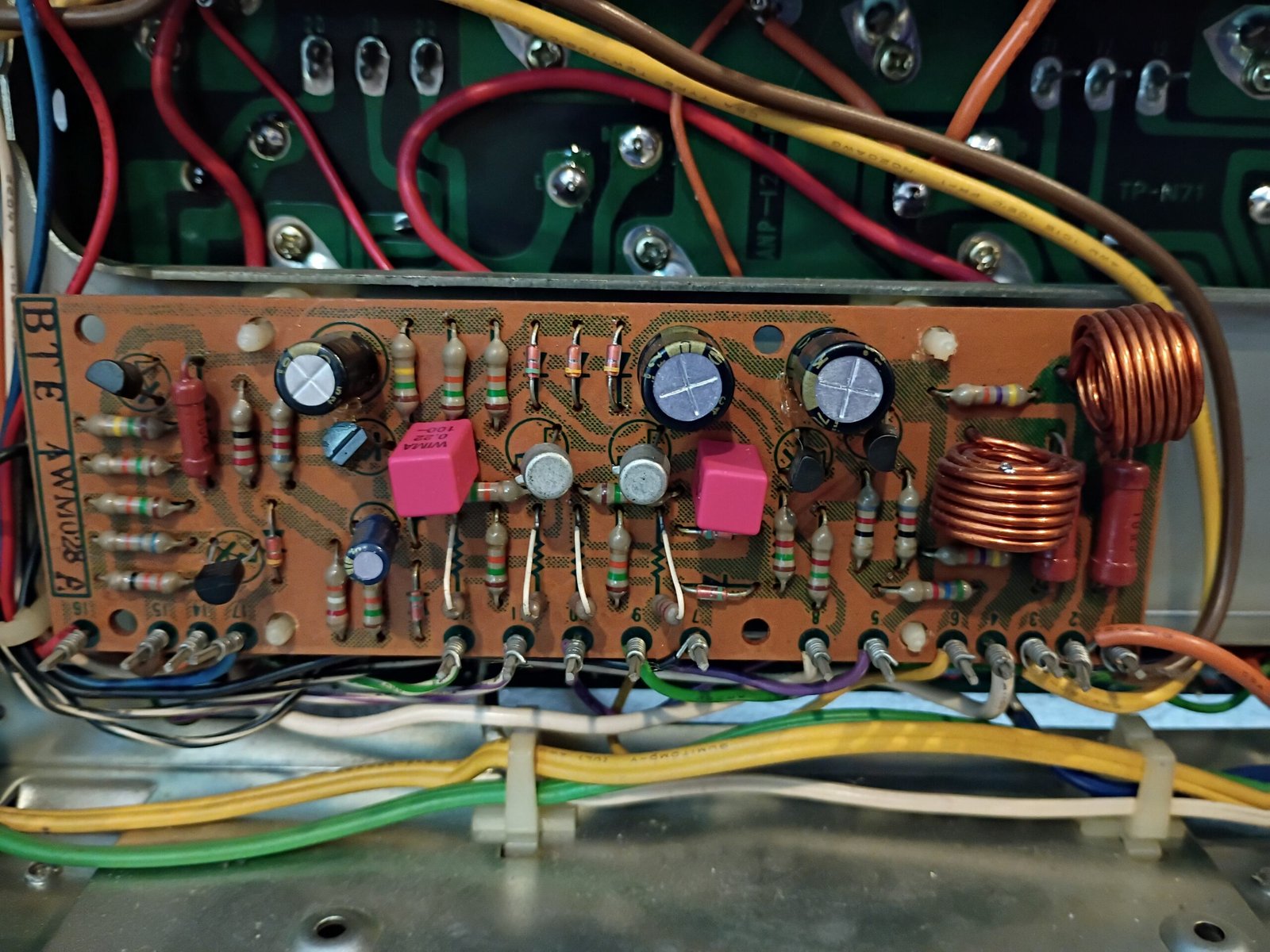
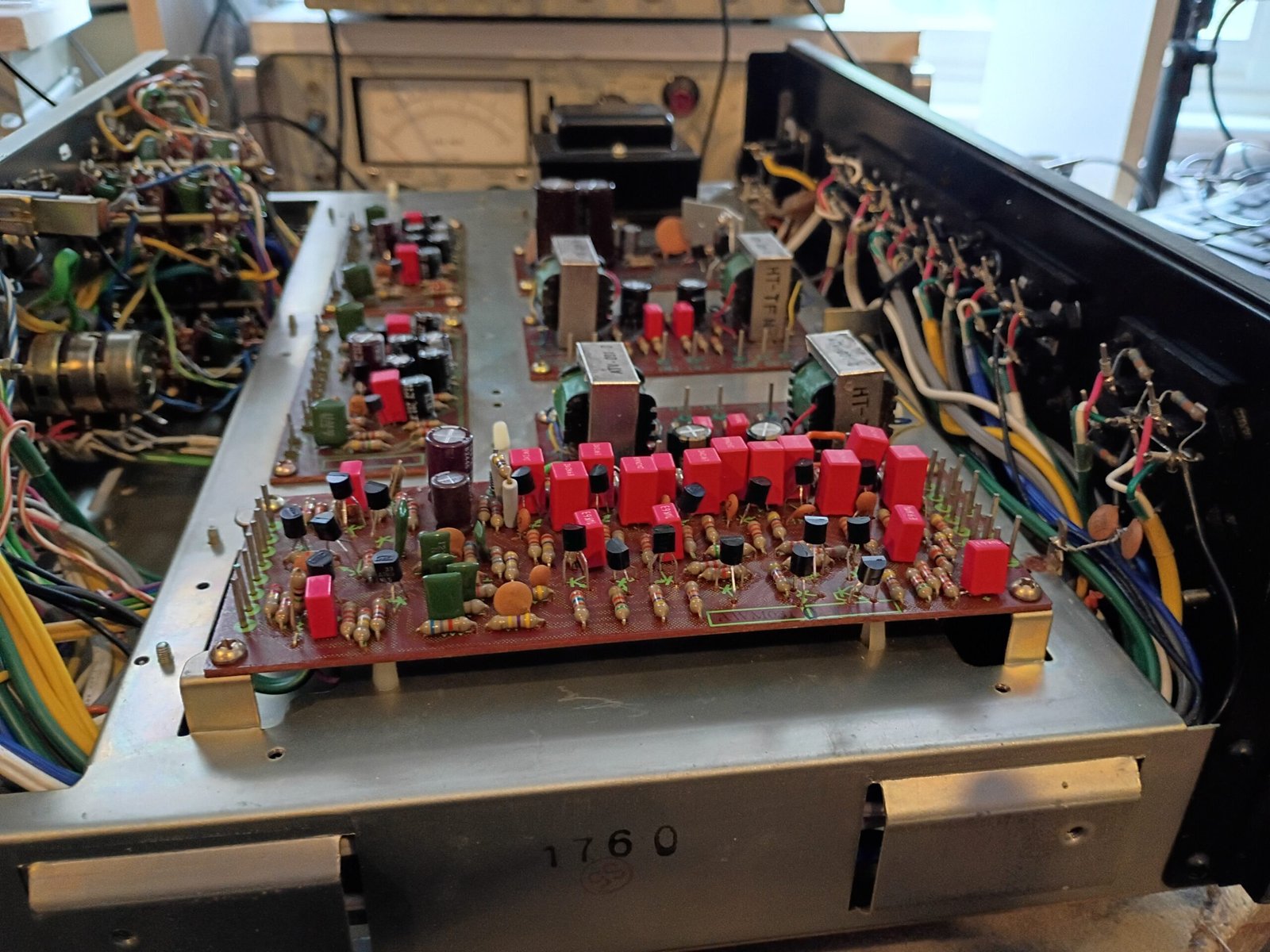
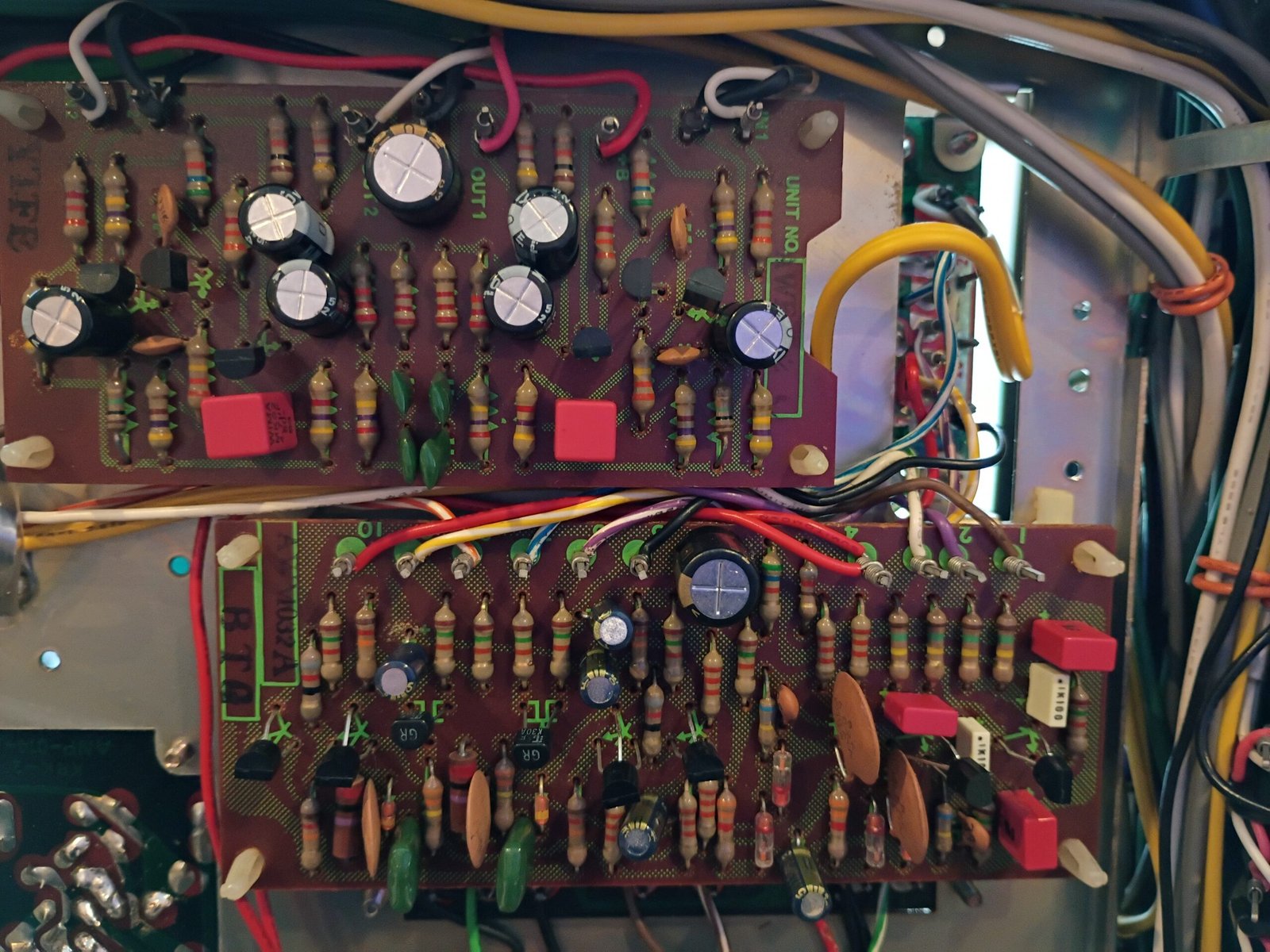
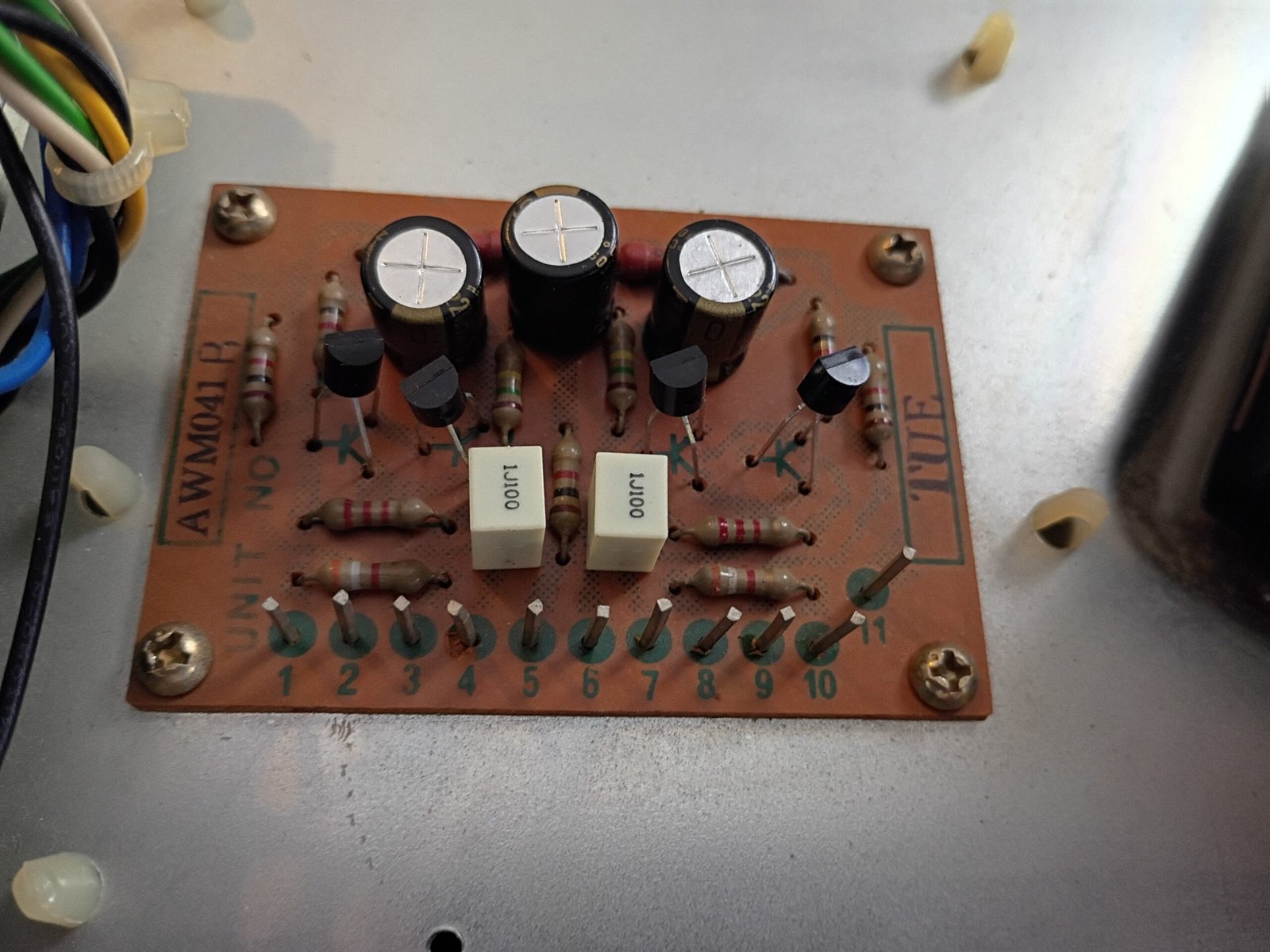
Recapping was uneventful on these. I modestly up-capped the 4 qm800a main amp supply caps from 4700uF to 6400uF. Pioneer notoriously used lots of “replace on sight” noisy signal transistors in the early 70s. Addressing this for all 3 units added up to 60 new transistors being installed.
I upgraded the qm800a speaker terminals by swapping in modern 5-ways for the unpopular Pioneer speaker plugs.
The tx8100 needed only minor tweaks to achieve the excellent performance typical of this unit.
While each of these units is so impressive in its own right, the assembly of all 3 is really something special.