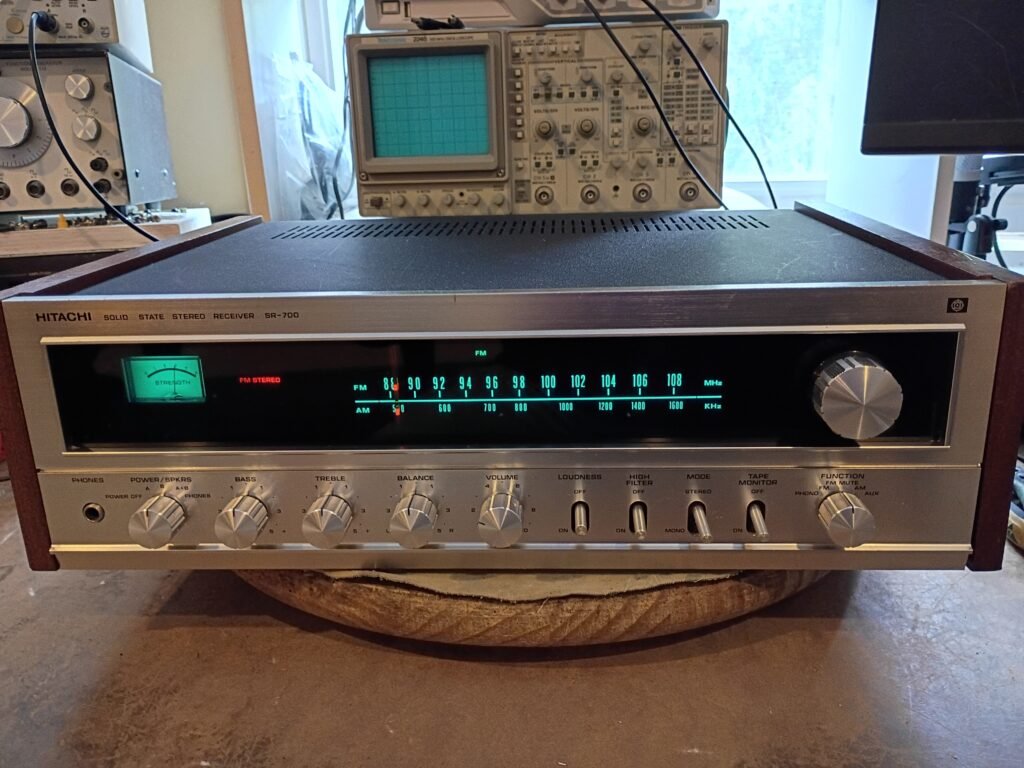
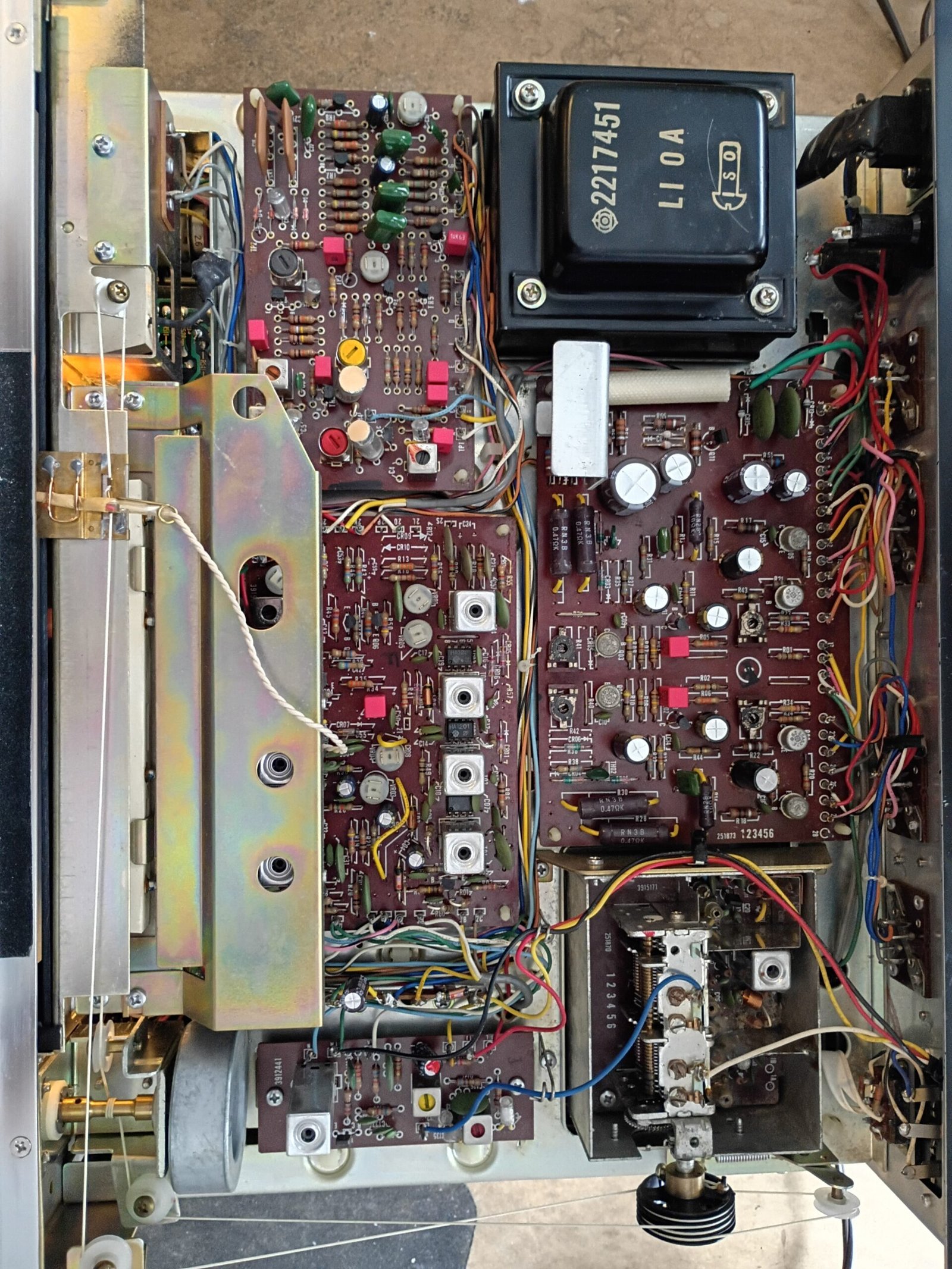
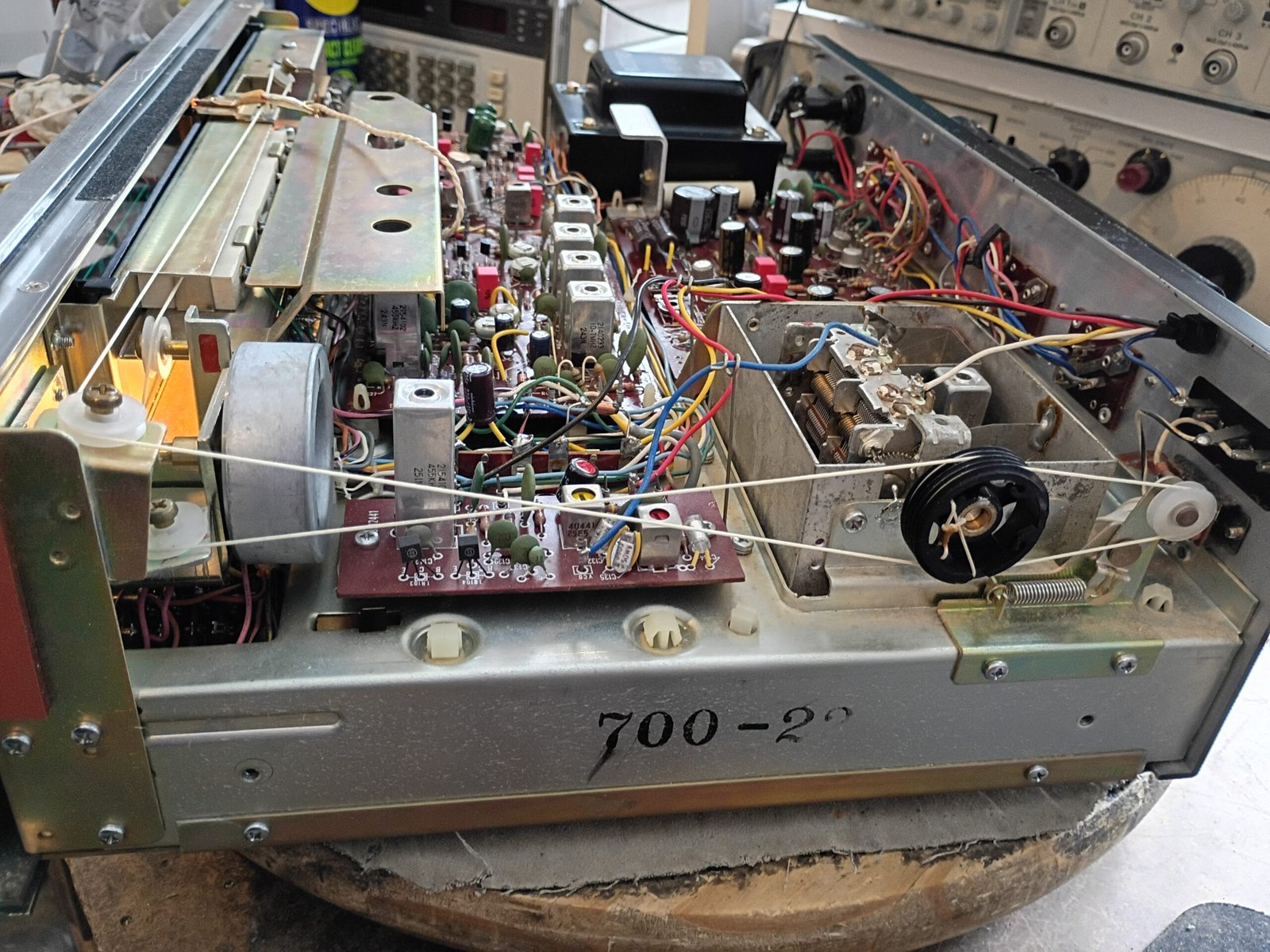
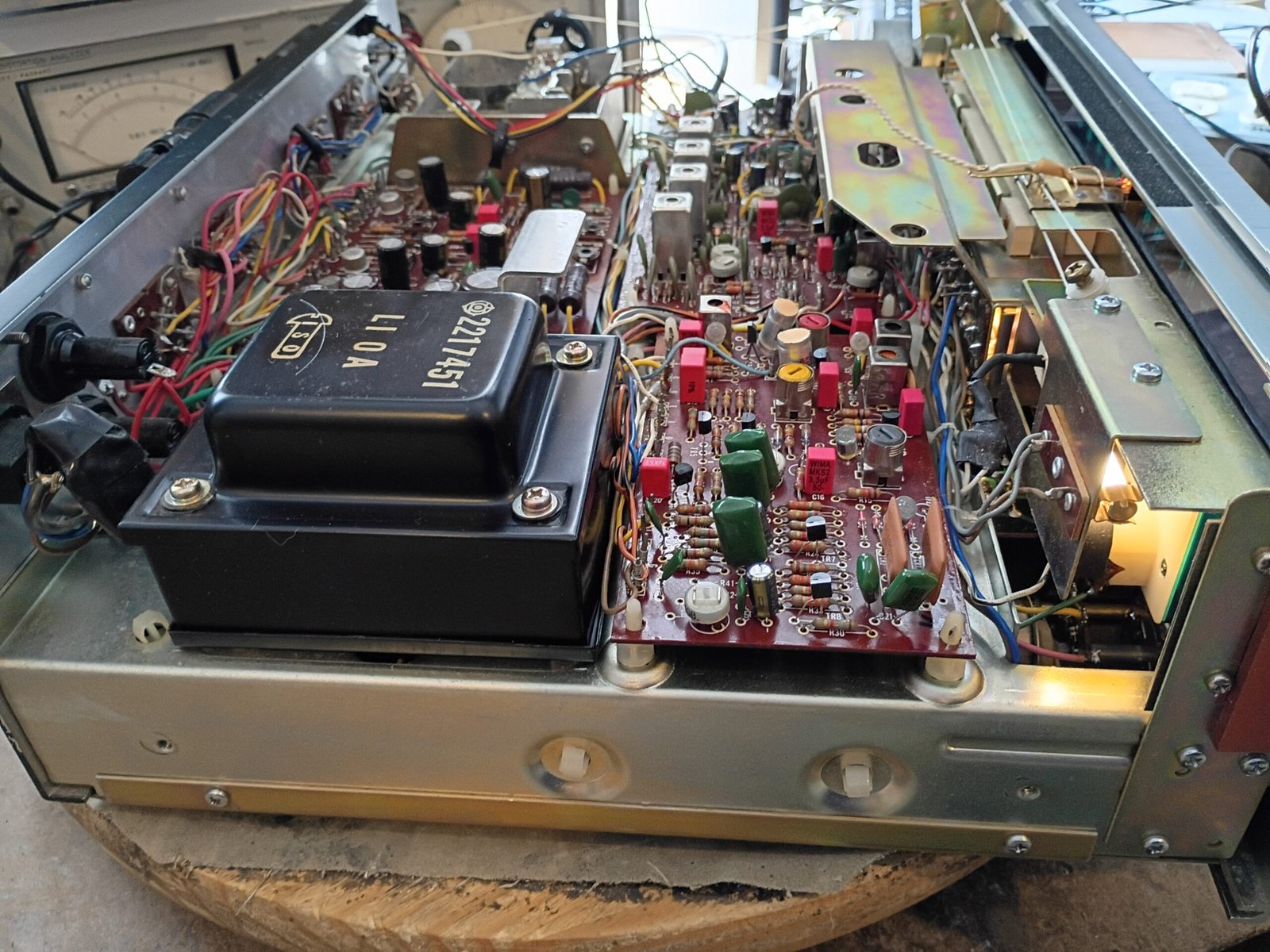
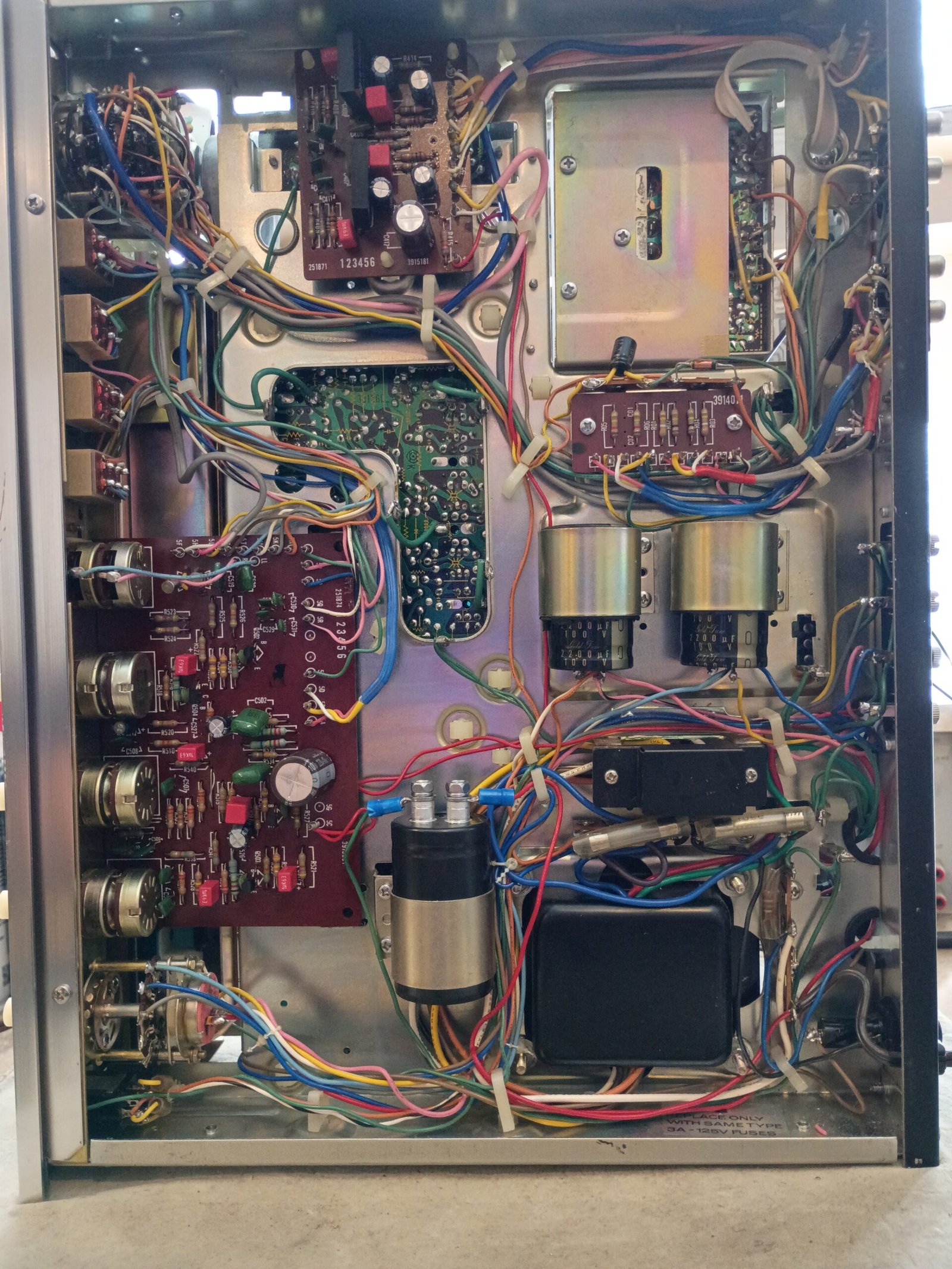
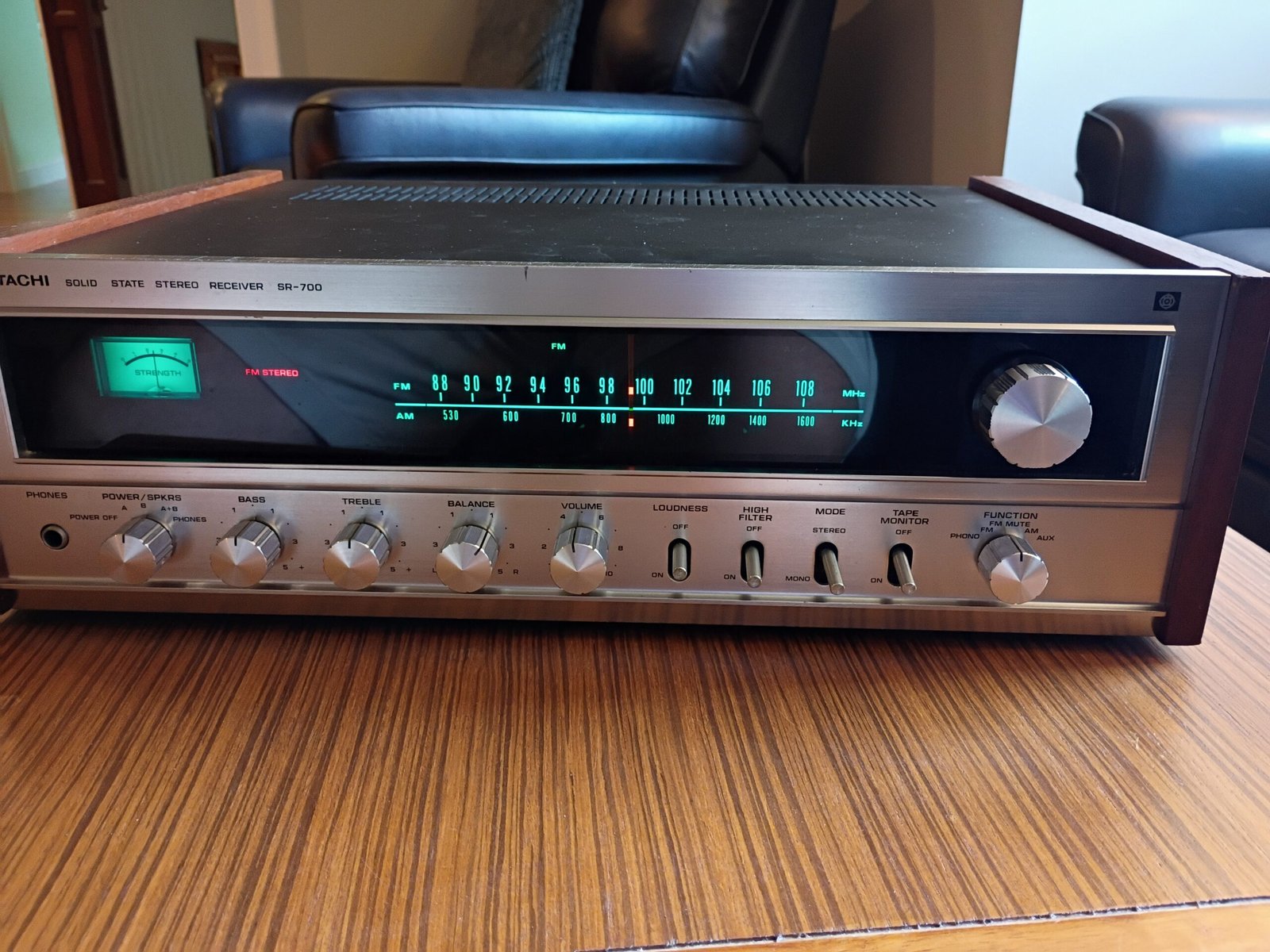
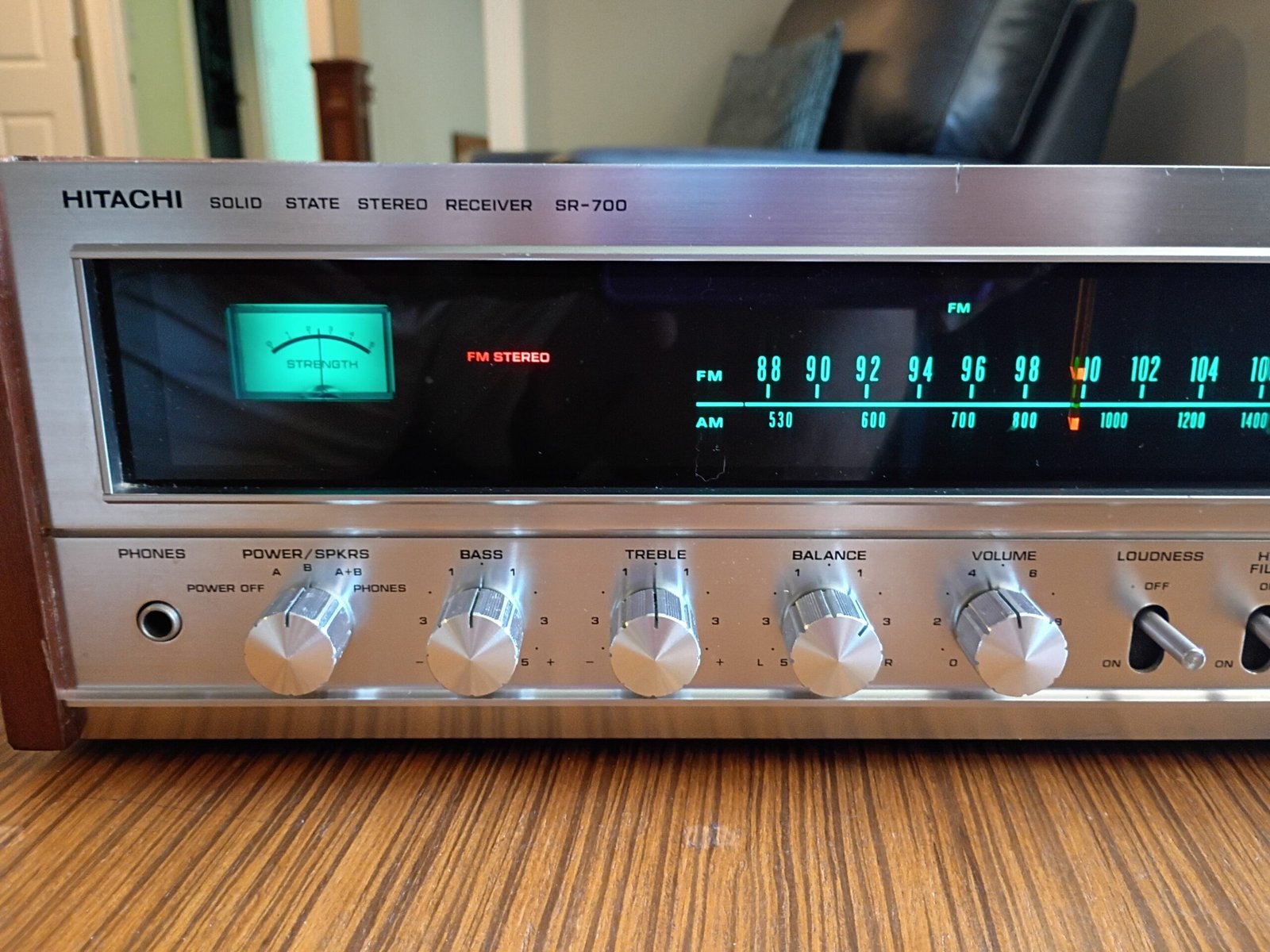
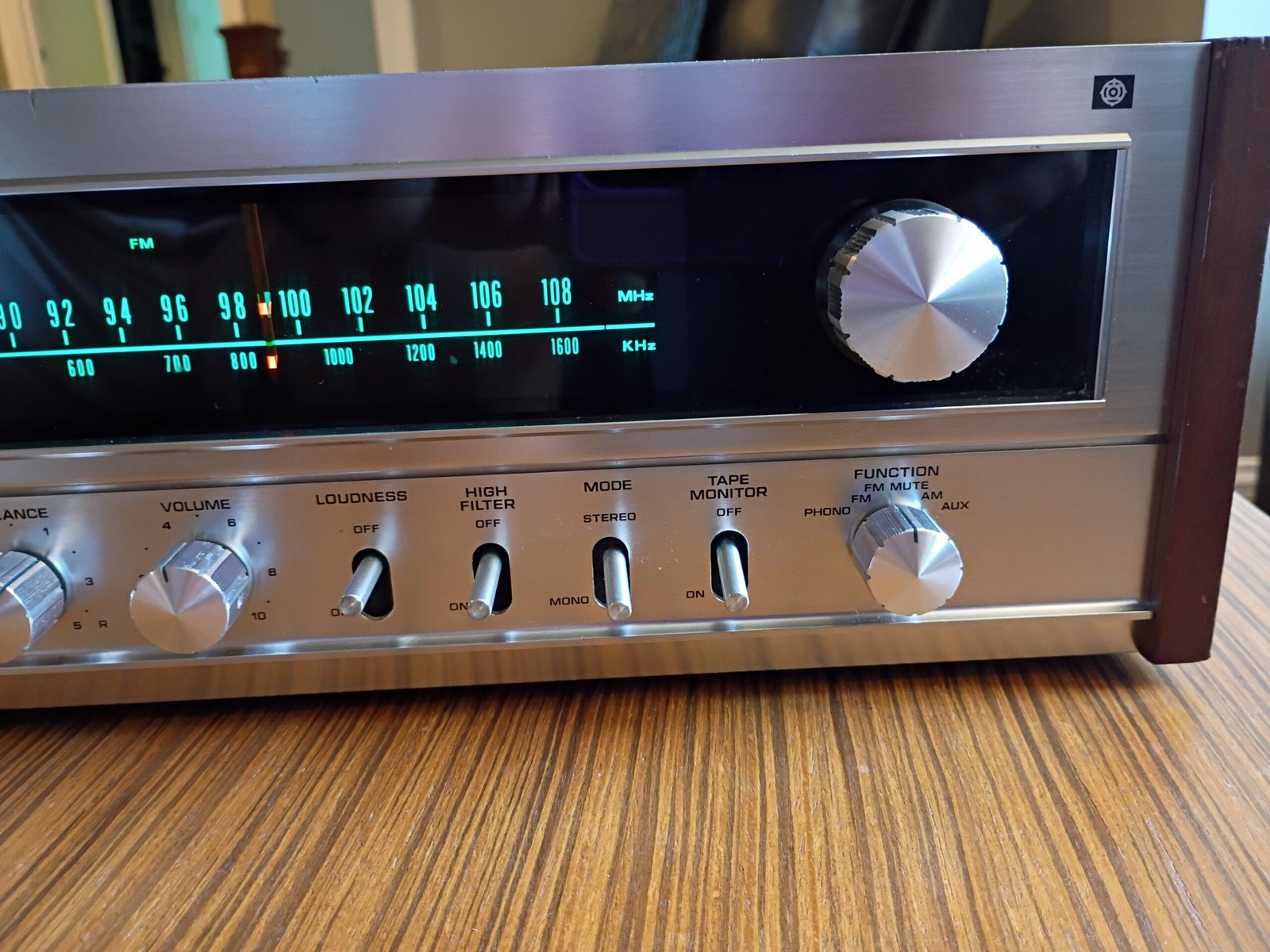
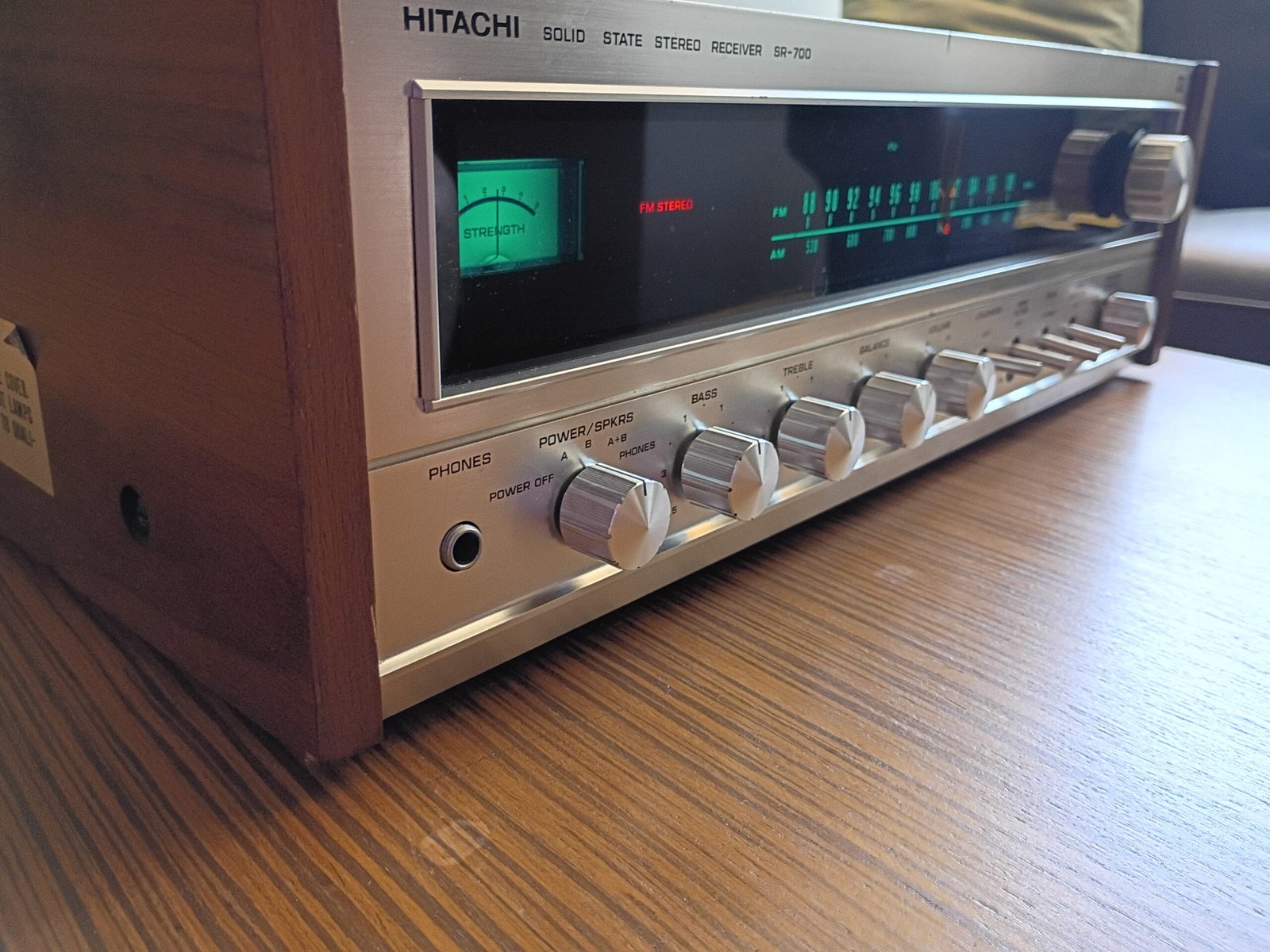
Beyond the list of standard restoration steps detailed on the main page, here are some added notes for this unit :
I acquired this receiver from Goodwill, so no background on any issues, etc. Exterior condition was good.
Background
I had read good things about early 70s Hitachi products (their own lines as well as products built/sold by The Fisher). I had previously admired how well designed and built The Fisher Futura 201 receiver was when I restored it in 2024 and wondered how the SR700 would compare. I was not disappointed.
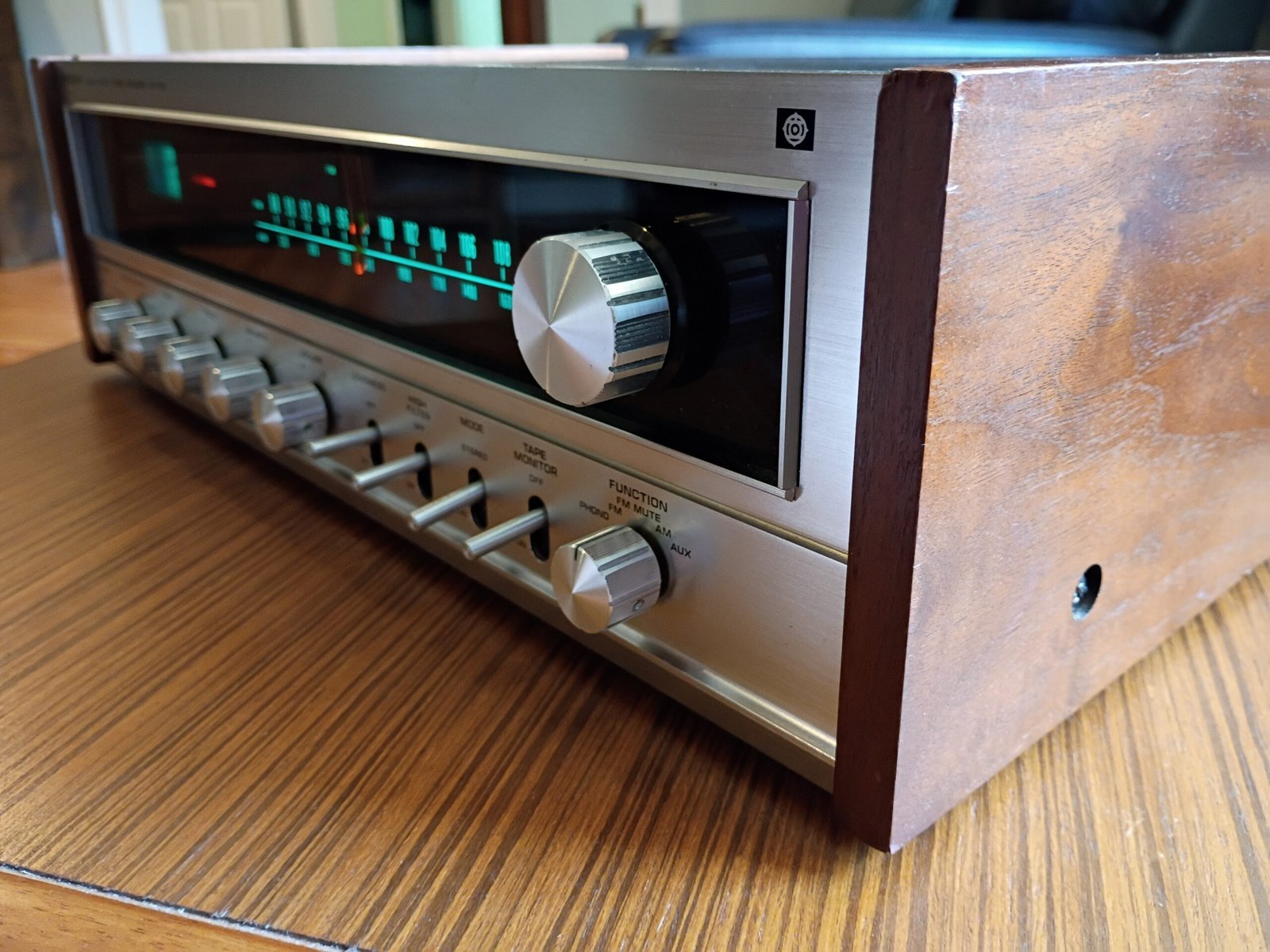
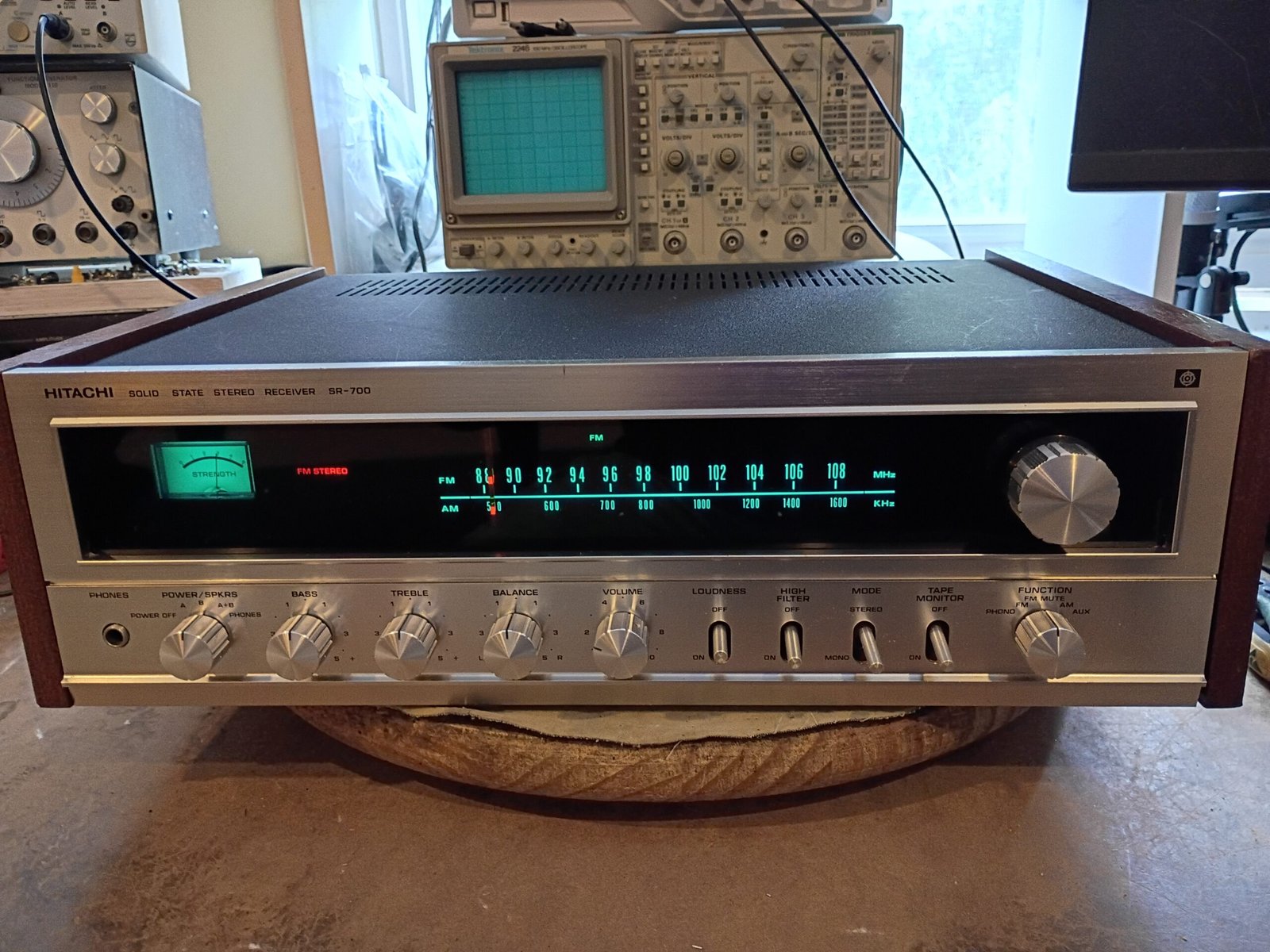
The SR700 was sold from 1972 to 1975. IMHO, this period was the zenith of vintage build quality for most stereo gear. It was Hitachi’s 2nd best receiver at that time (the SR800 being TOTL) with decent power and typical midrange features. It has 2 “line” level inputs, a MM phono stage and a cap-coupled amplifier section. The knobs are solid aluminum with unique side ribbing and the tuner pointer has a second beveled step creating 2 bright spots (never saw that before) – examples of nice touches the Hitachi designers saved for their own products, IMHO.
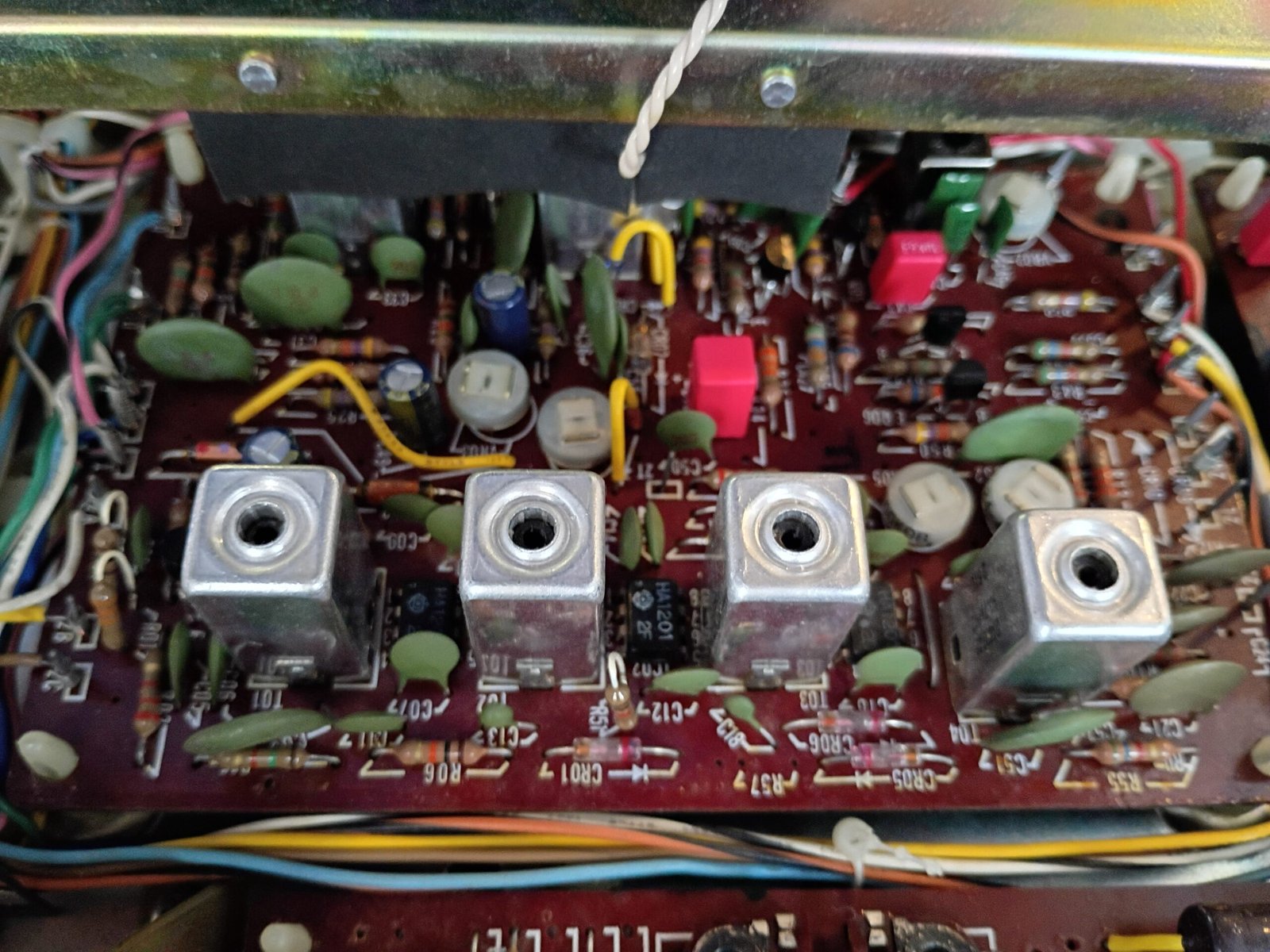
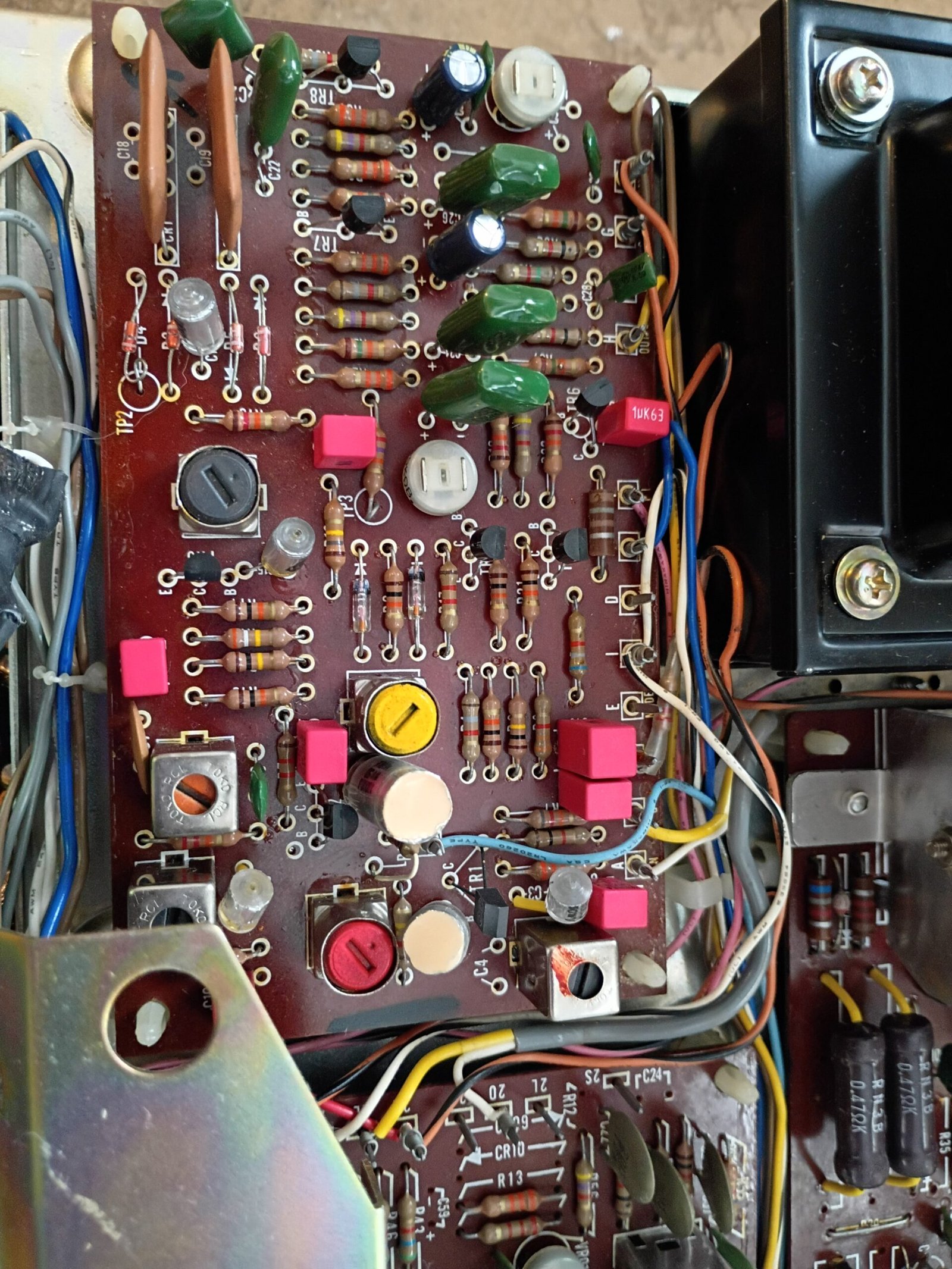
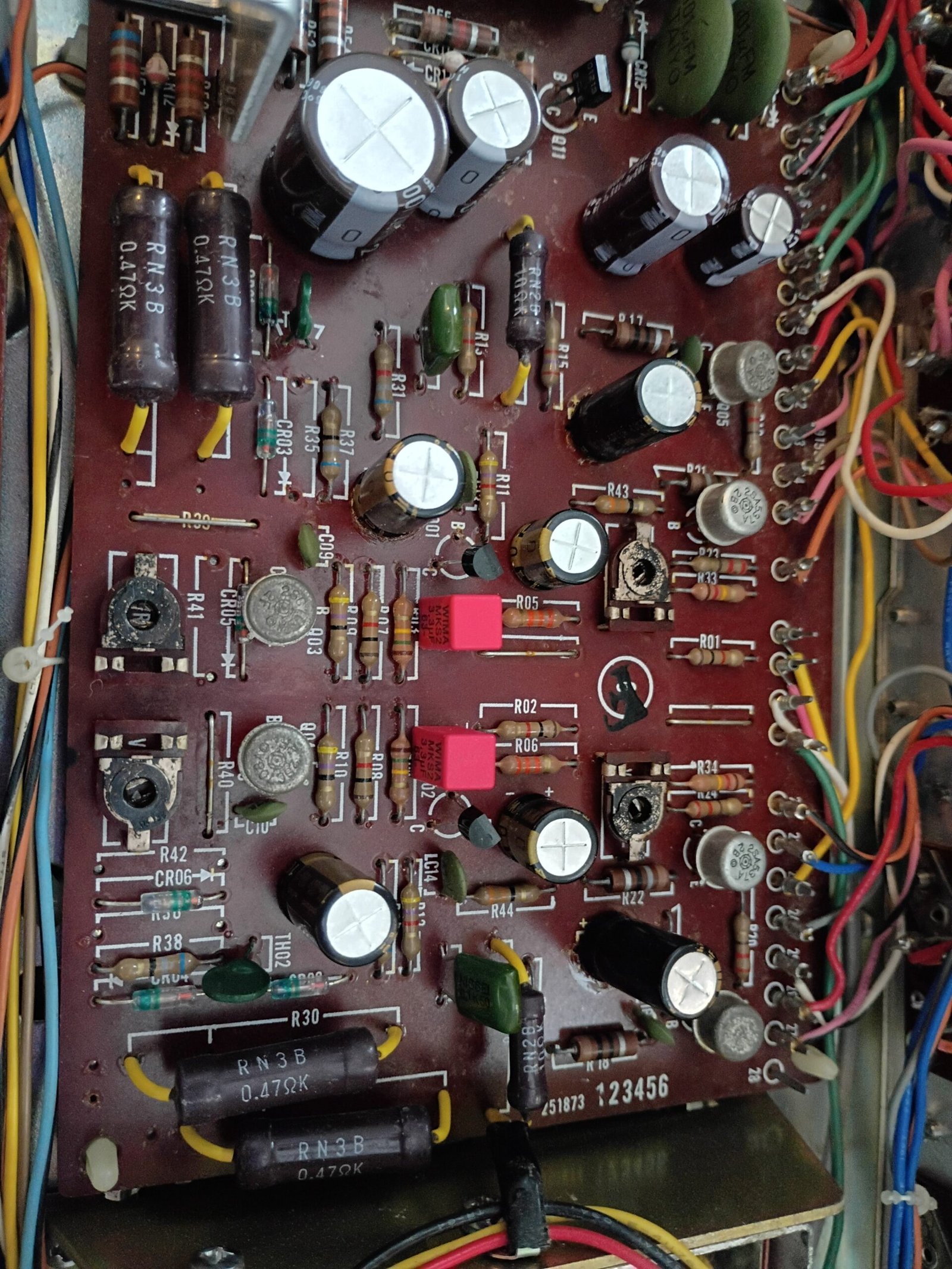
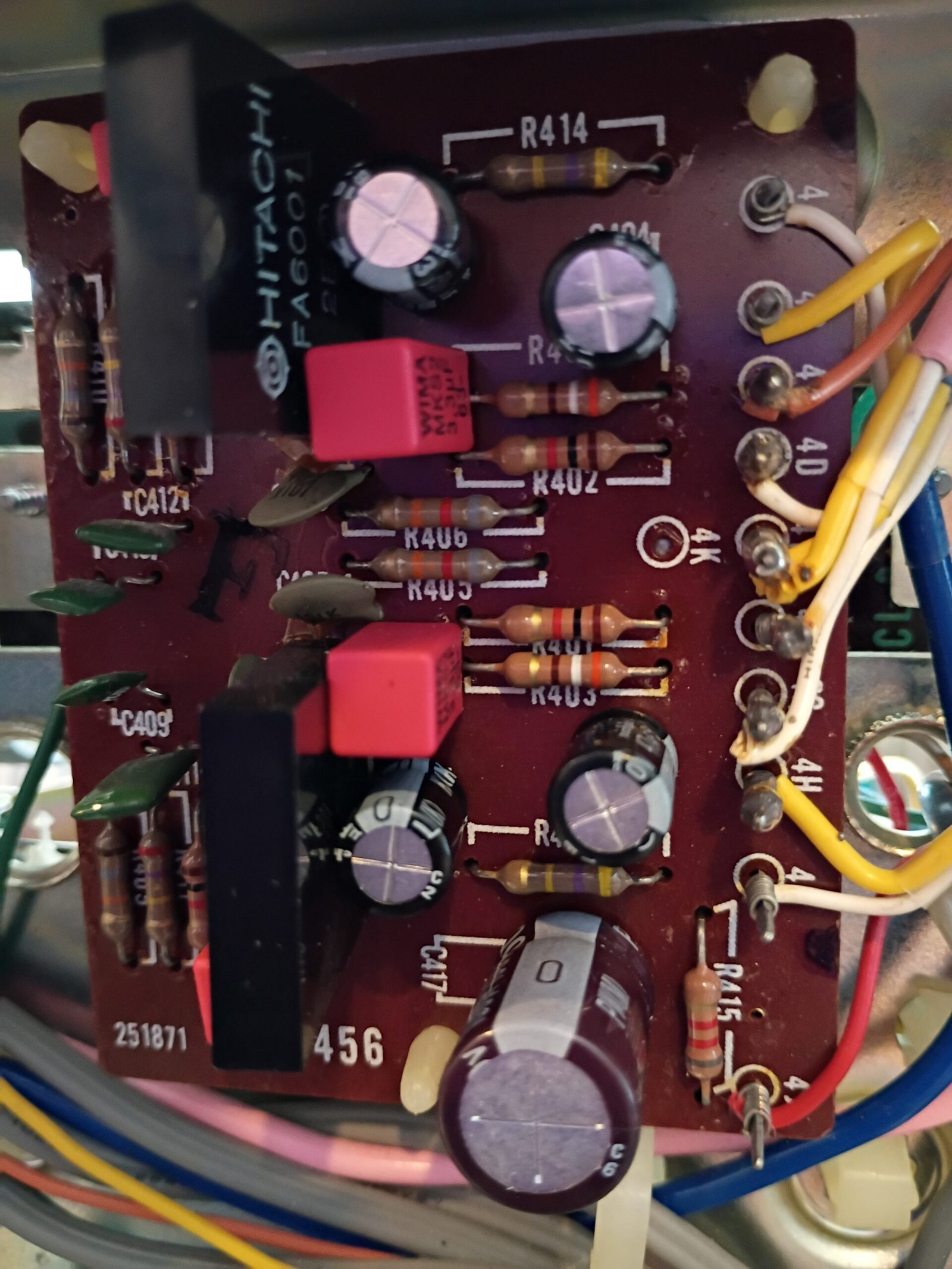
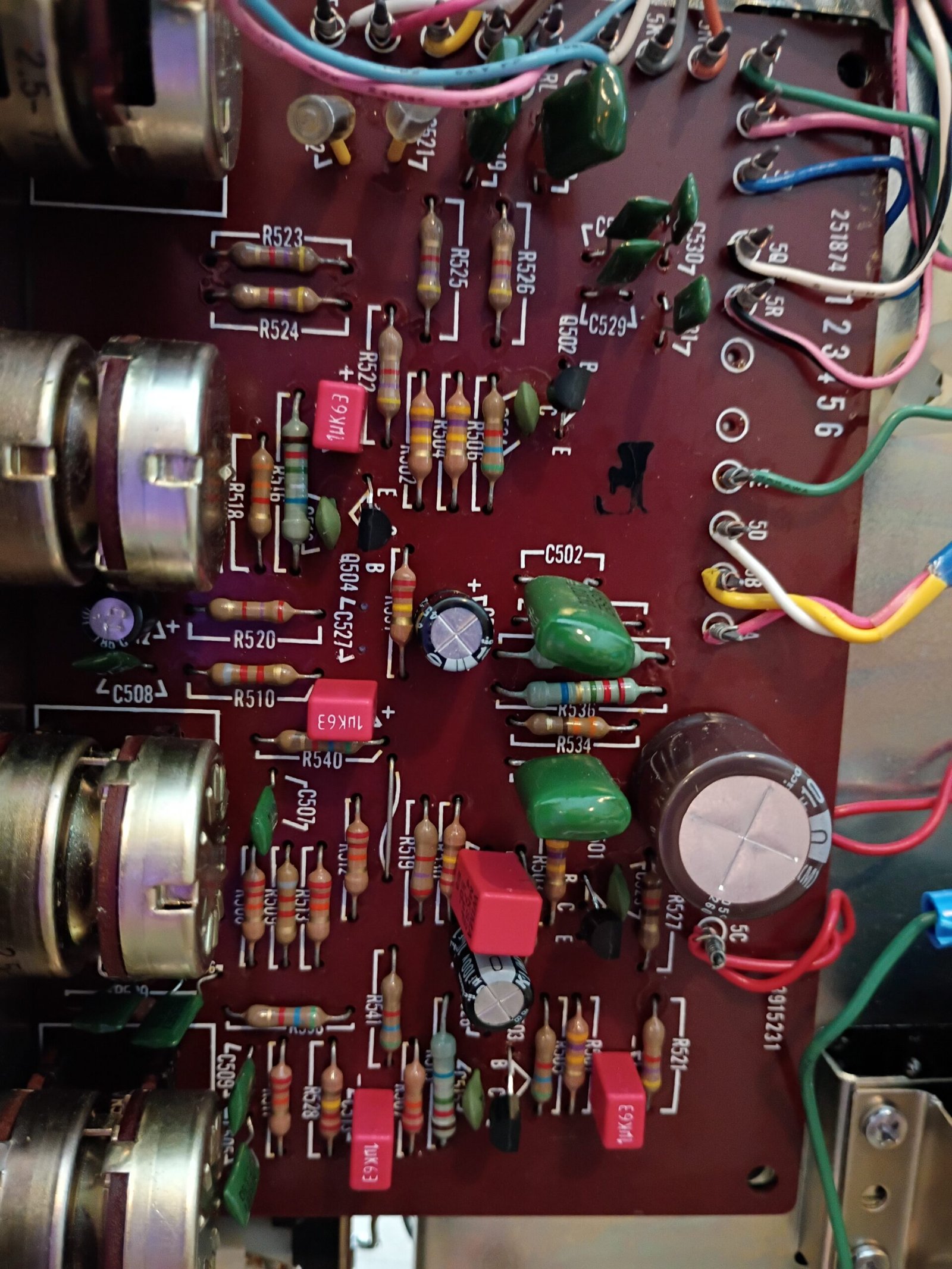
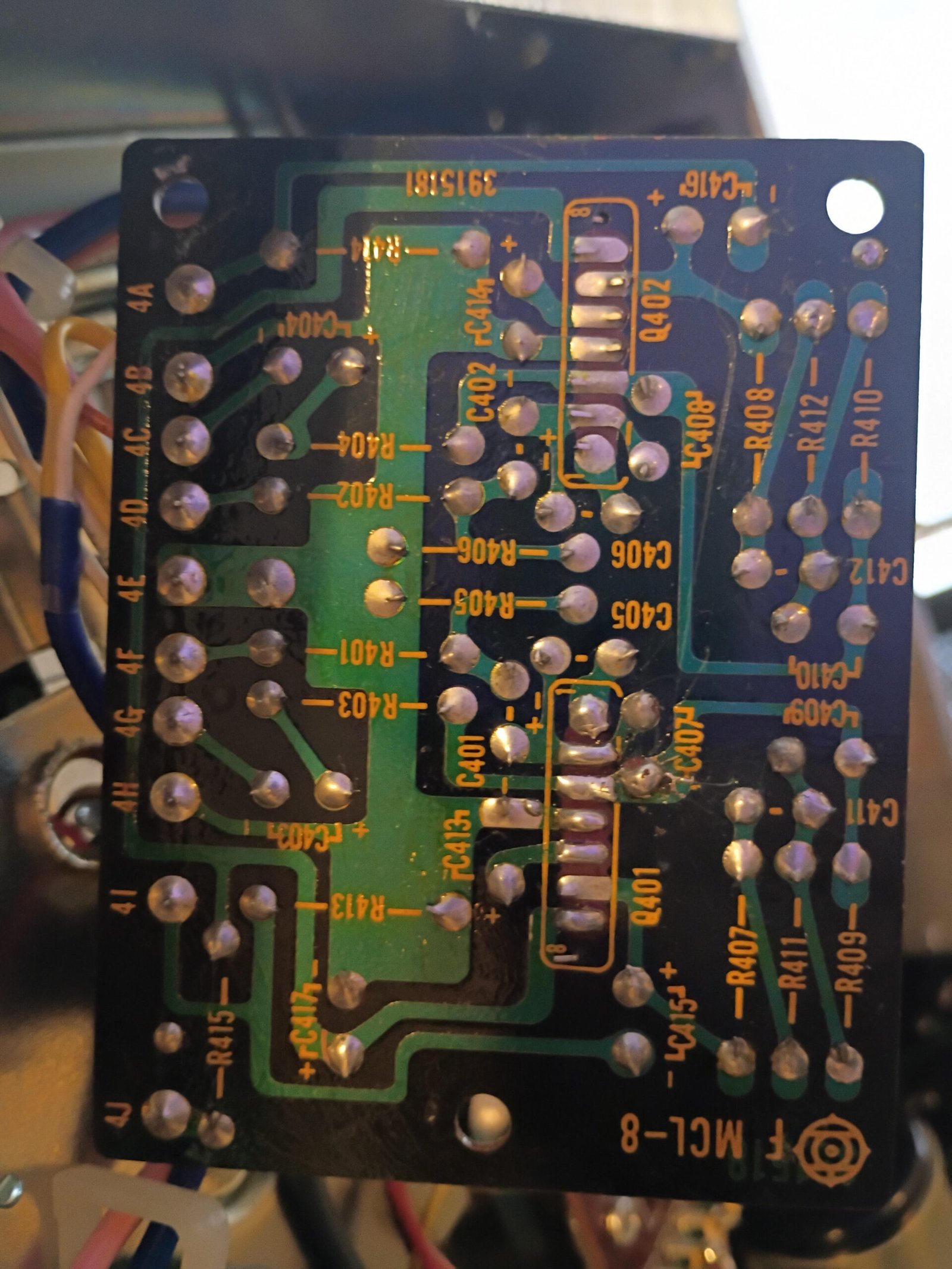
Once inside, I immediately saw the excellent layout and board design I had liked in The Fisher Futura 201. Especially nice was the same yellow silk screening of component locations and pinouts on the back (solder side) of the board which made recapping a breeze. The photos show what I mean as there are easily accessible boards totally filling the space on top of the chassis with more modules underneath. I can really see the Hitachi engineers showing off a bit here.
Notes on this unit:
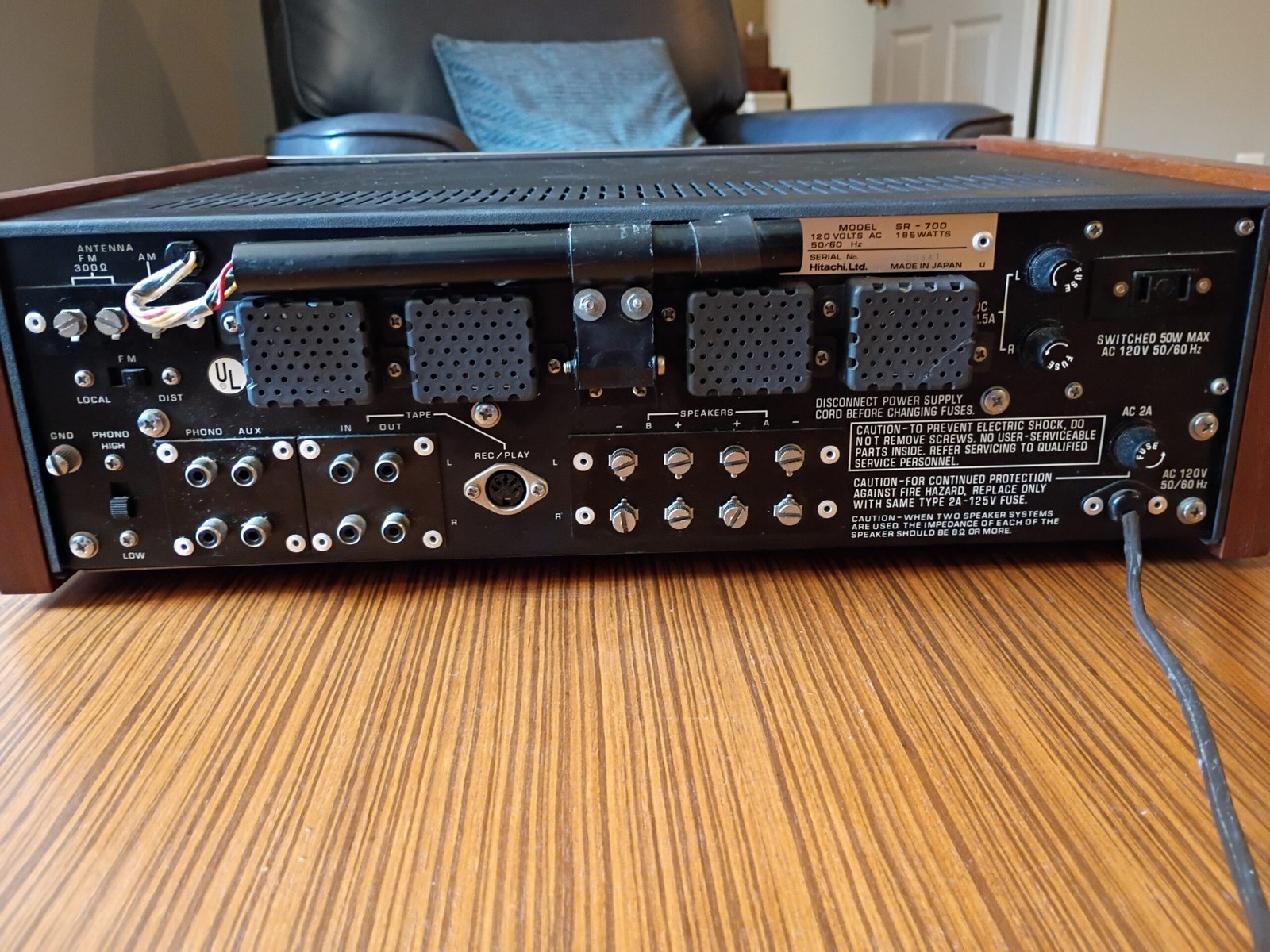
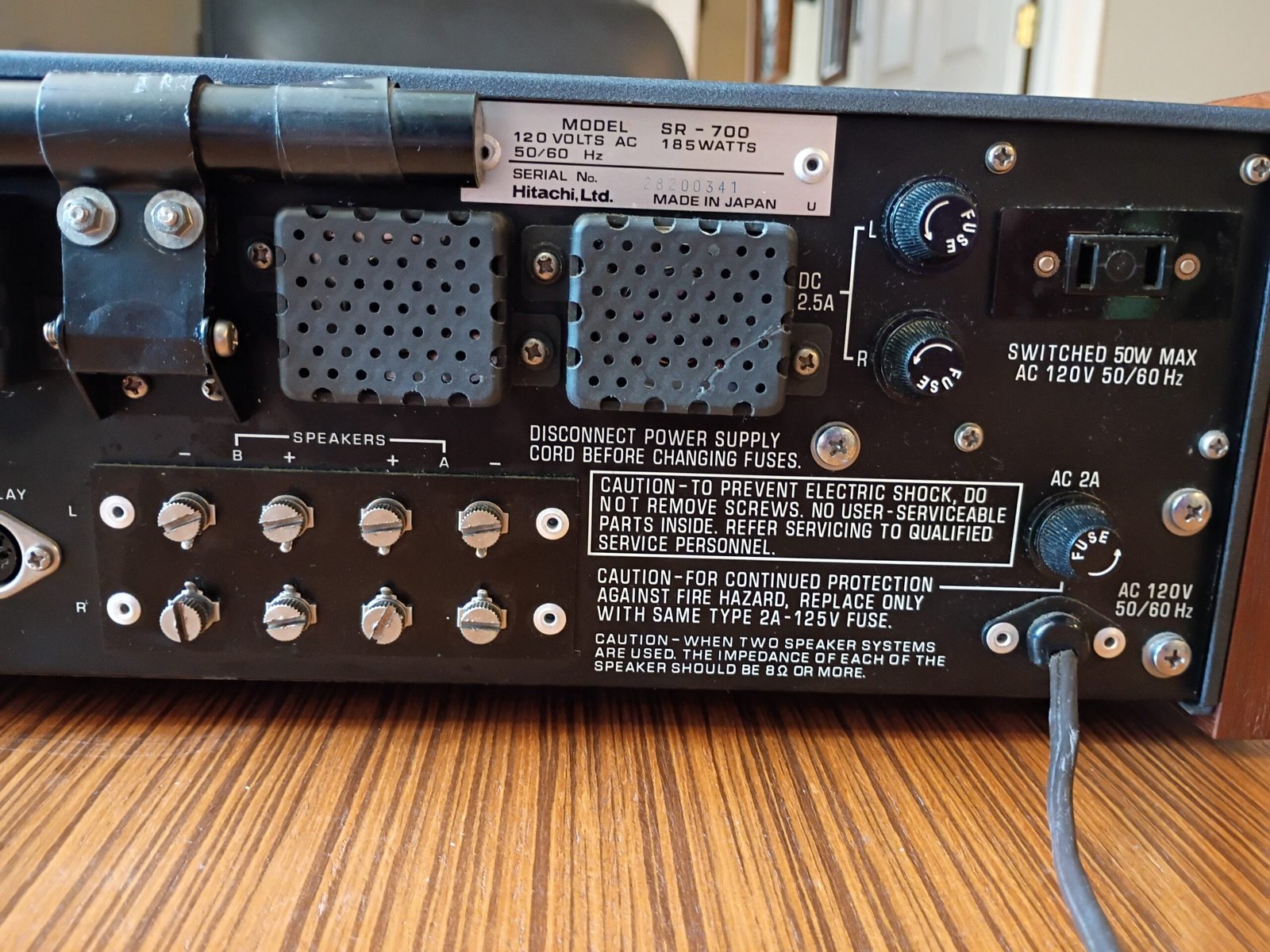
The initial visual inspection and powered testing went nicely once I replaced a blown fuse on the left channel supply path. Replacing the fuse enabled full functionality. The blown fuse could have been due to earlier pilot error (accidental speaker wire shorting, etc)
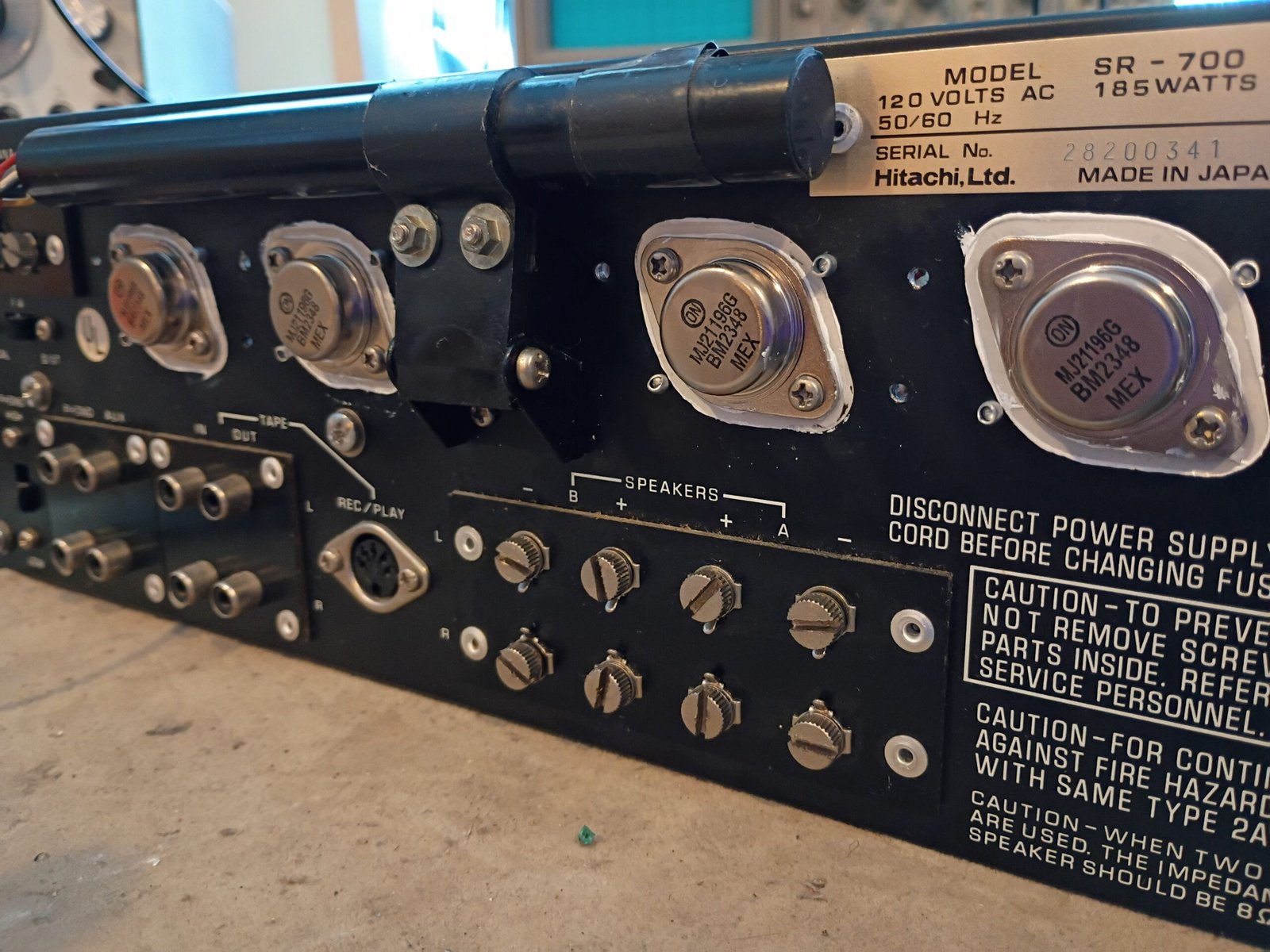
Even though it was sounding quite good, I always remove and test the 4 output transistors as these directly drive the speakers and are exposed to the most abuse over time. I found one to be a bit leaky. As this suggests future problems, all 4 outputs were replaced for reliable operation and matched performance.
The recap process then went quite smoothly with the solder-side board marking speeding things up (Hitachi gets the highest marks for serviceability in my book).
The tuner was aligned and the FM stereo presentation was quite good.
Functional testing complete/passed. Sounds very nice, indeed.
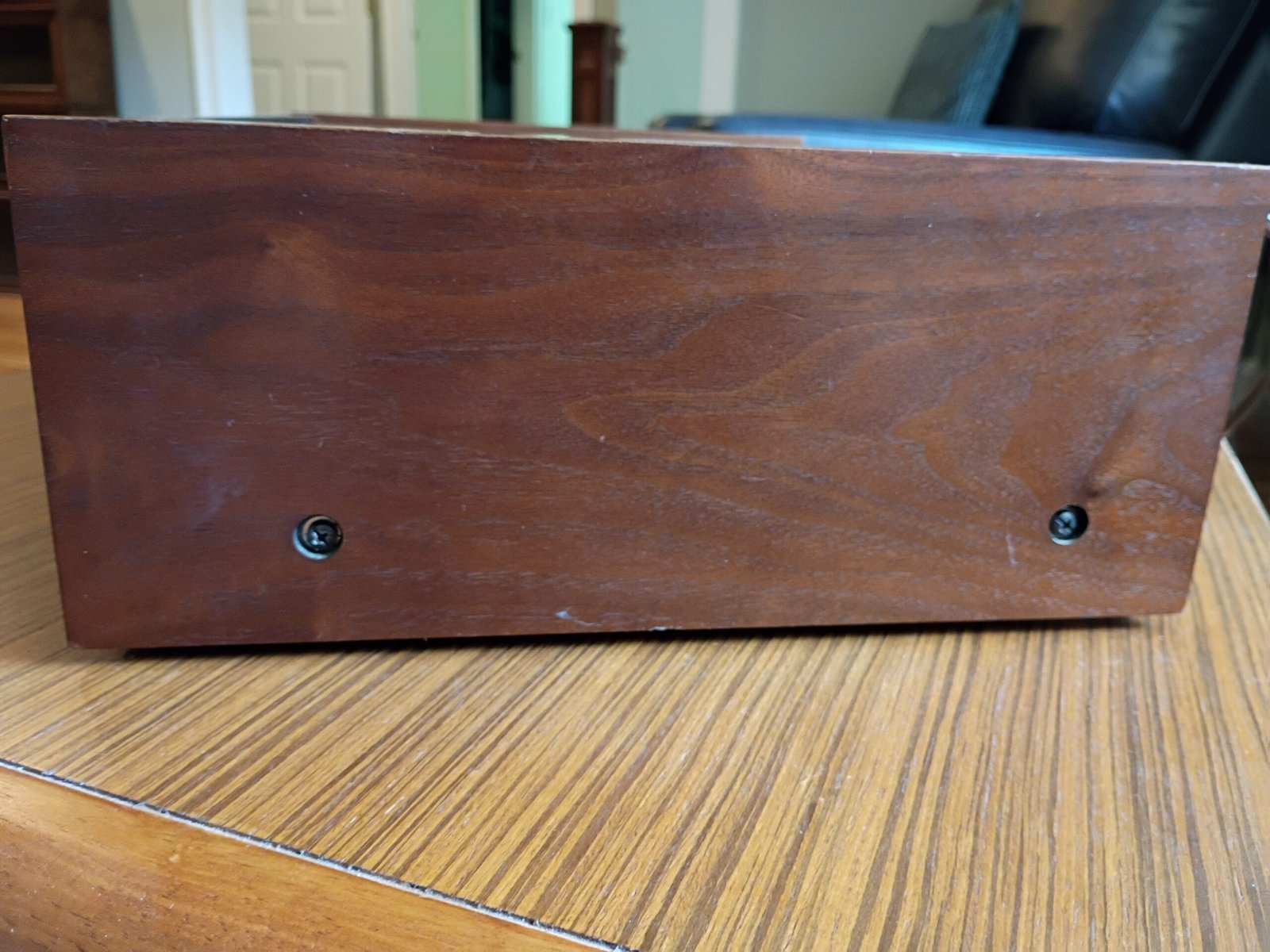
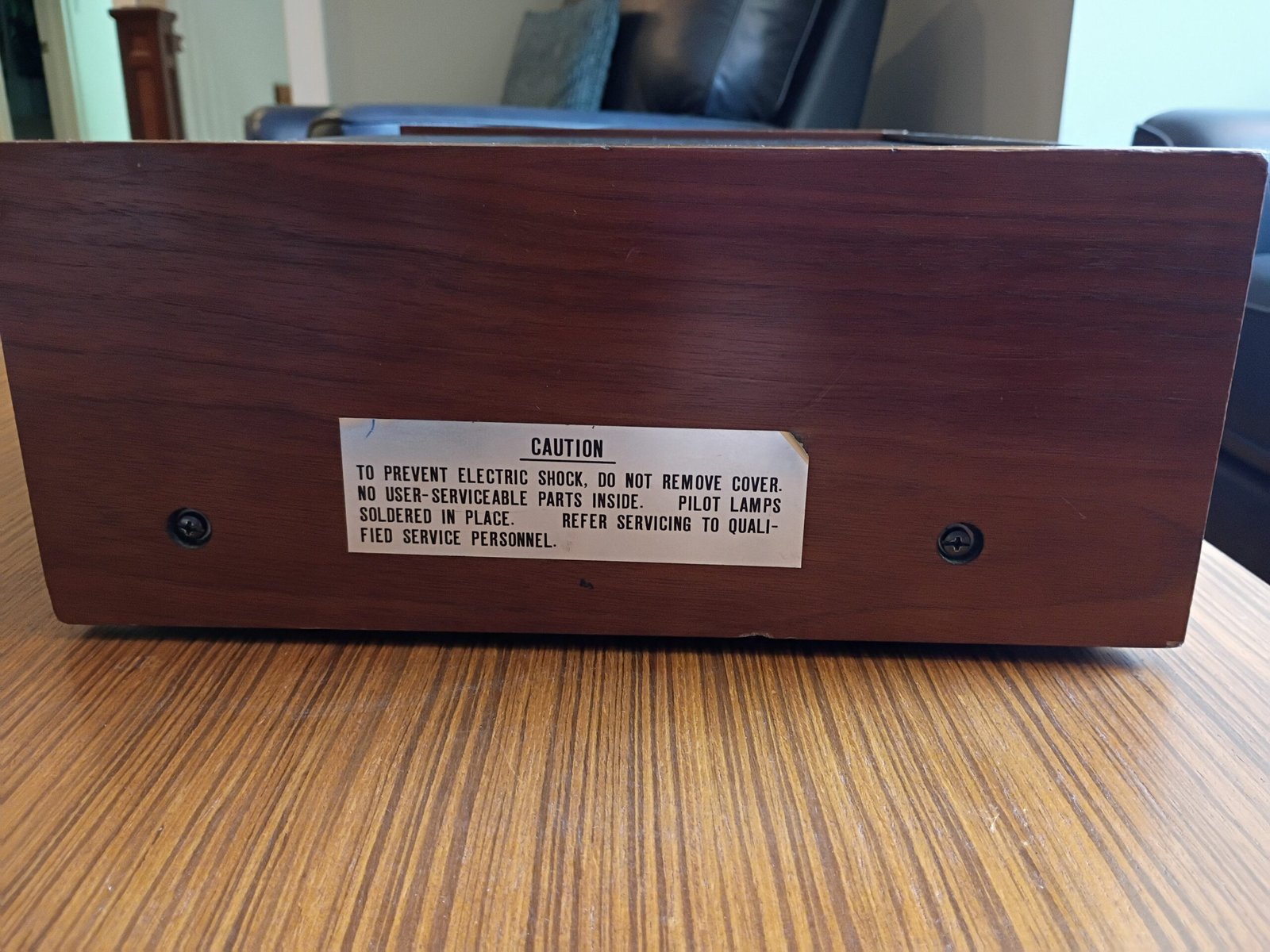
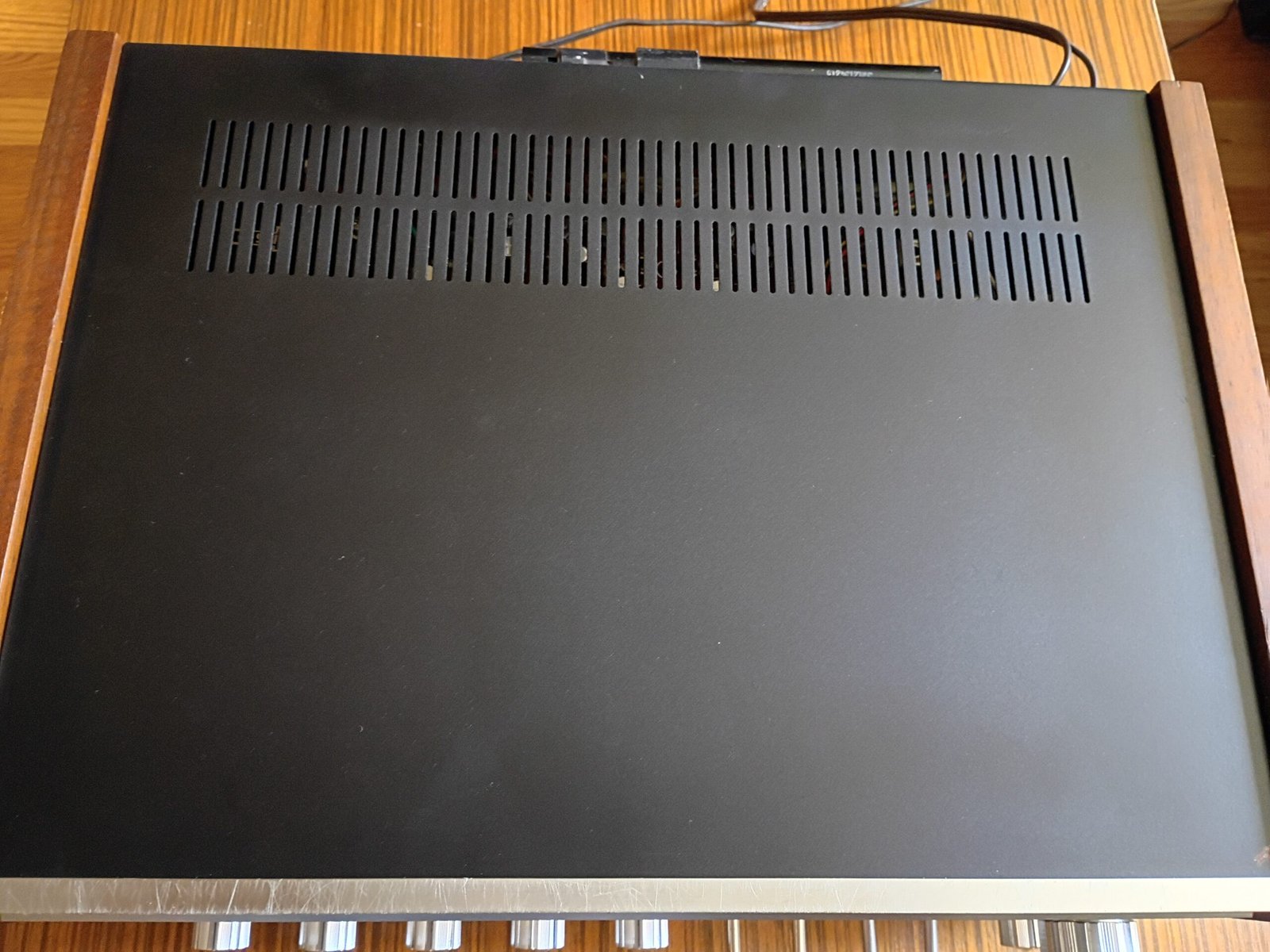
Overall cosmetics are good to very good, but the faceplate has some dings (example can be seen above the “93” point of the dial). The top edge of the faceplate has many scratches from folks sliding things across it over the years. The corners on the wood sides have some small dents. The finish on the metal top was blotchy, so I sanded it down and resprayed it.