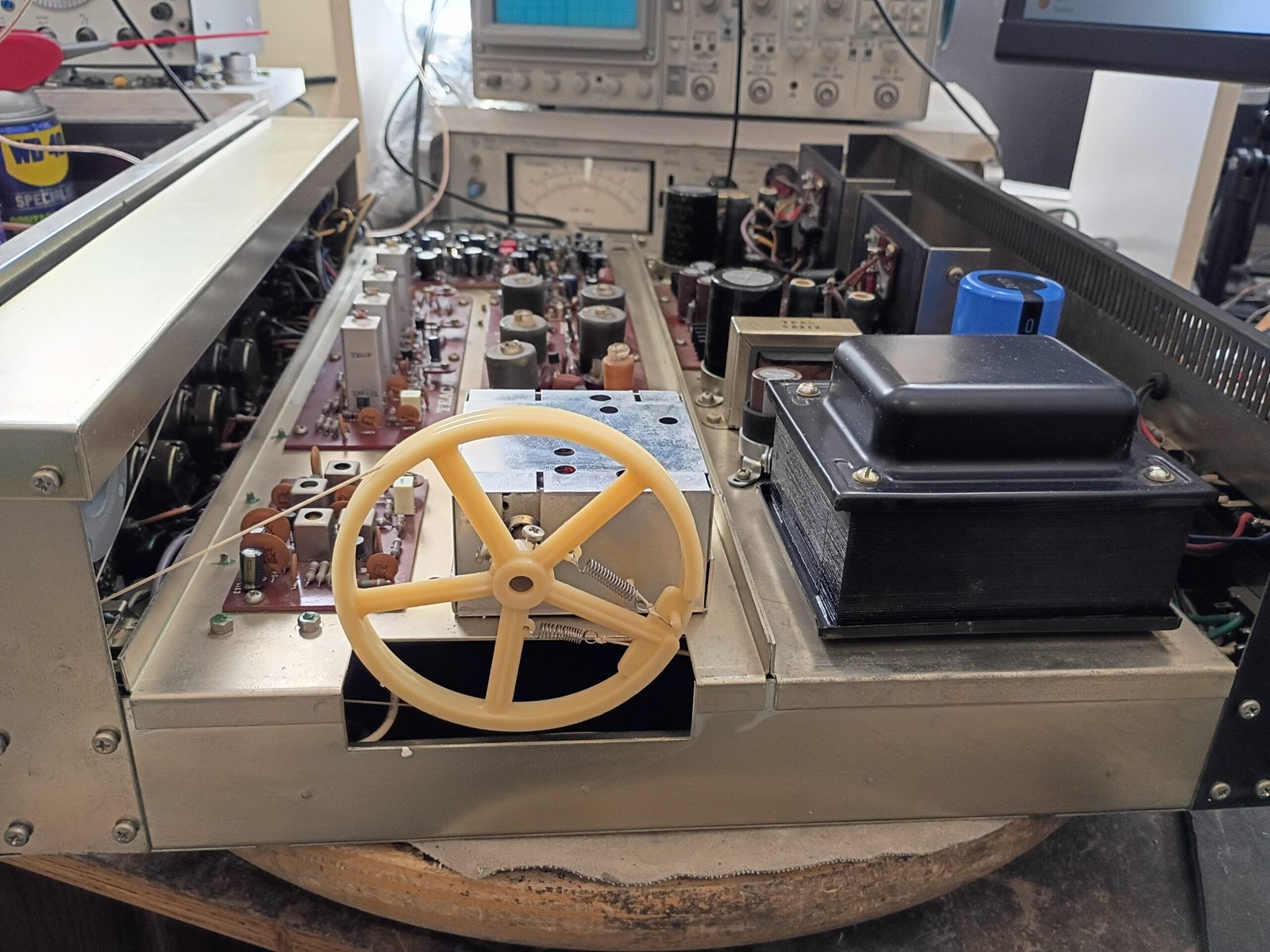
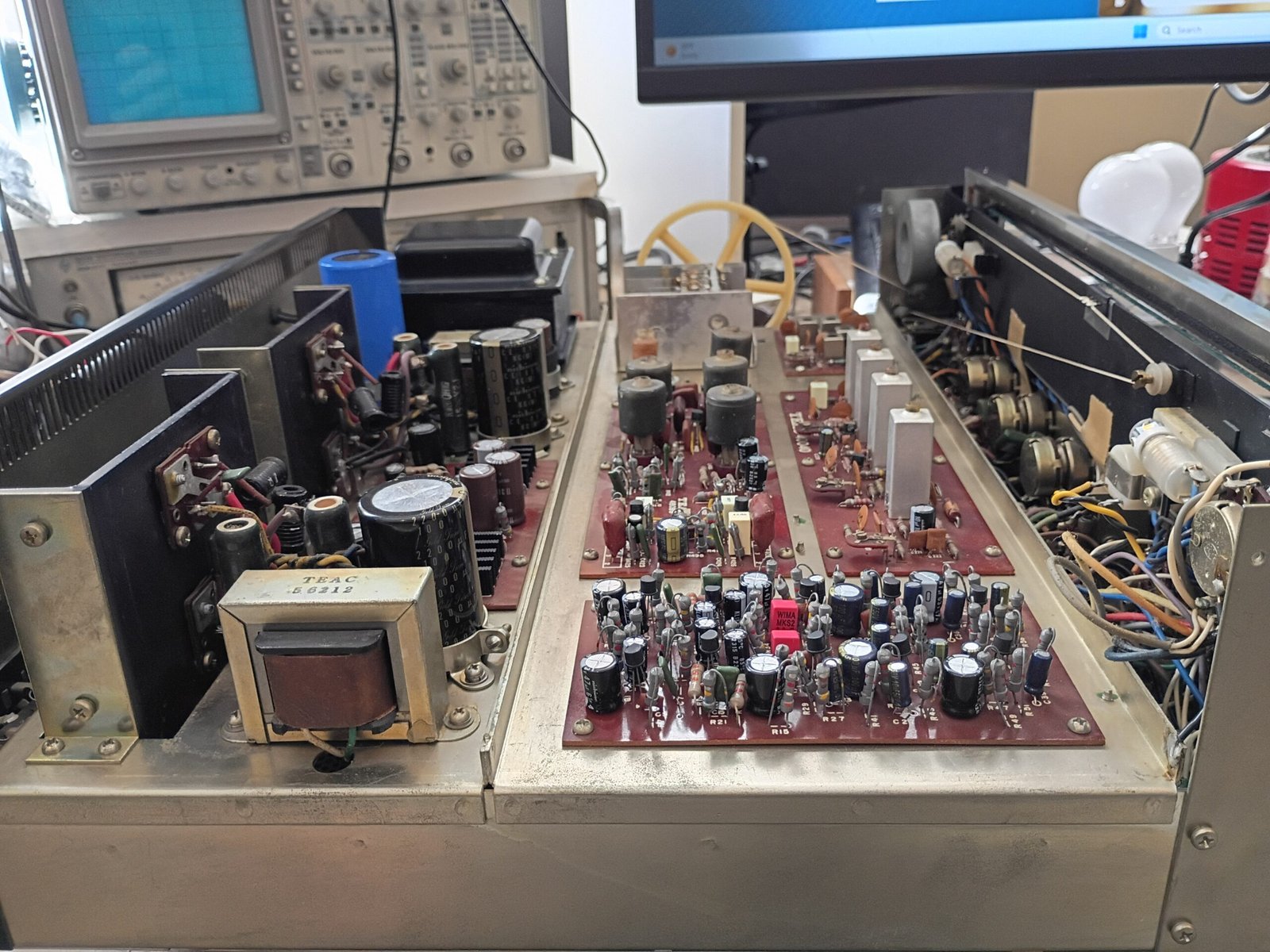
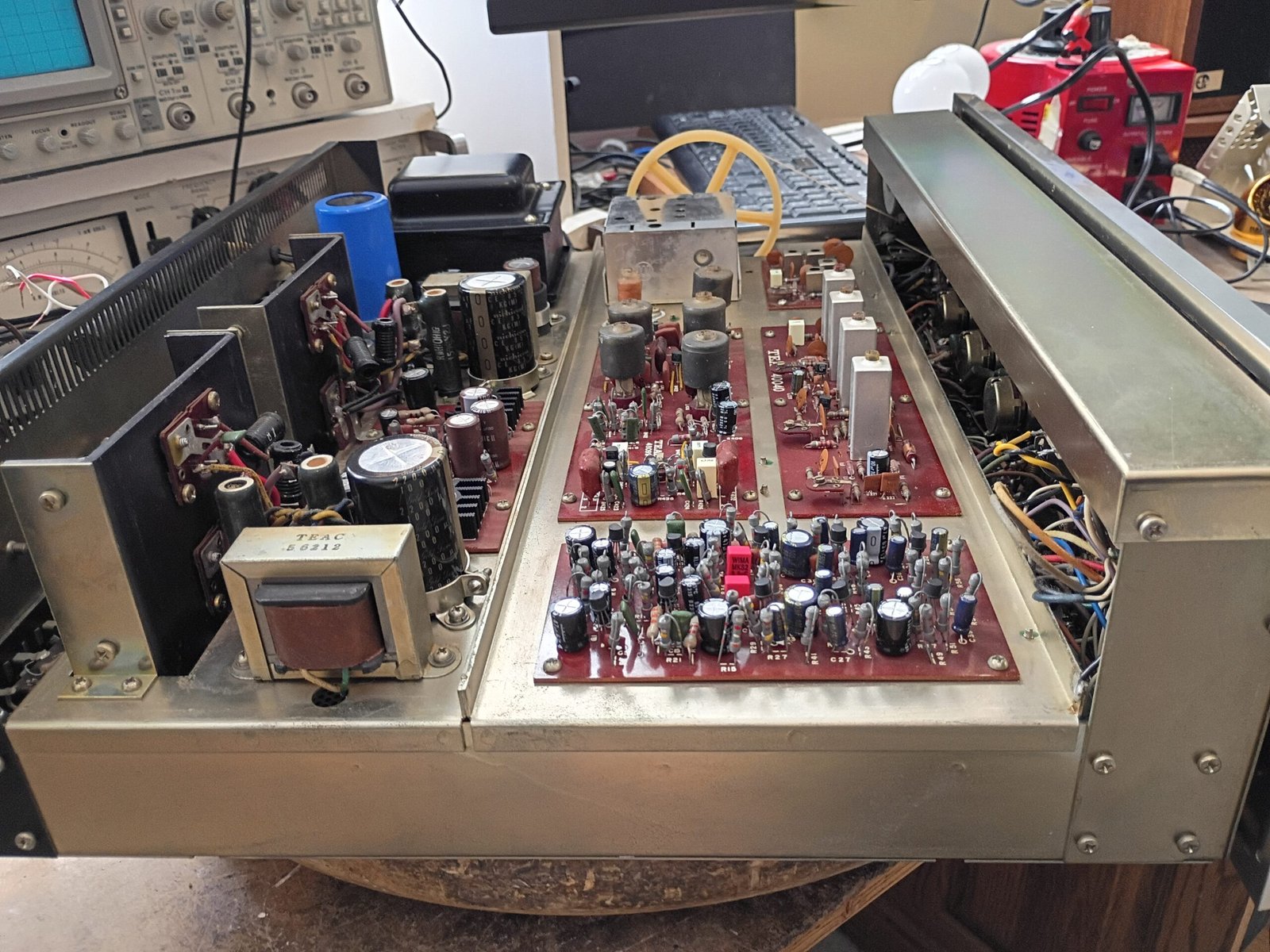
Beyond the list of standard restoration steps detailed on the main page, here are some added notes for this unit :
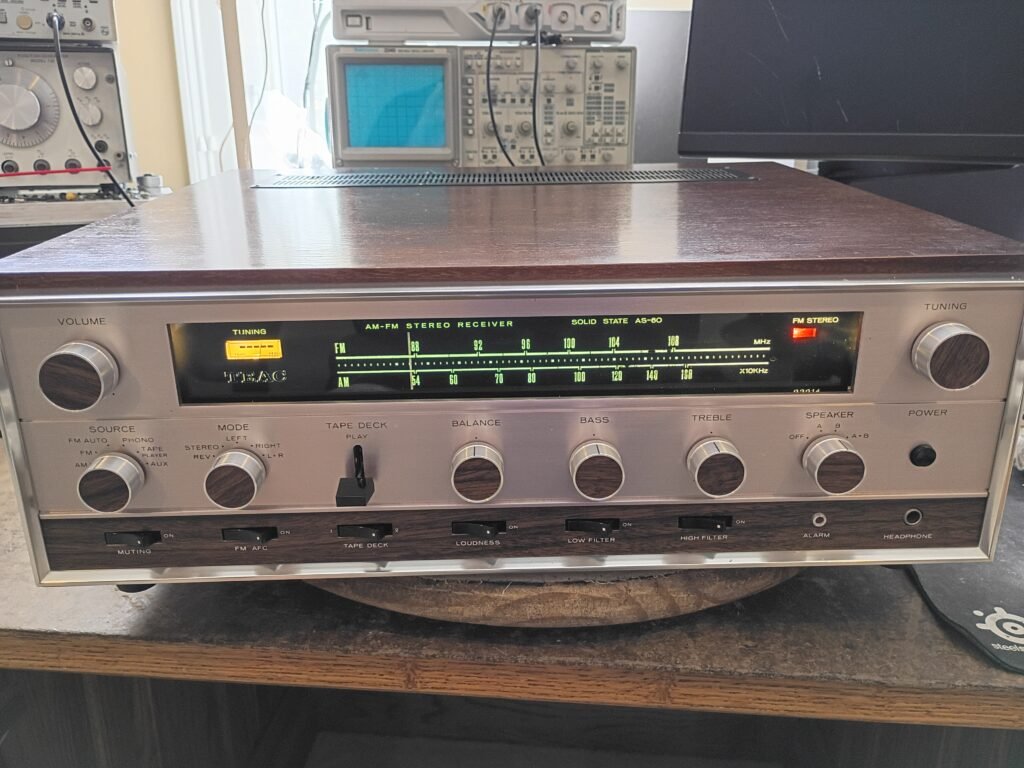
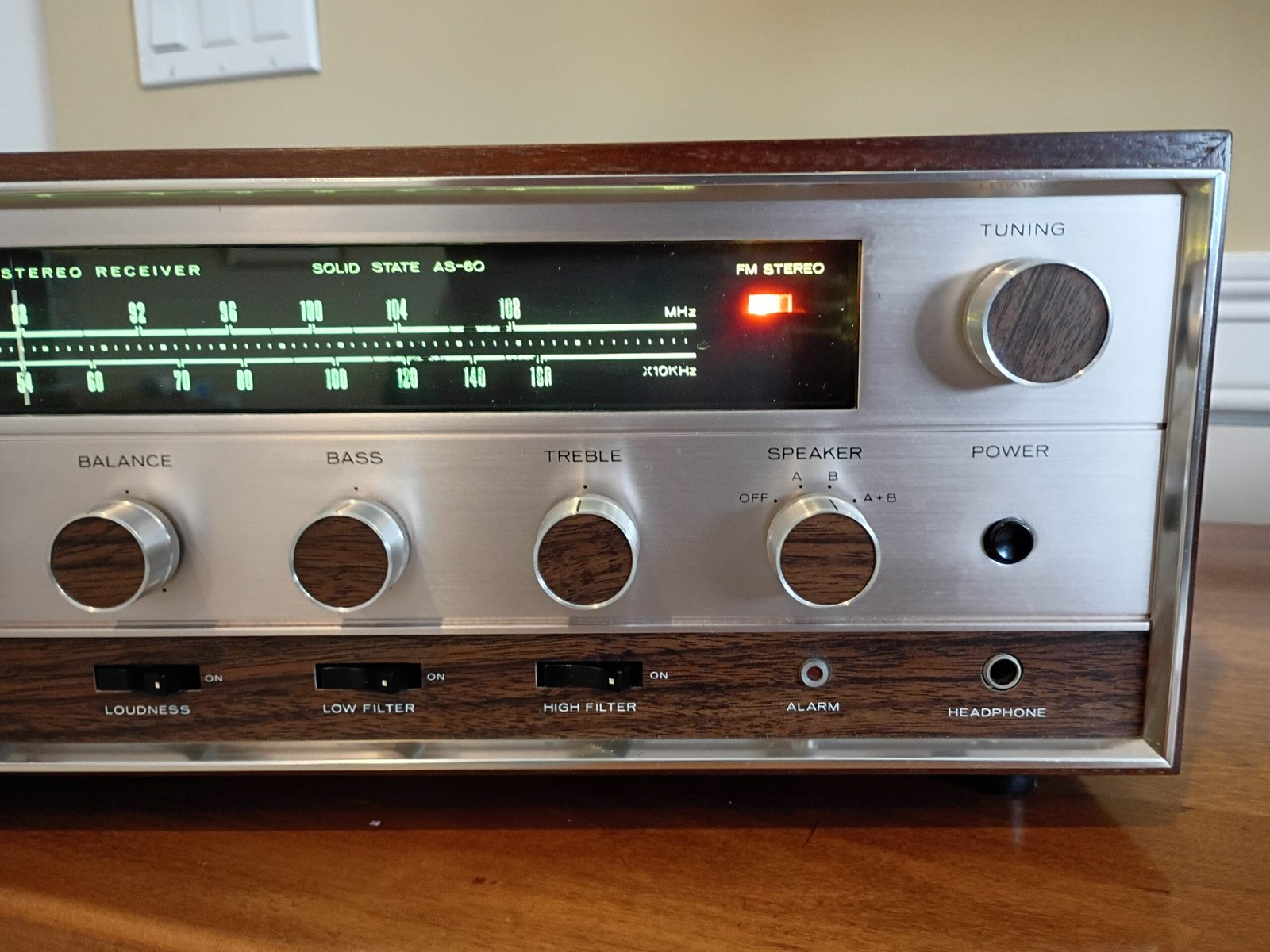
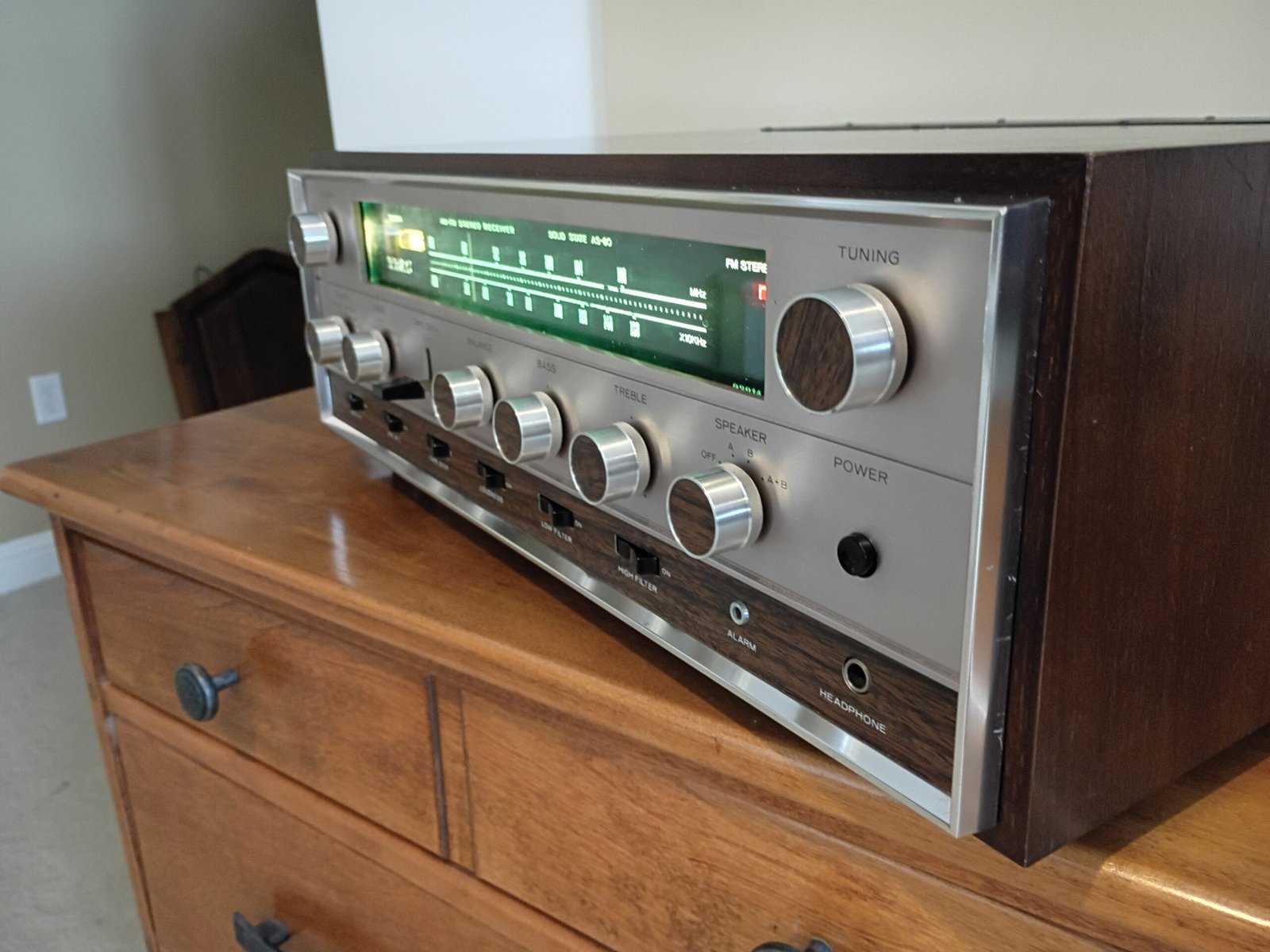
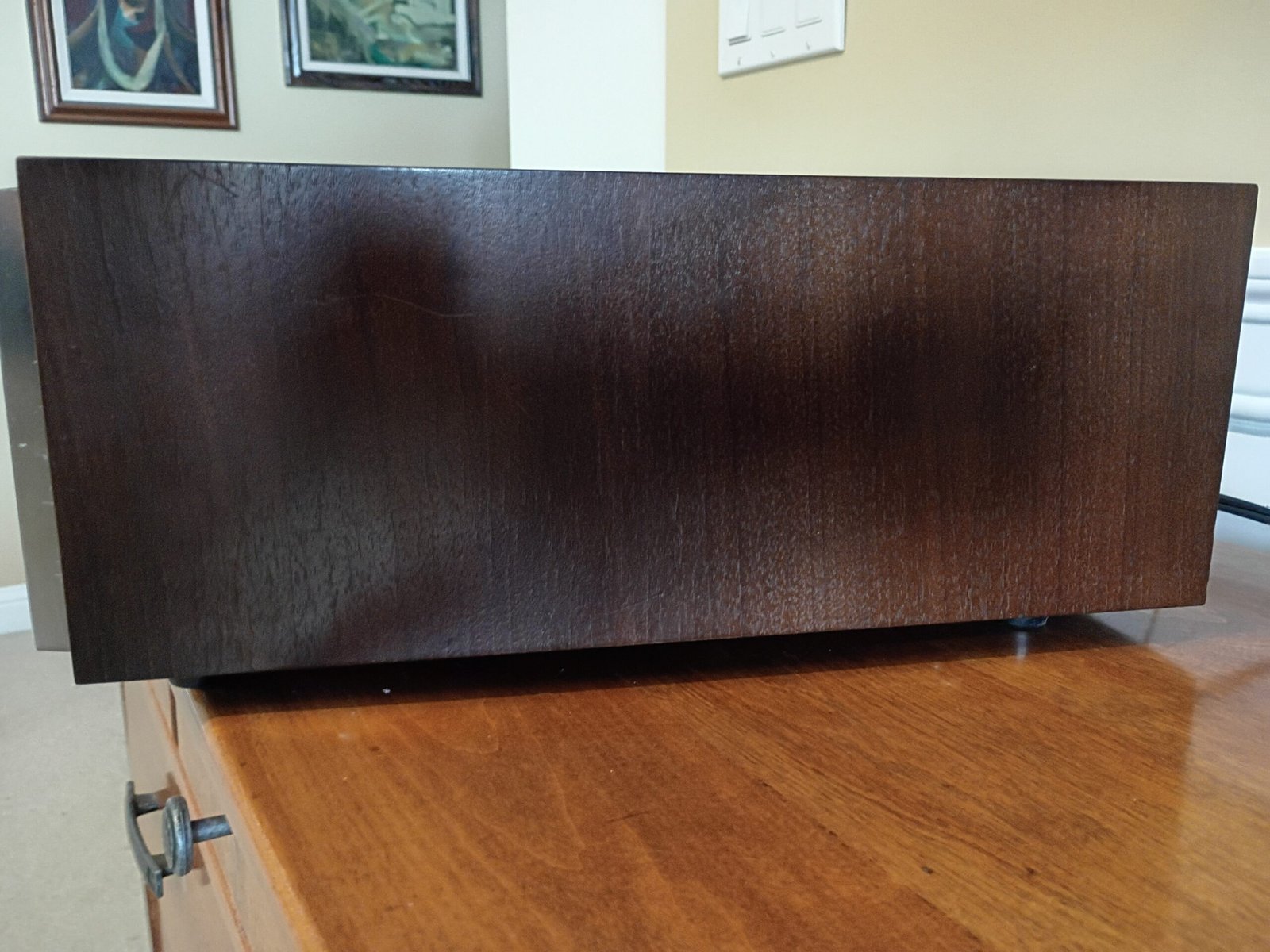
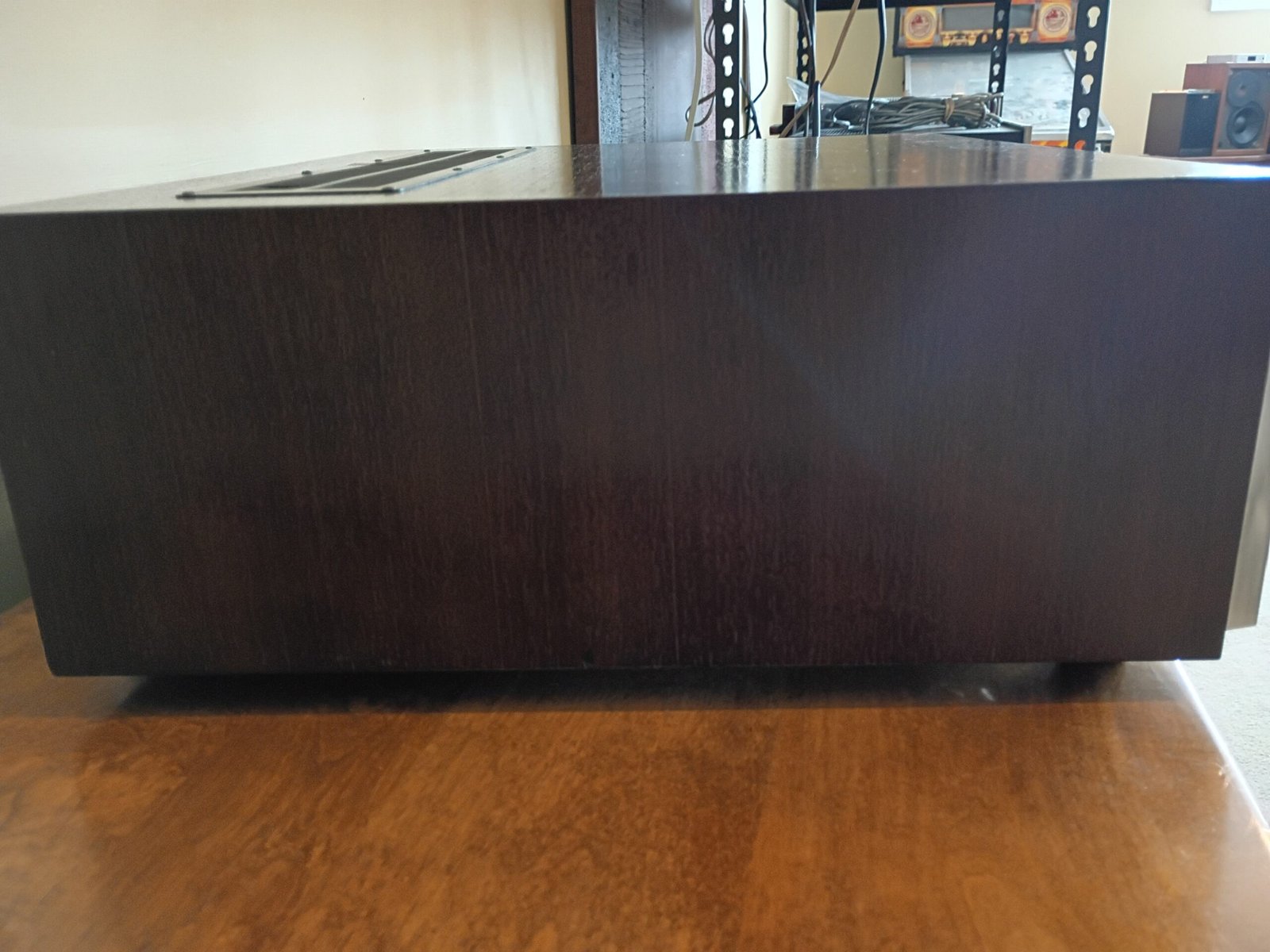
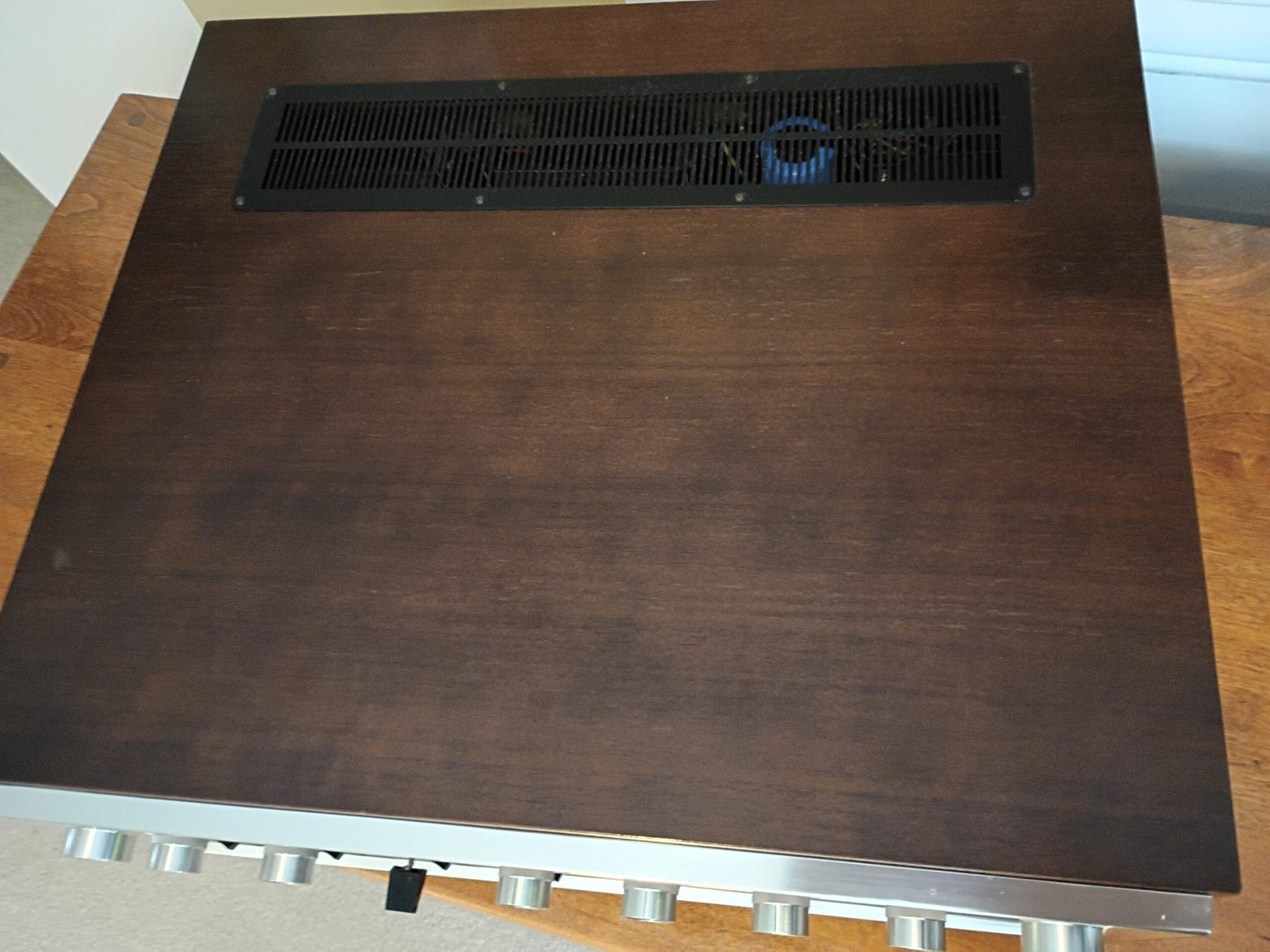
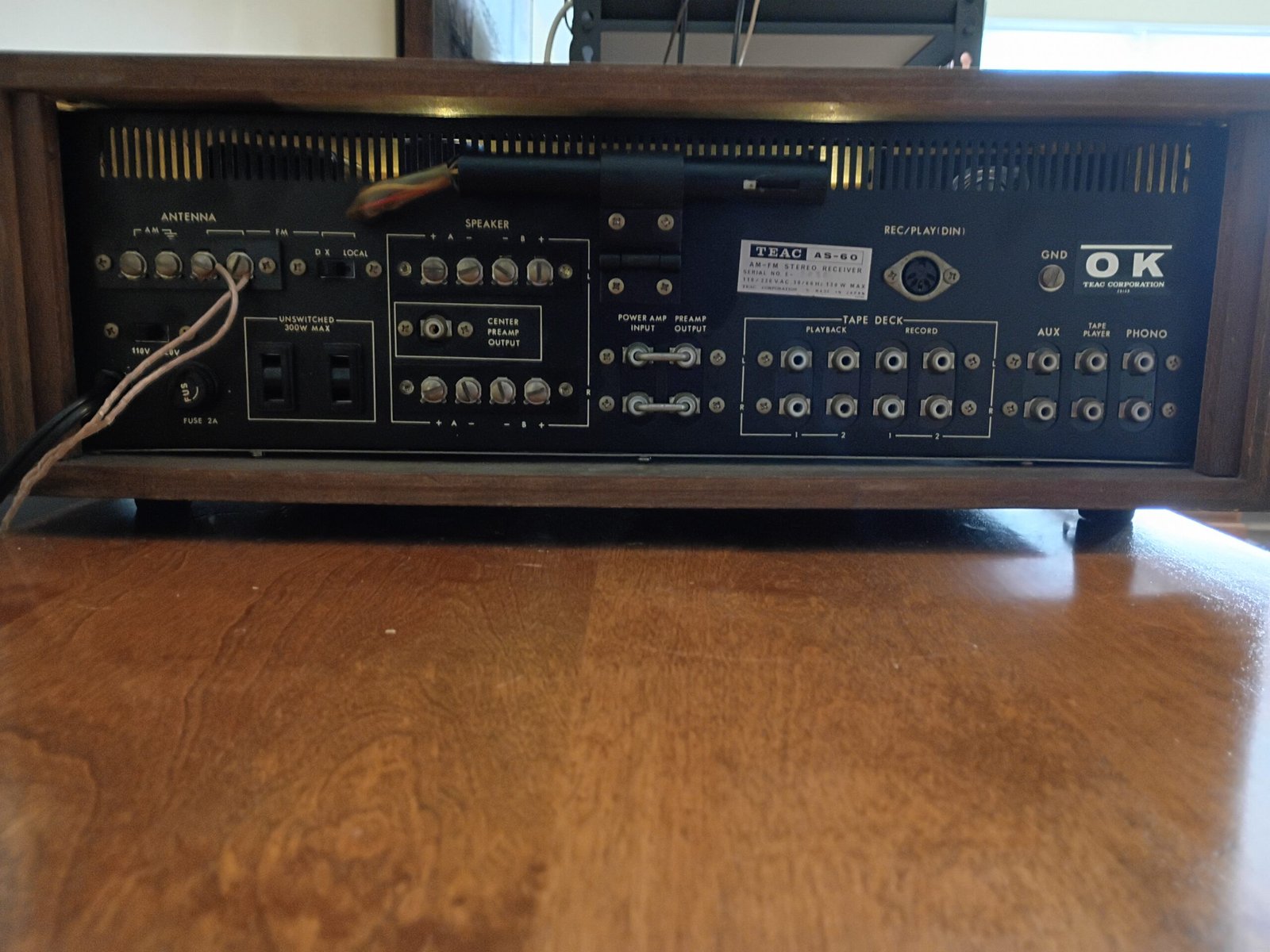
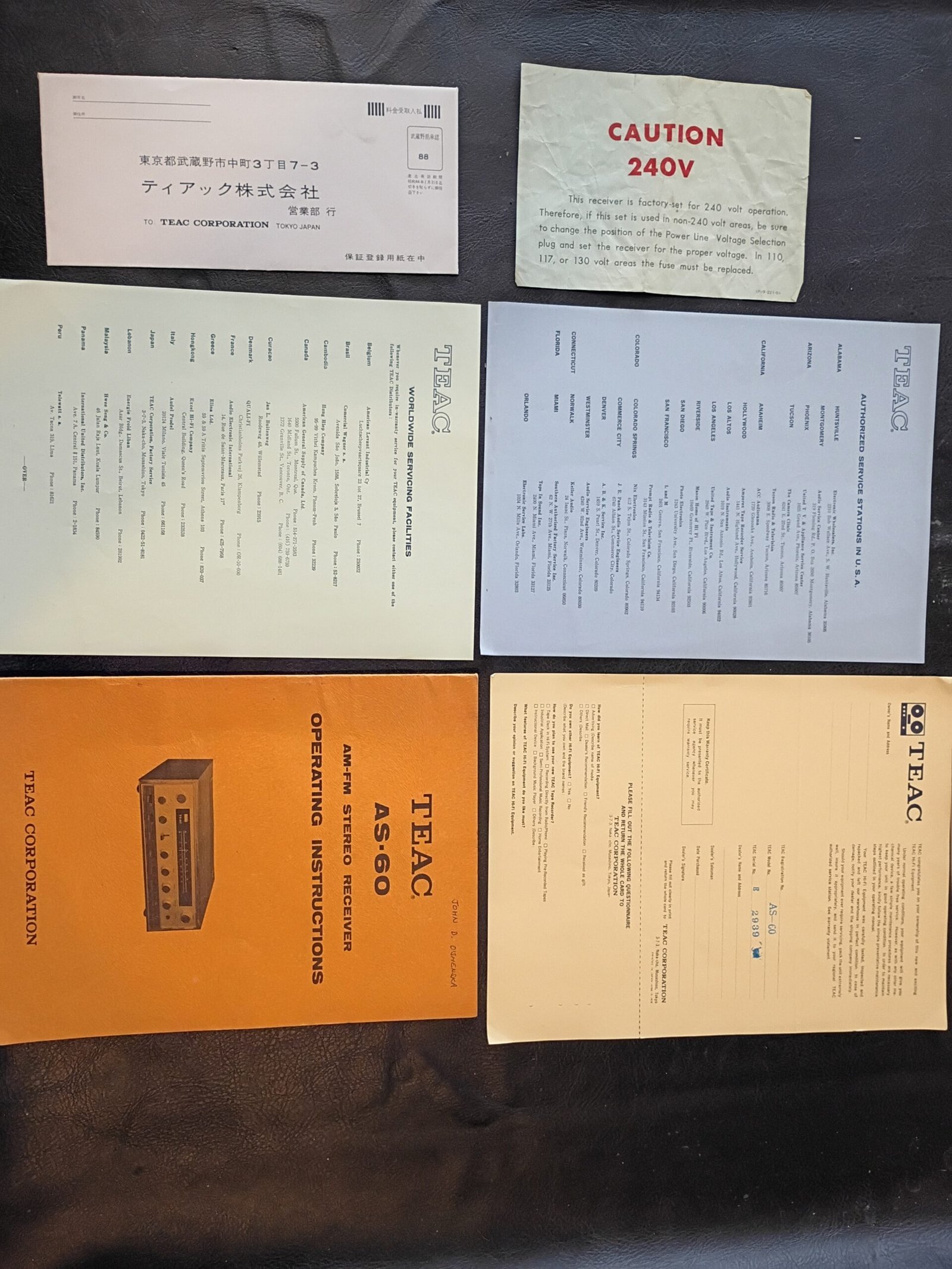
A friend of mine purchased this for me – apparently from the original owner as it came with all the factory paperwork and shipping box. The exterior condition was very good (this 58 year old unit was loved).
Background :
TEAC initially made its name selling excellent reel-to-reel tape recorders and expanded into other stereo components like amplifiers and receivers to capitalize on their reputation for high-end quality. Fair to say they sold a lot more tape decks than receivers, so these are fairly rare.
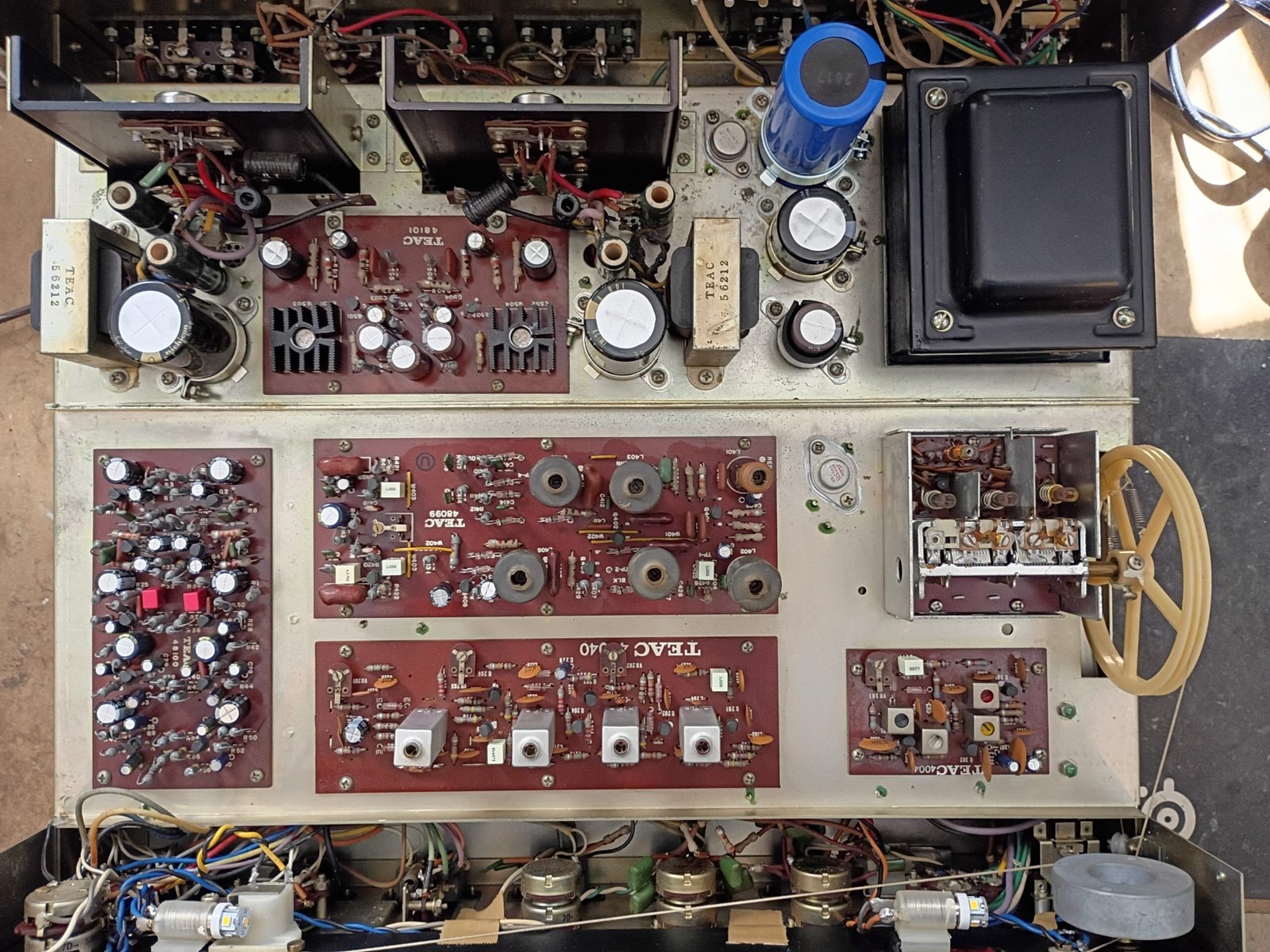
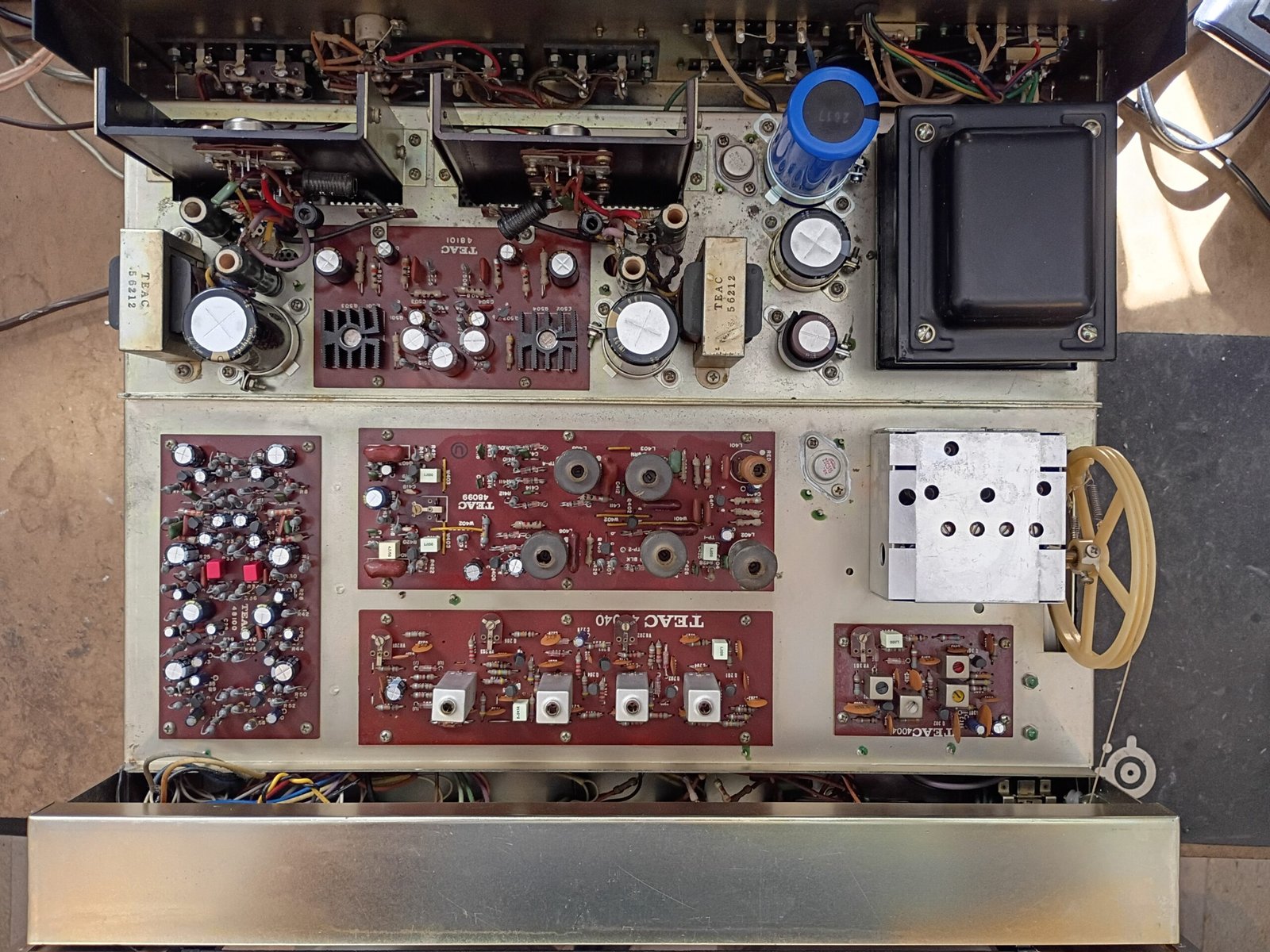
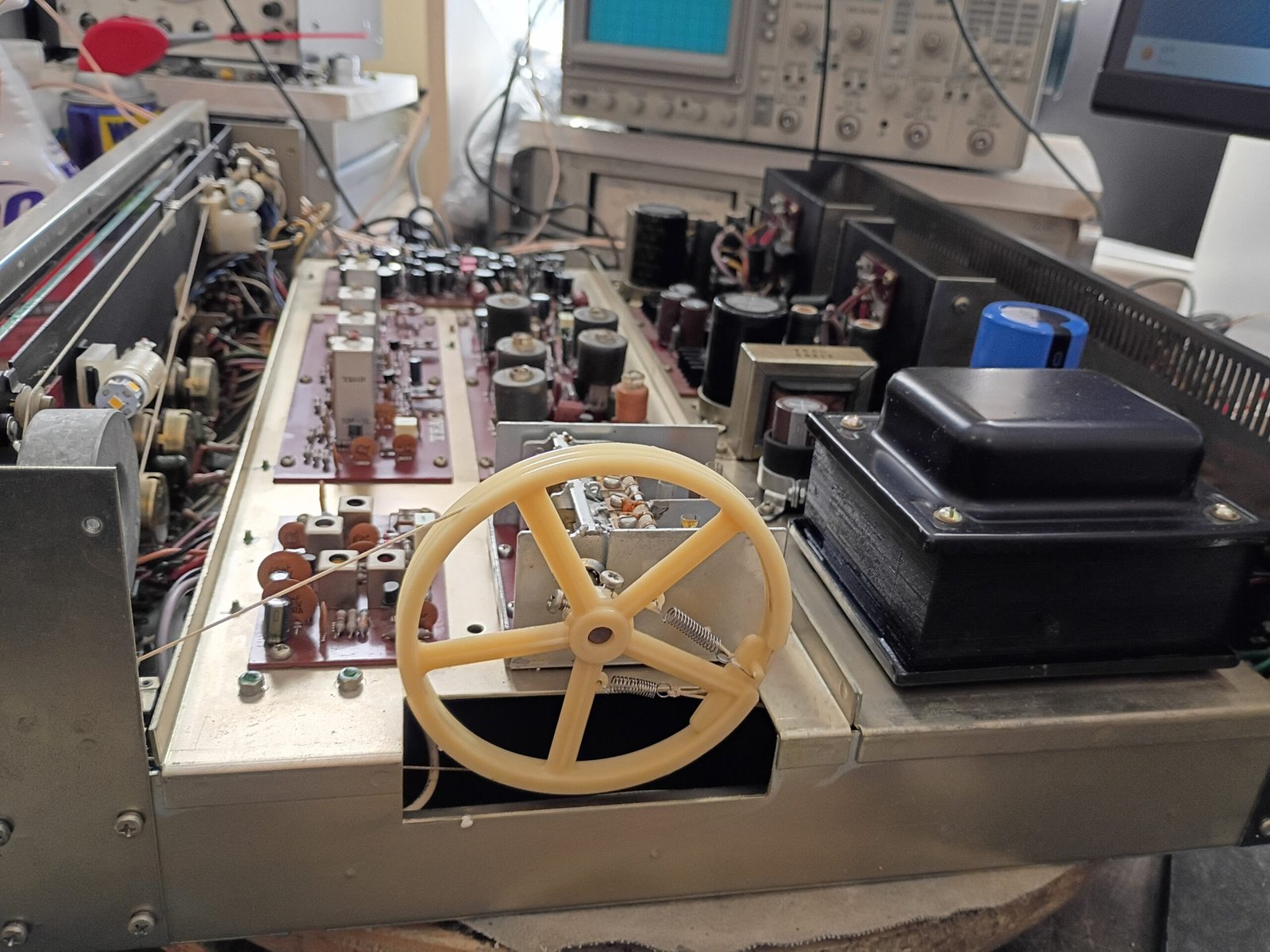
The AS60 was an early all-silicon solid state receiver first sold in 1968. The build quality is exceptional, and it features a transformer-coupled amplifier design that delivers a very refreshing sound. Internally, it is nicely designed and was a pleasure to restore.
I have worked on many late 60s receivers from Marantz, Pioneer, Sony, Nikko (etc) and this TEAC really stands out.
Restoration notes :
Initial visual inspection showed some minor issues.
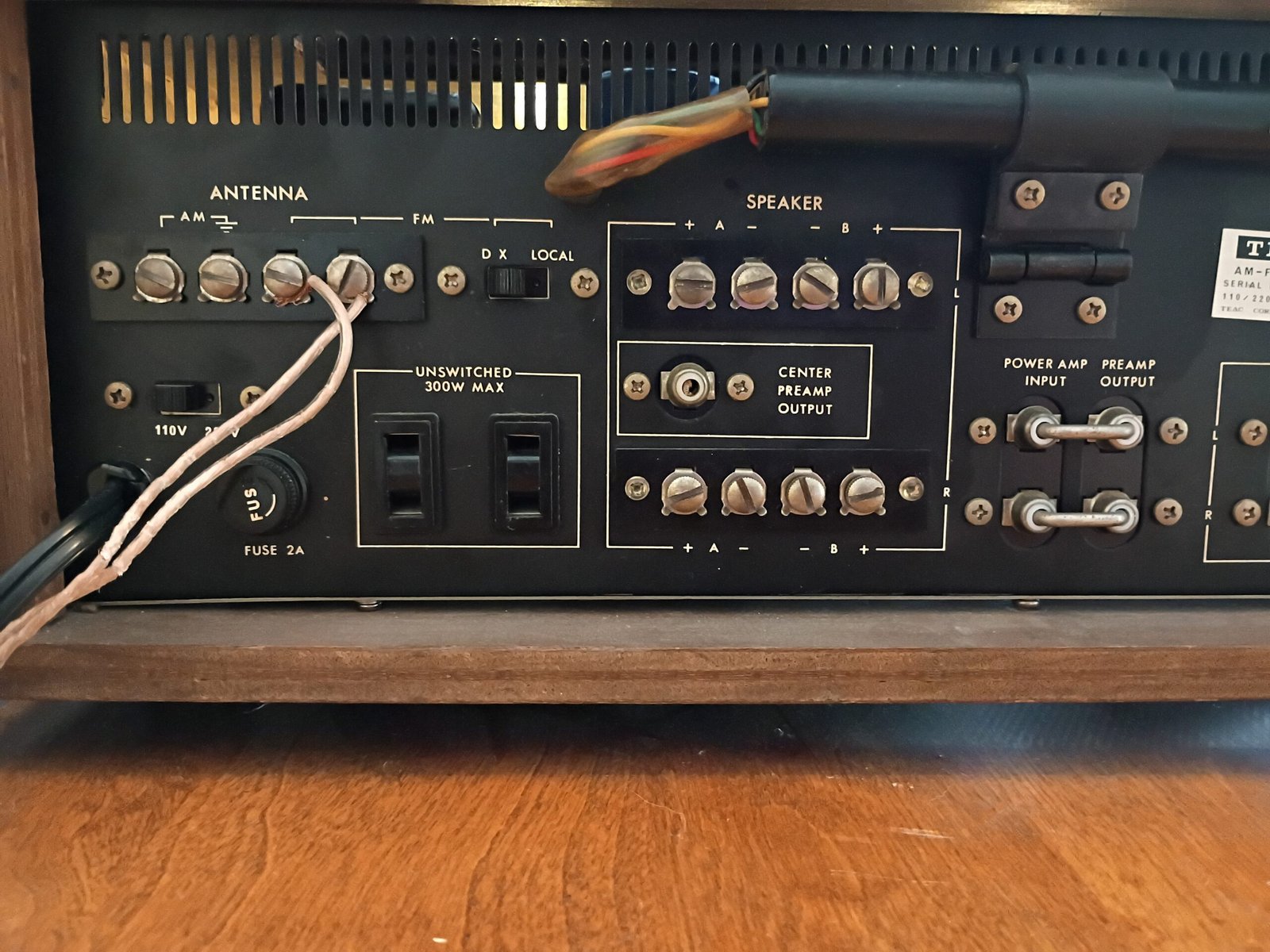
The power cord had a replacement plug, so I installed a new cord and strain relief.
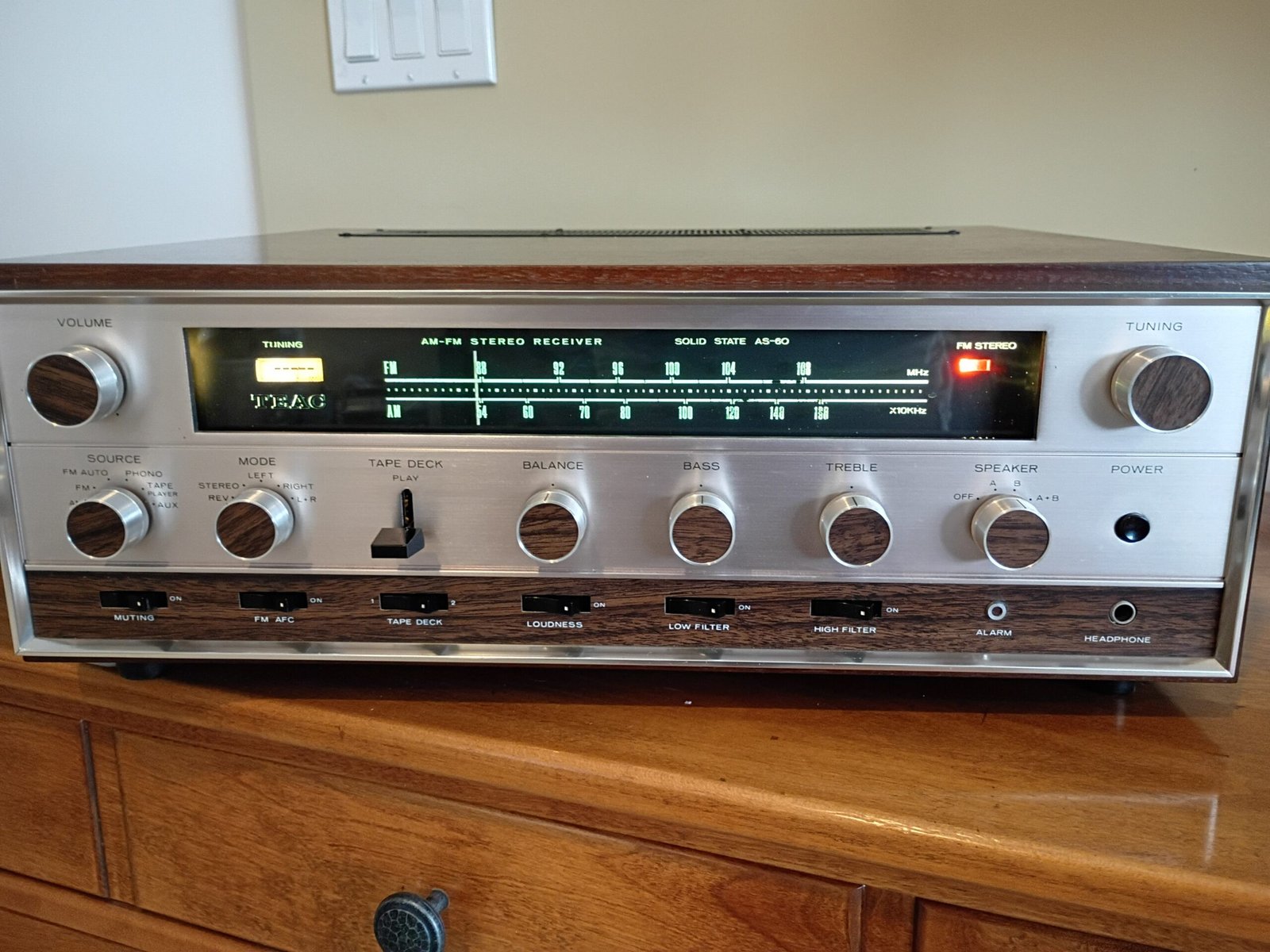
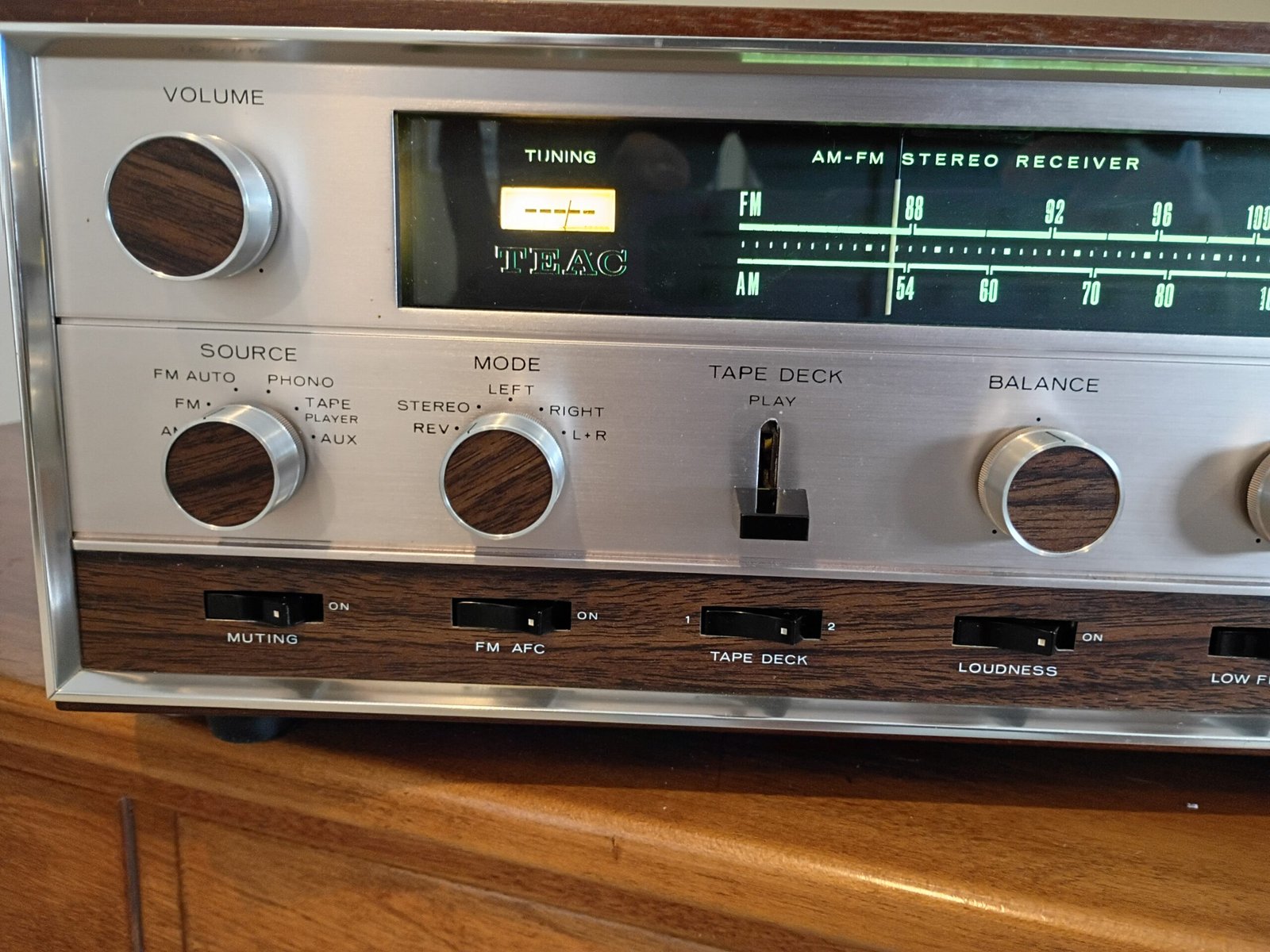
The dial glass had some faded markings. Where it had said “TEAC” in the lower left, there is now a transparent engraving that can be seen when the dial lights are on. (It actually looks rather cool.) The horizontal lines in the tuner scale also have some gaps. This was left as is since replacement parts are extremely hard to find for unit this rare (see photos).
After normal switch contact cleaning and pot lubing, the unit powered up nicely. Most functions were working with normal issues with FM muting level, etc which I addressed later. Listening to FM, it already sounded very nice.
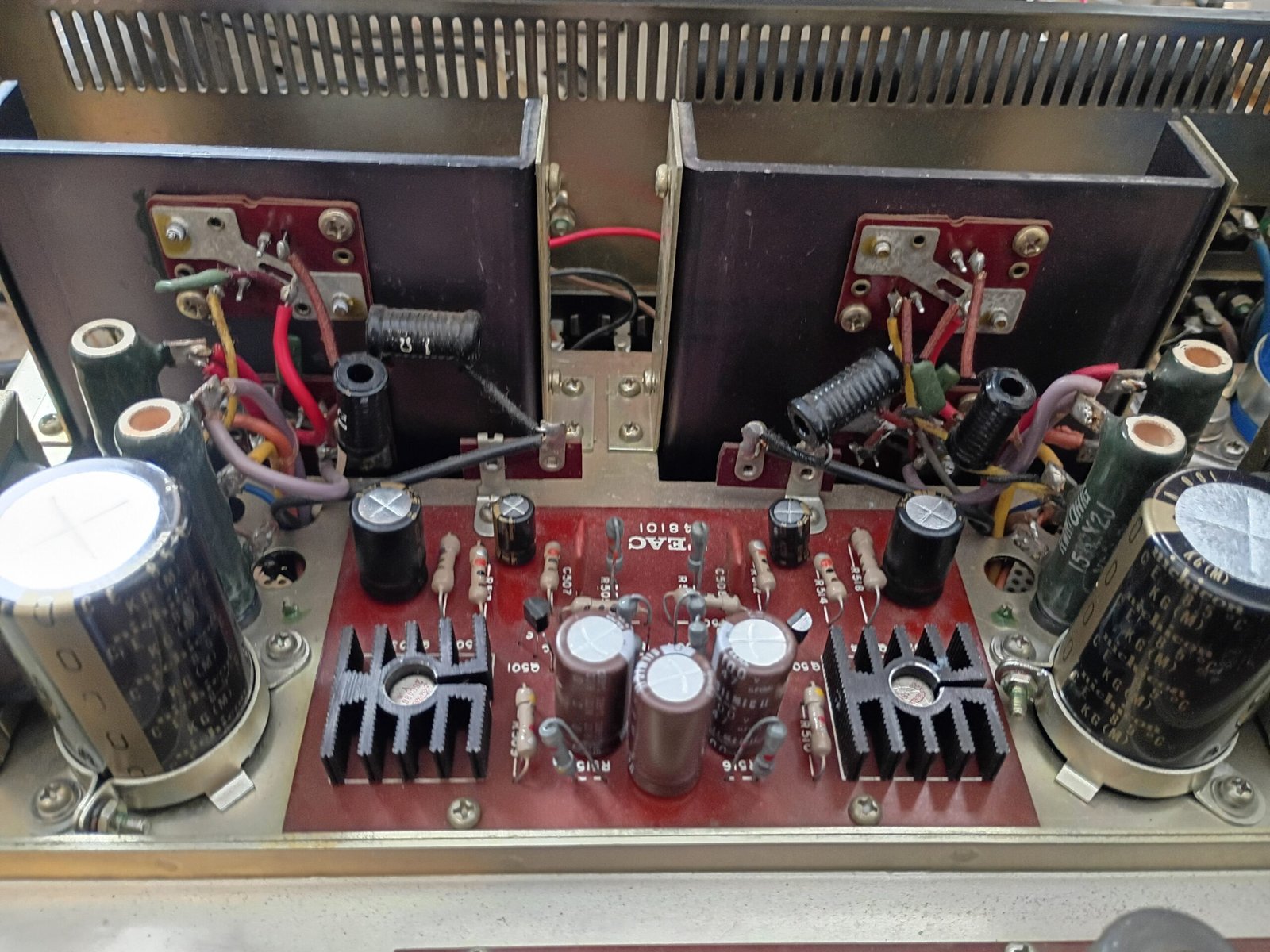
I always test the output transistors while replacing the mica and thermal paste. One was leaky (on its way out) so I replaced all 4 with new/matching devices.
One of the power supply transistors also tested bad and was replaced.
Finally, the main amp input transistors were leaky and they were replaced with low-noise equivalents (per AudioKarma recommendations).
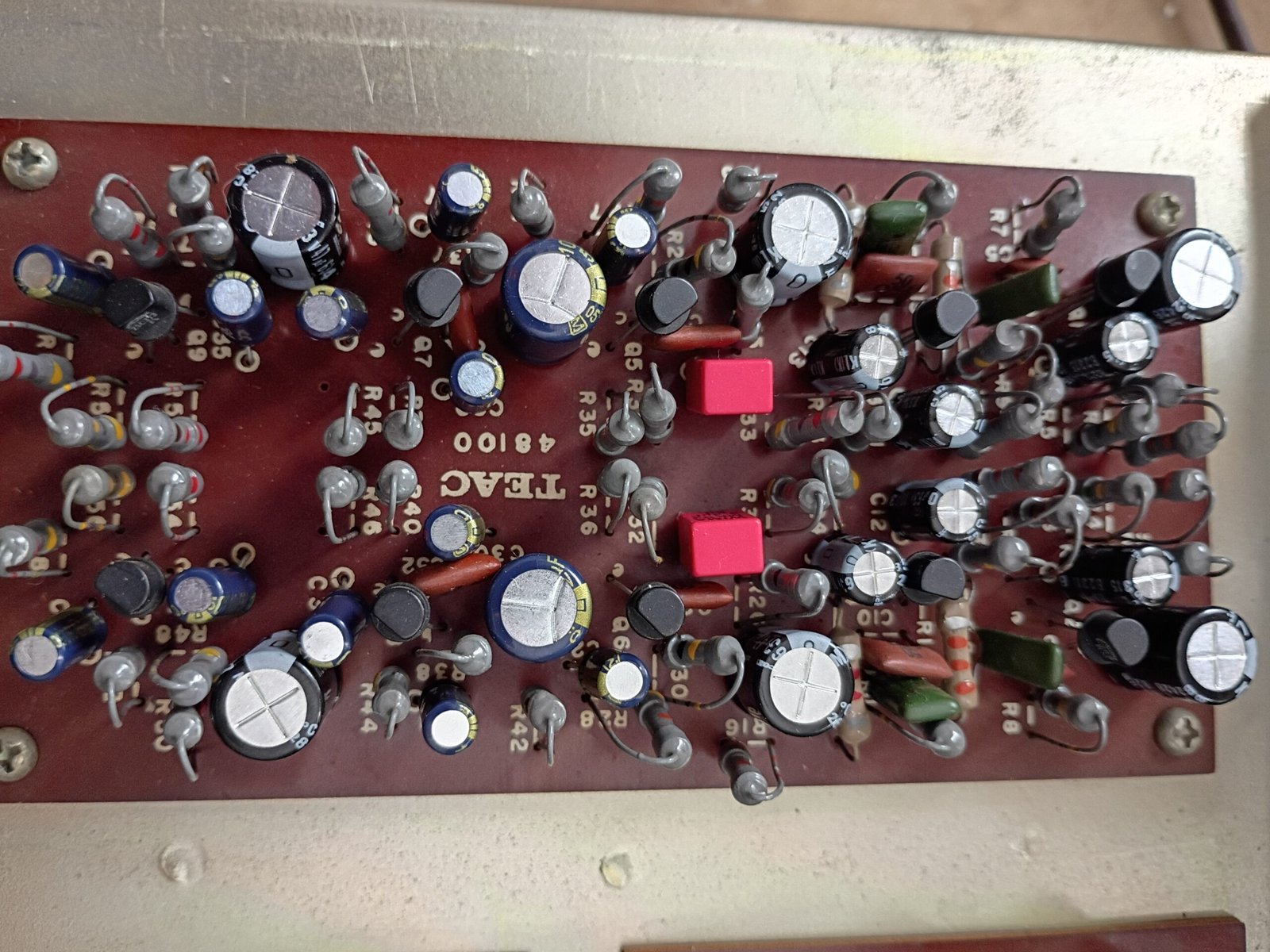
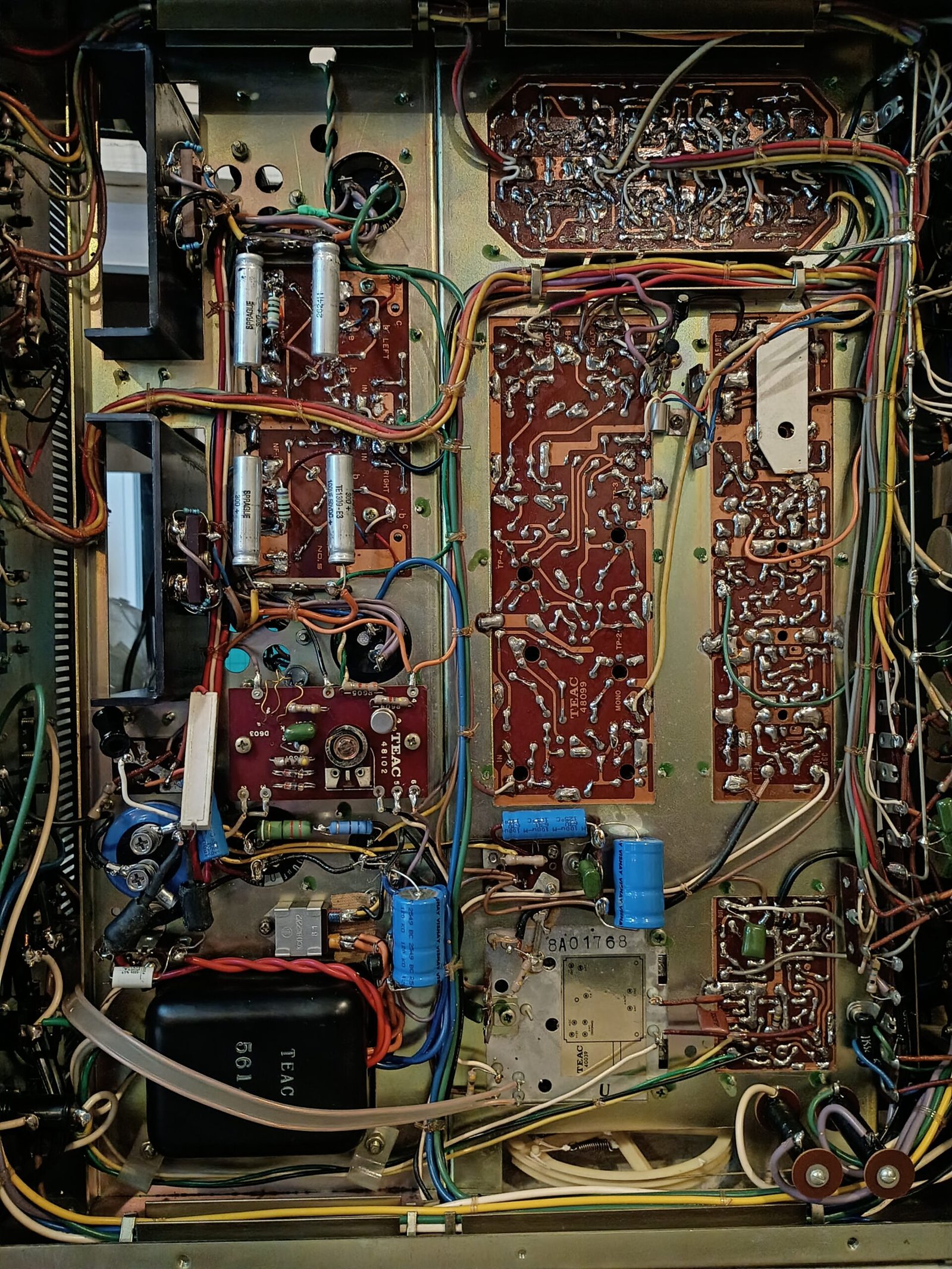
During the recap, I used correct (but more pricey) axial caps to match the originals (see photos).
The FM tuner got dialed in and it has impressive sensitivity with a very pleasing stereo presentation.
This receiver has an interesting protection circuit that watches for sustained/DC current on the amplifier outputs and shuts down the amp’s first stage to kill the outputs. It latches in this state and lights the “alarm” lamp on the faceplate. Removing the issue (shorted speaker wires, for example) and cycling power resets this circuit.