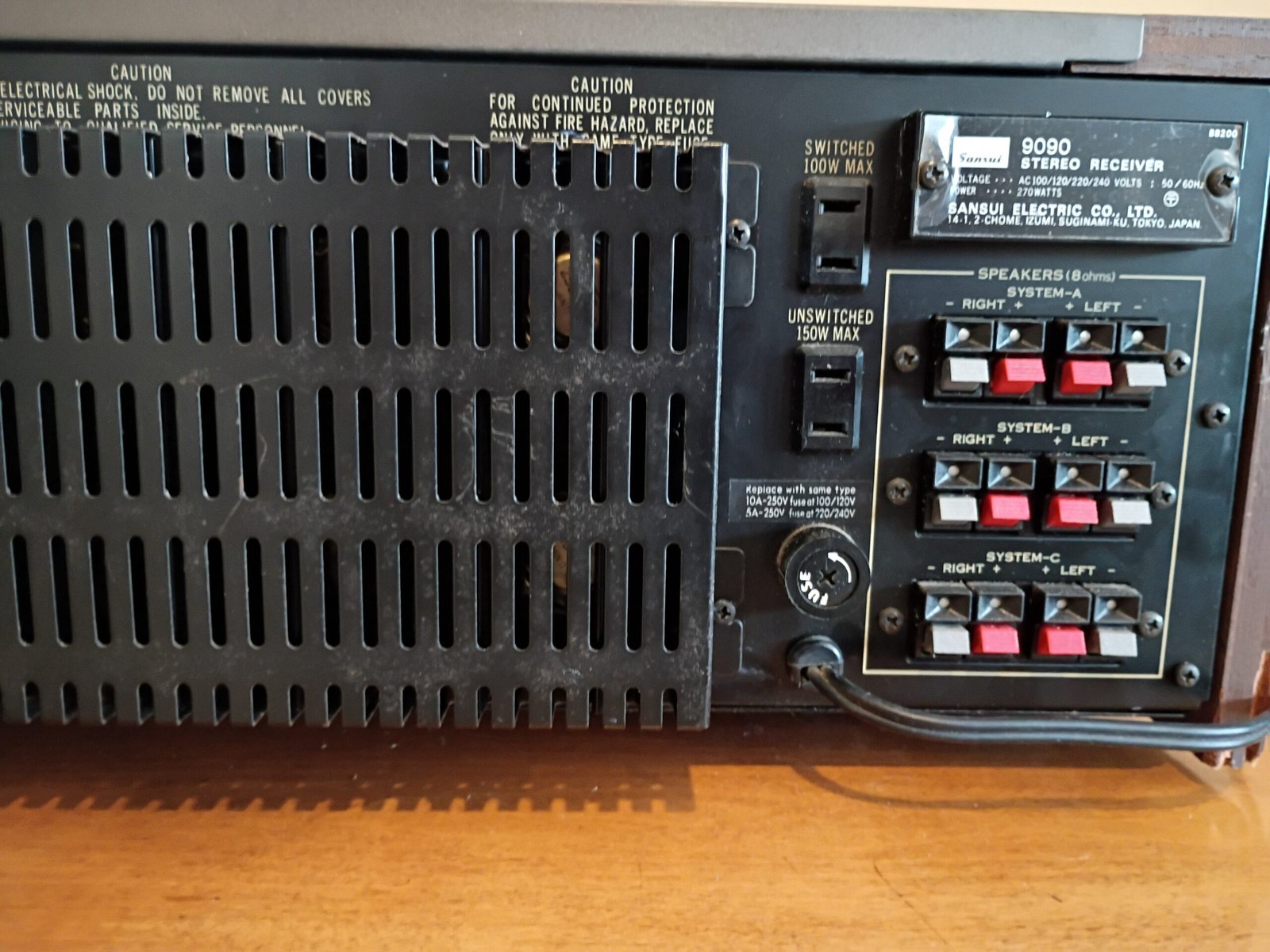
Beyond the list of standard restoration steps detailed on the main page, here are some added notes for this unit :
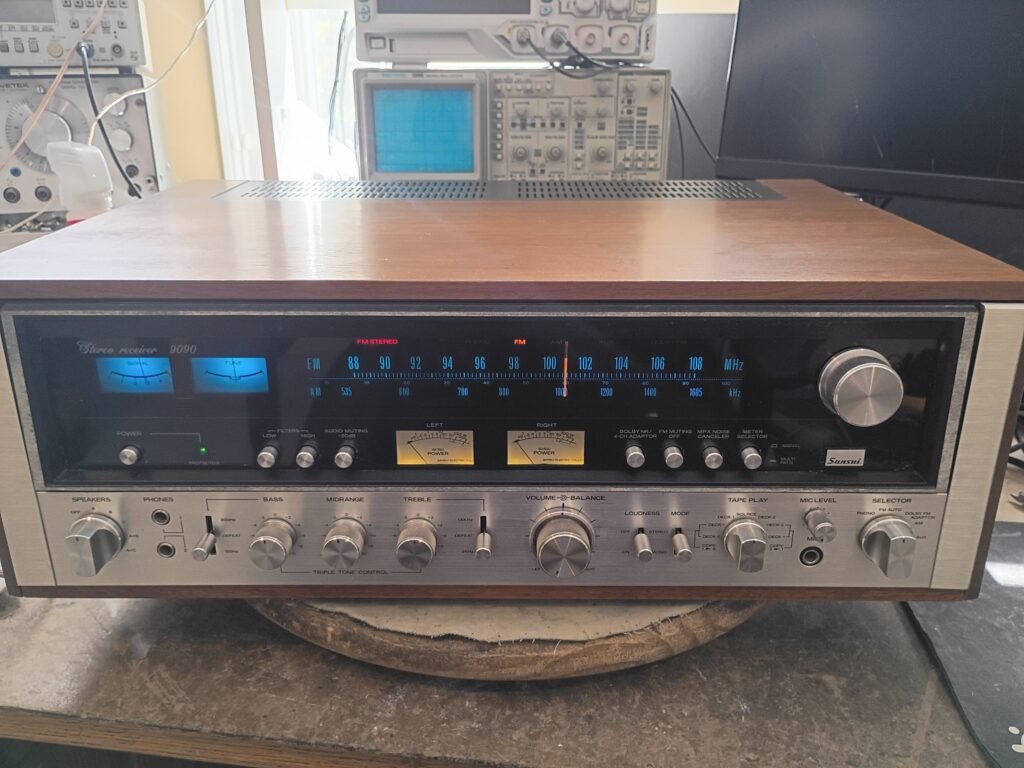
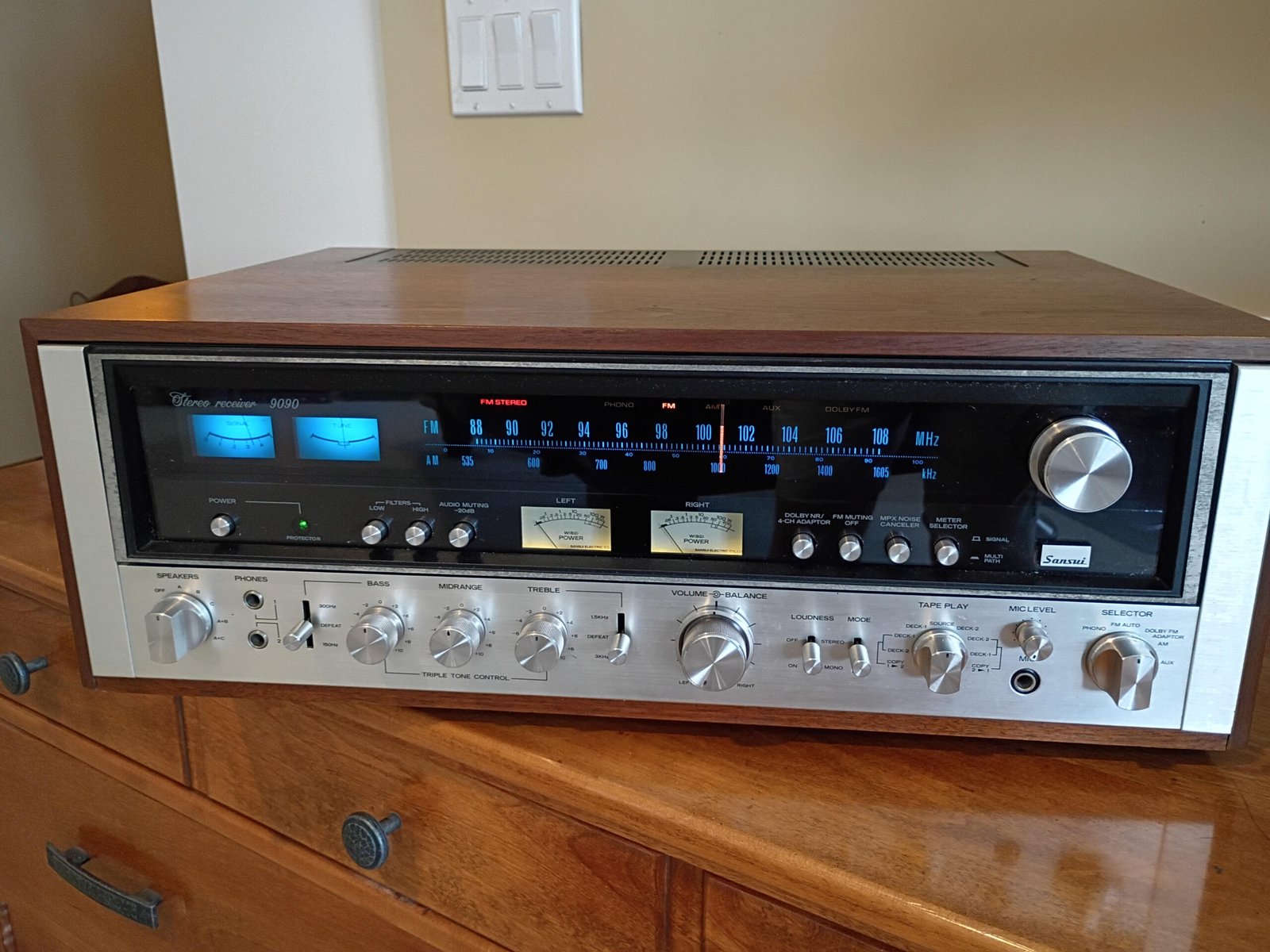
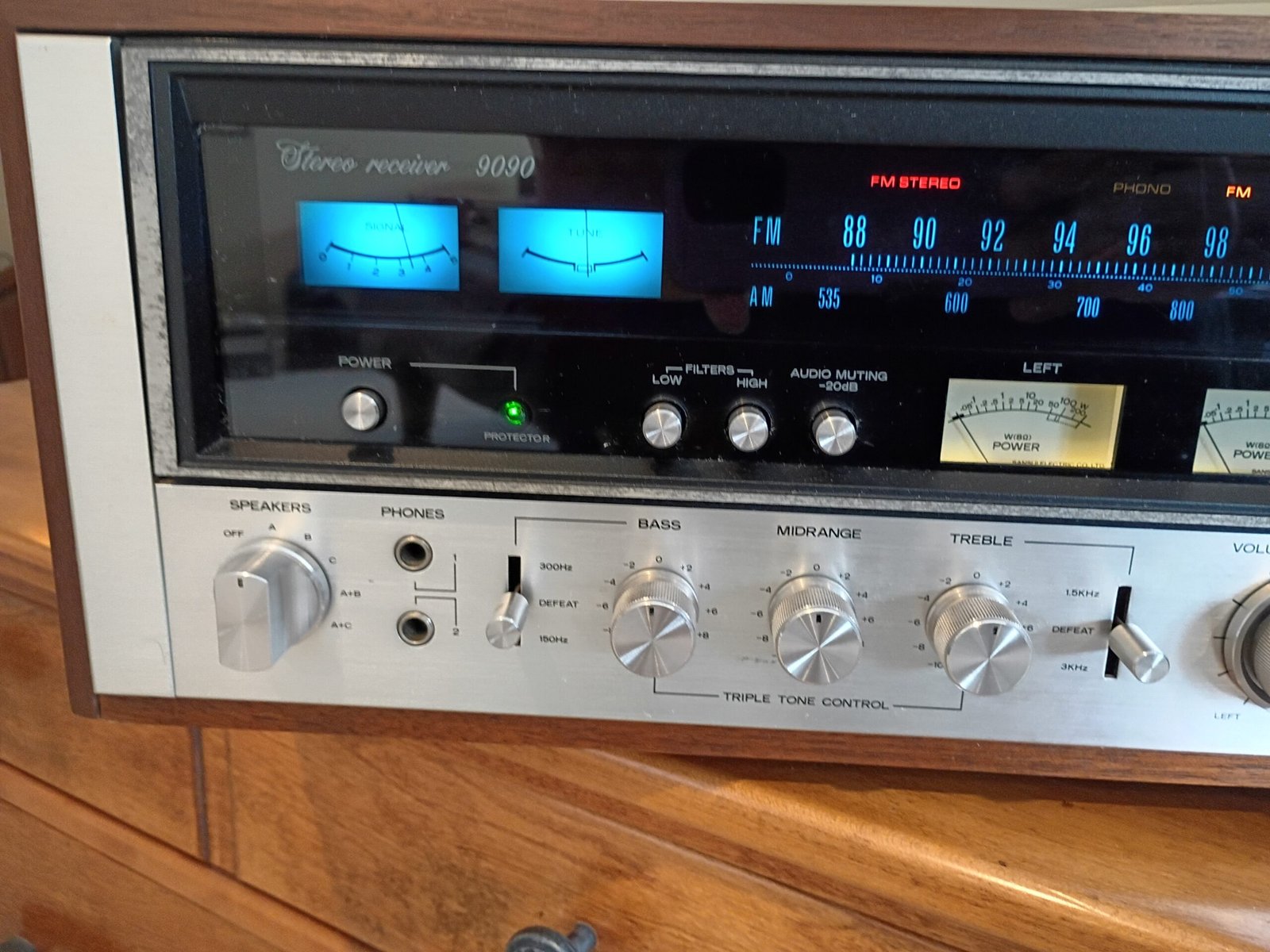
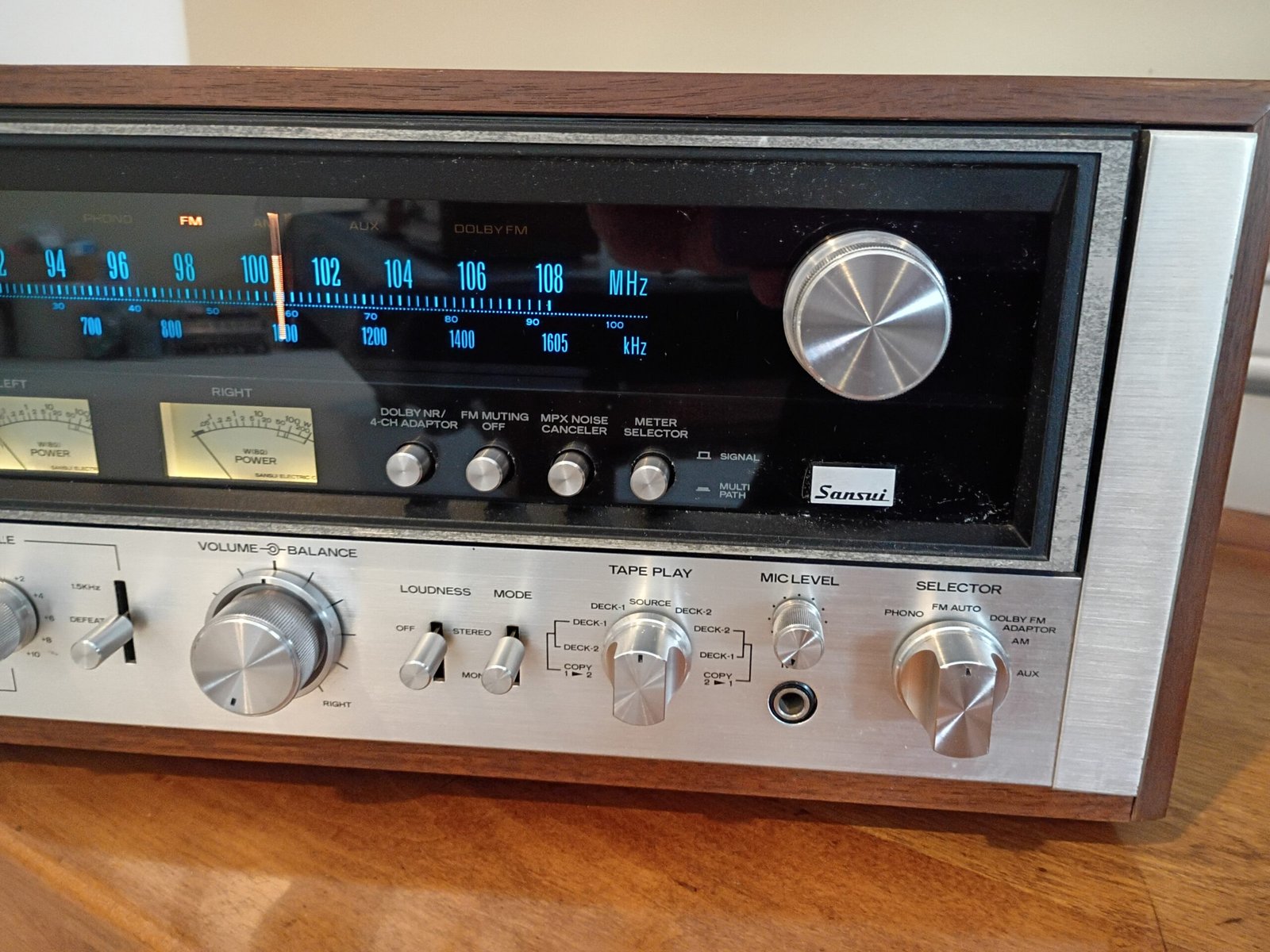
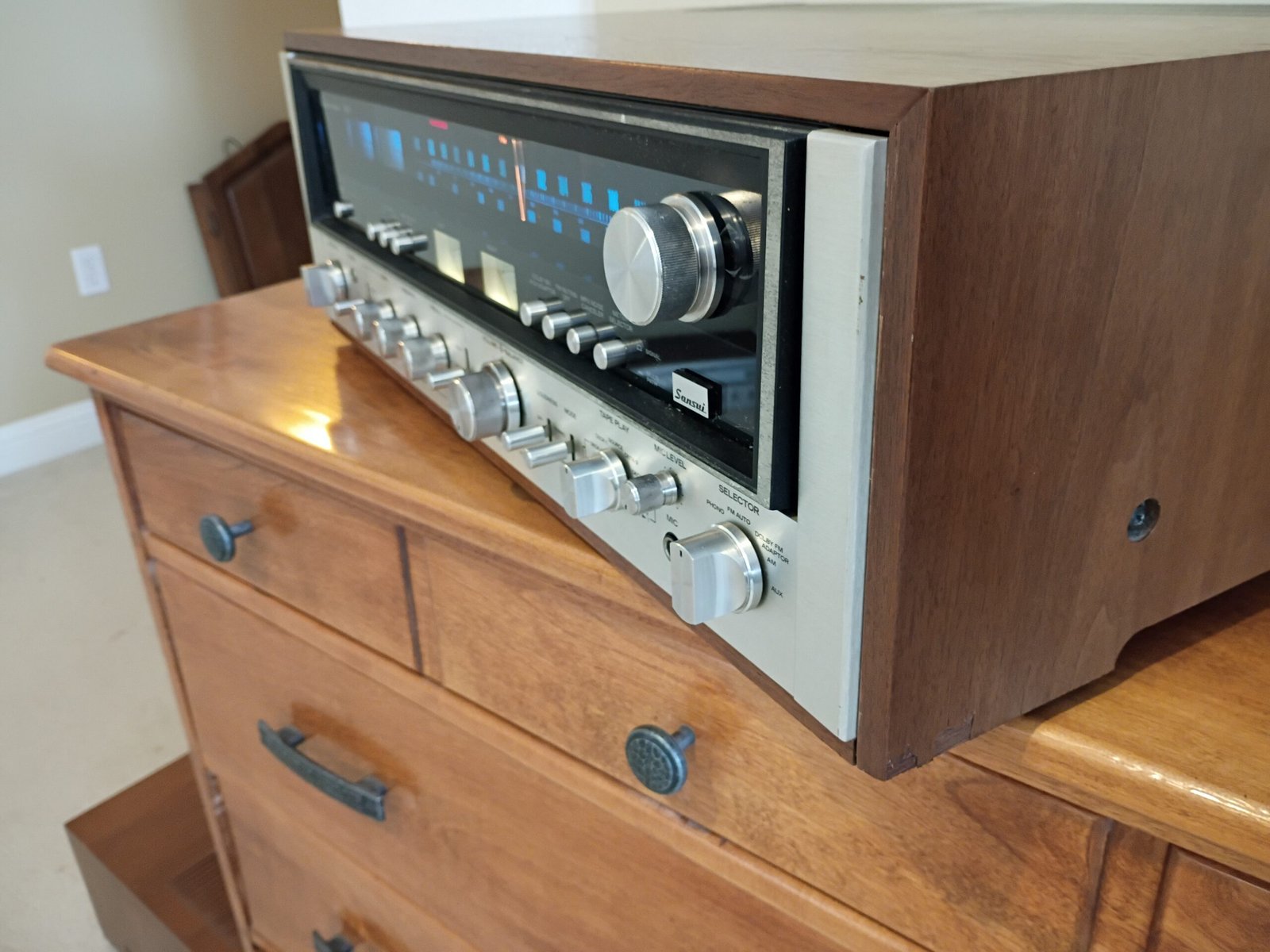
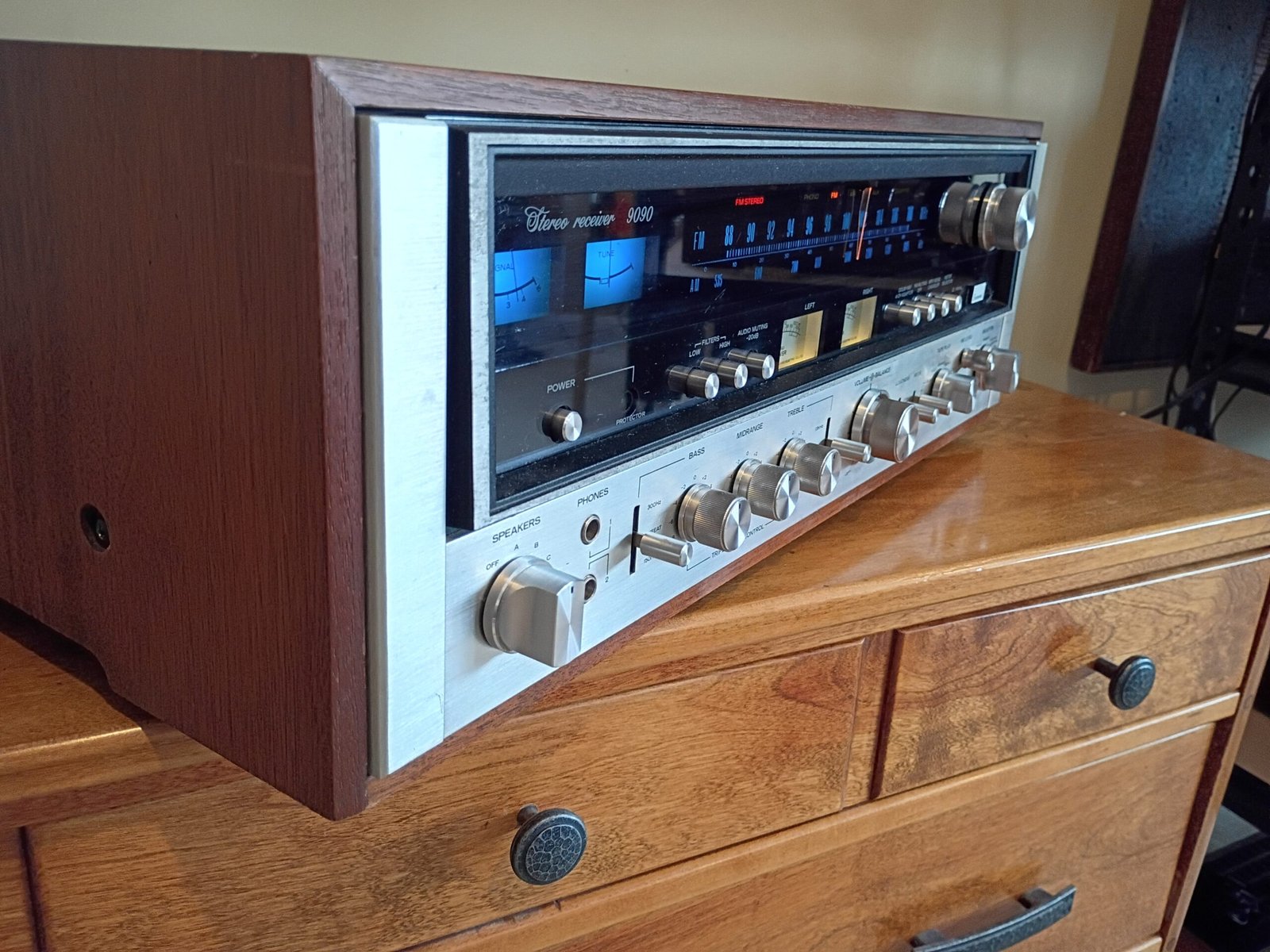
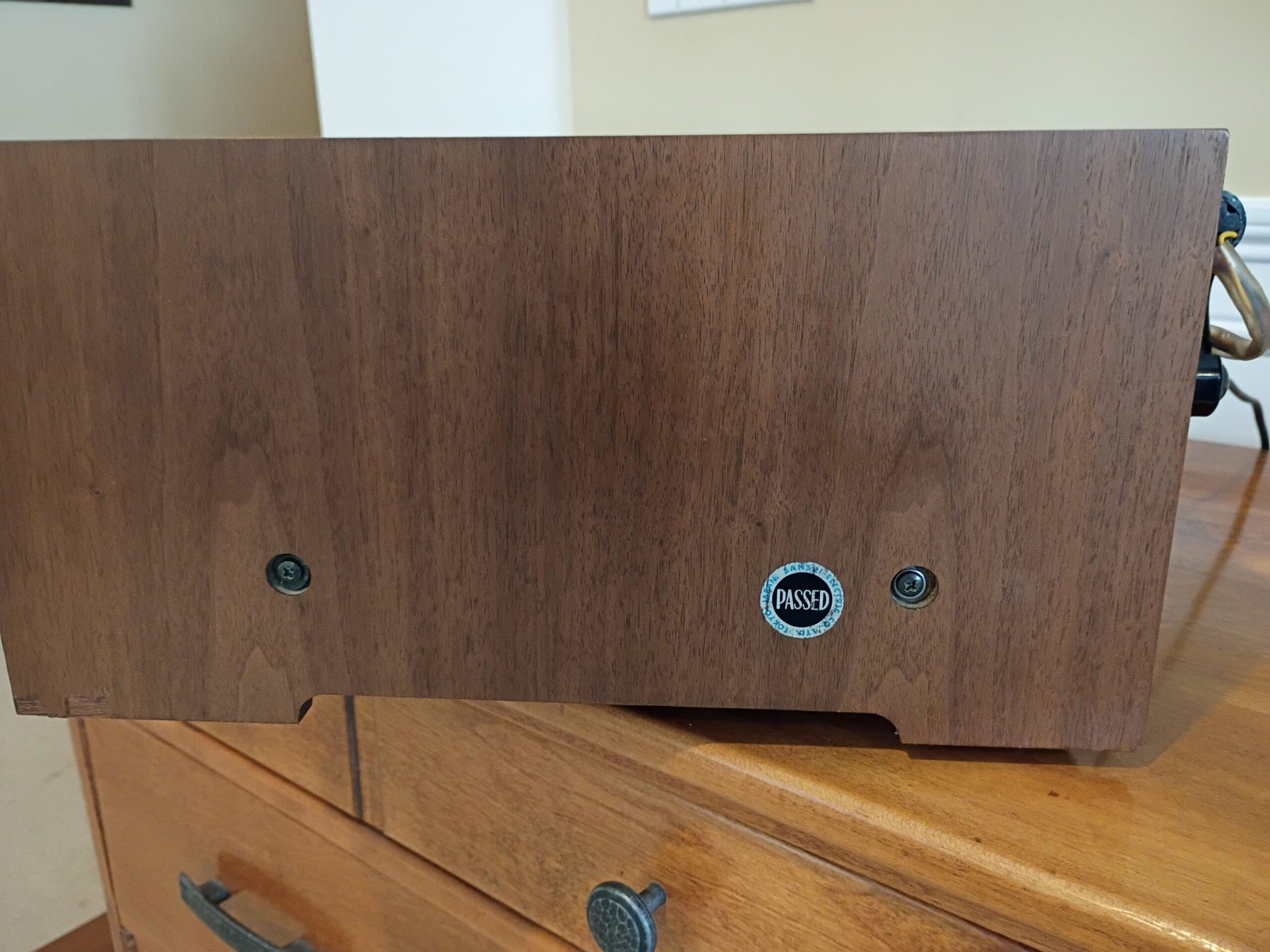
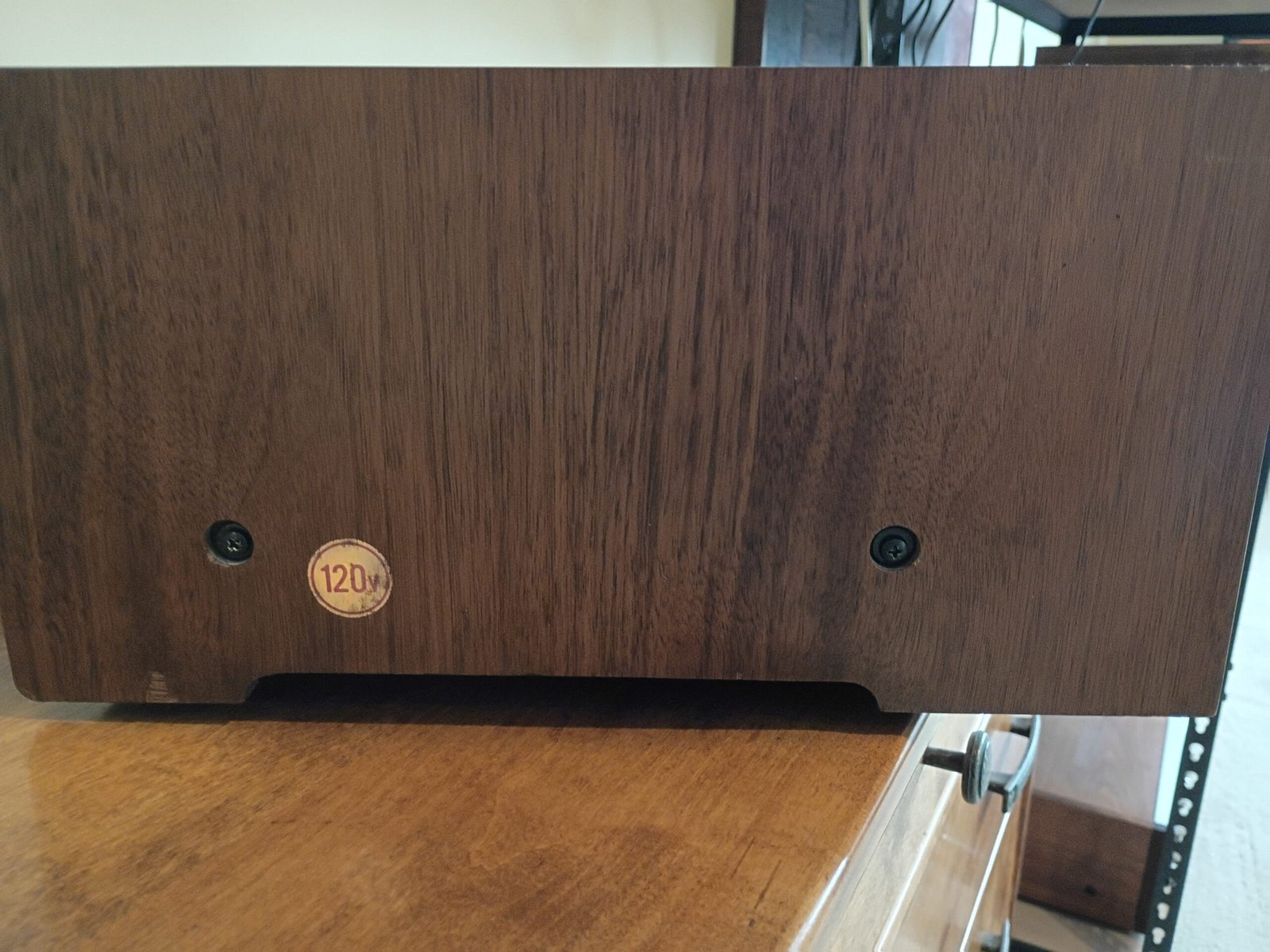
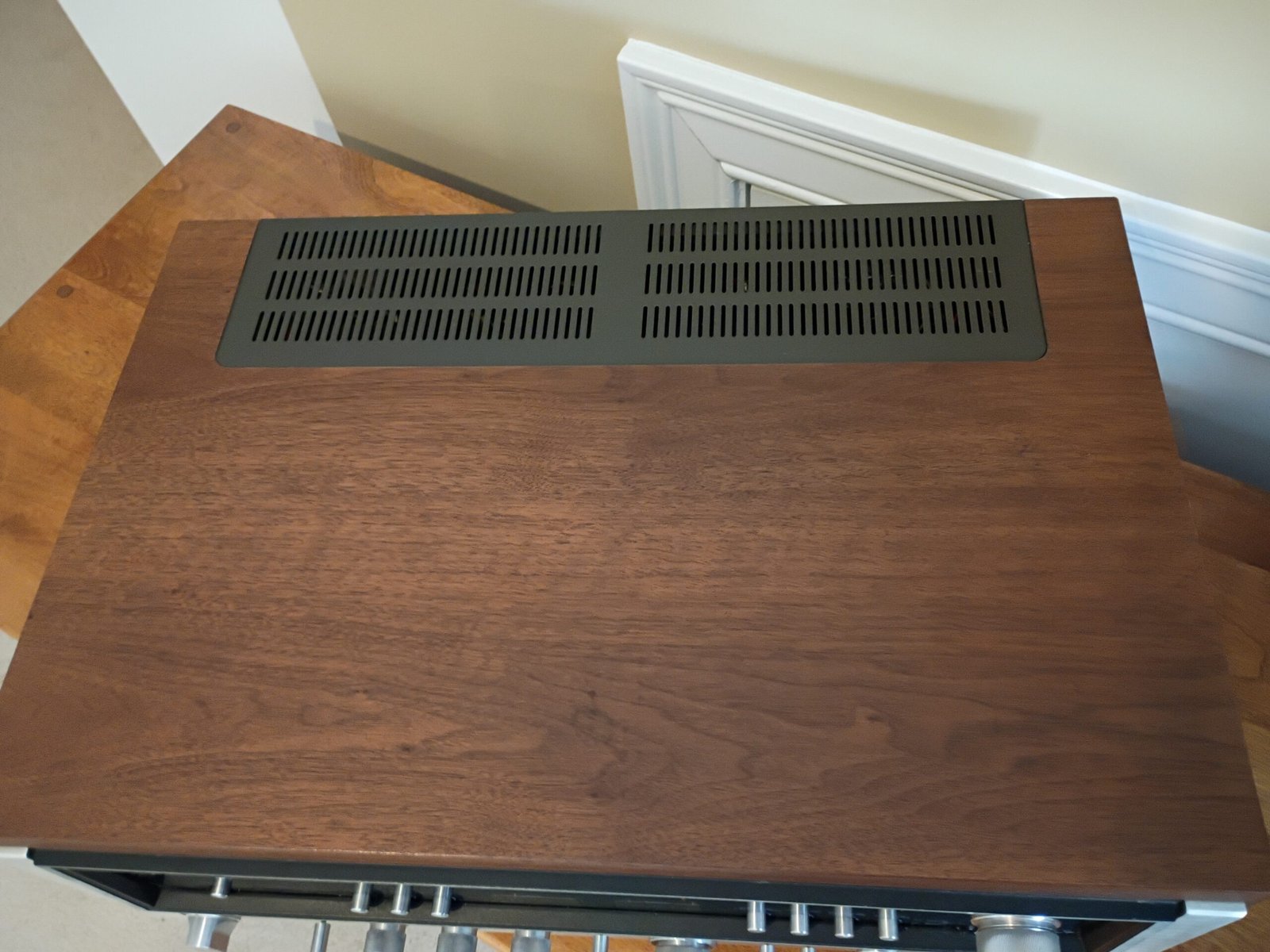
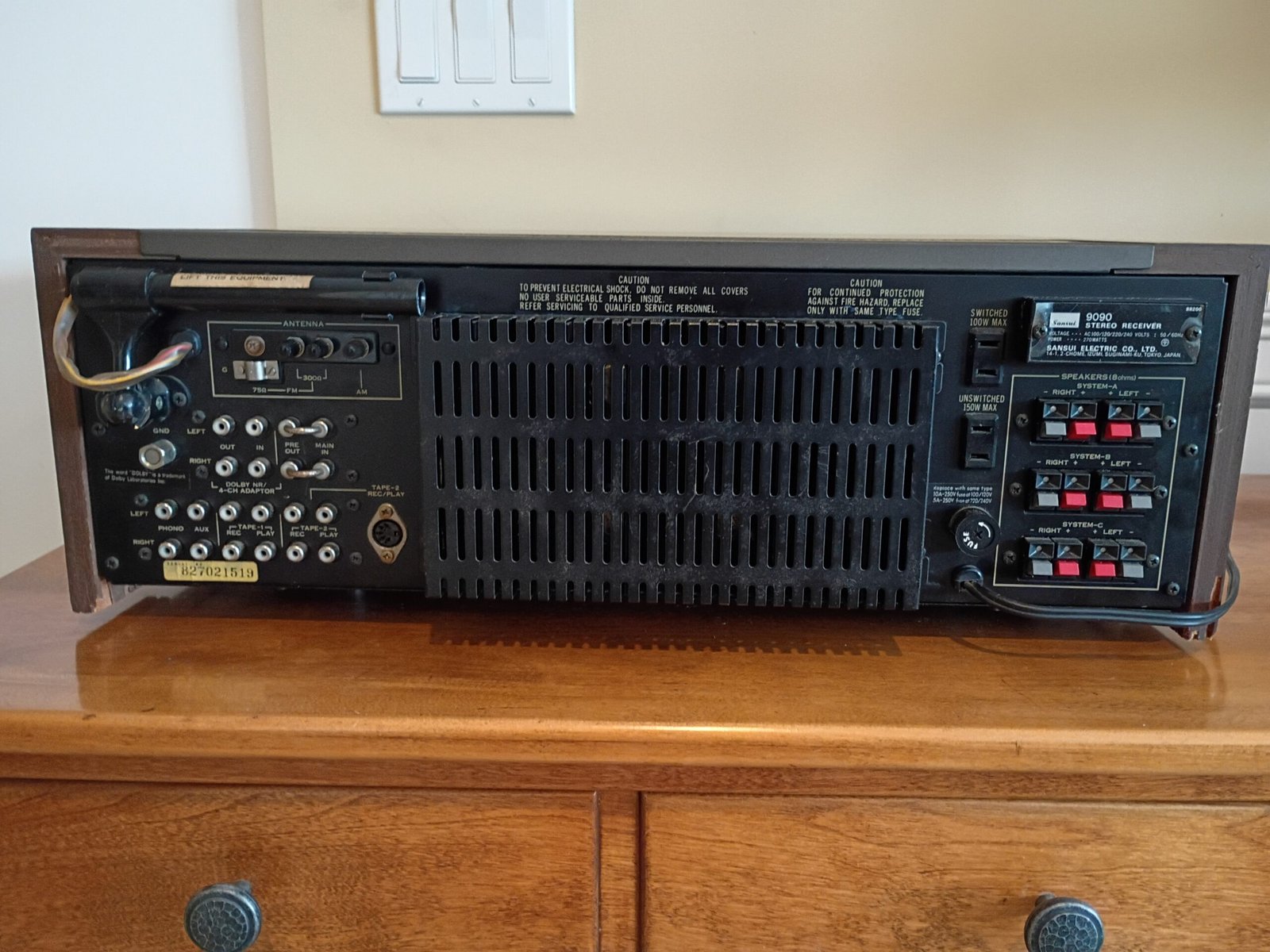
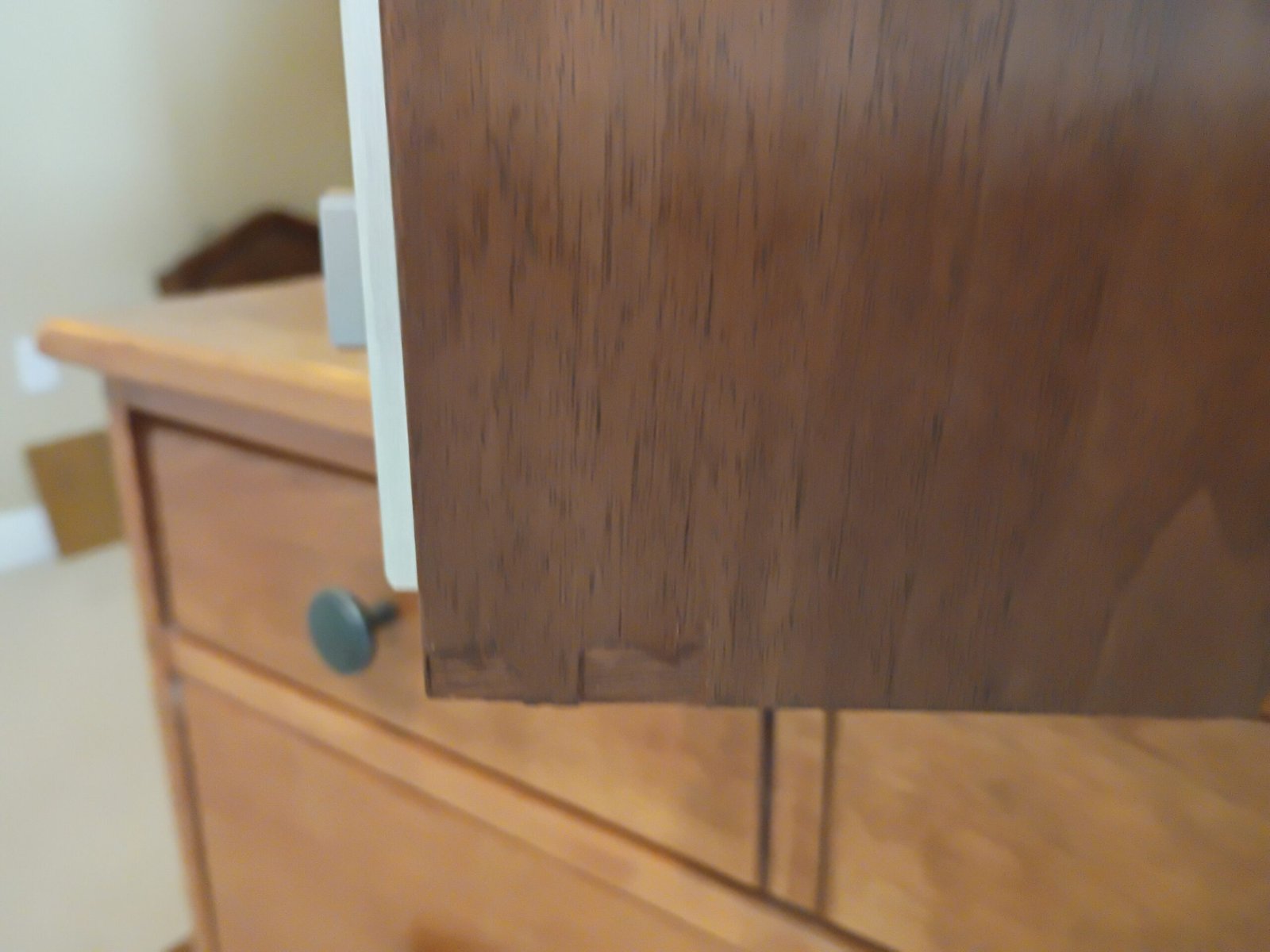
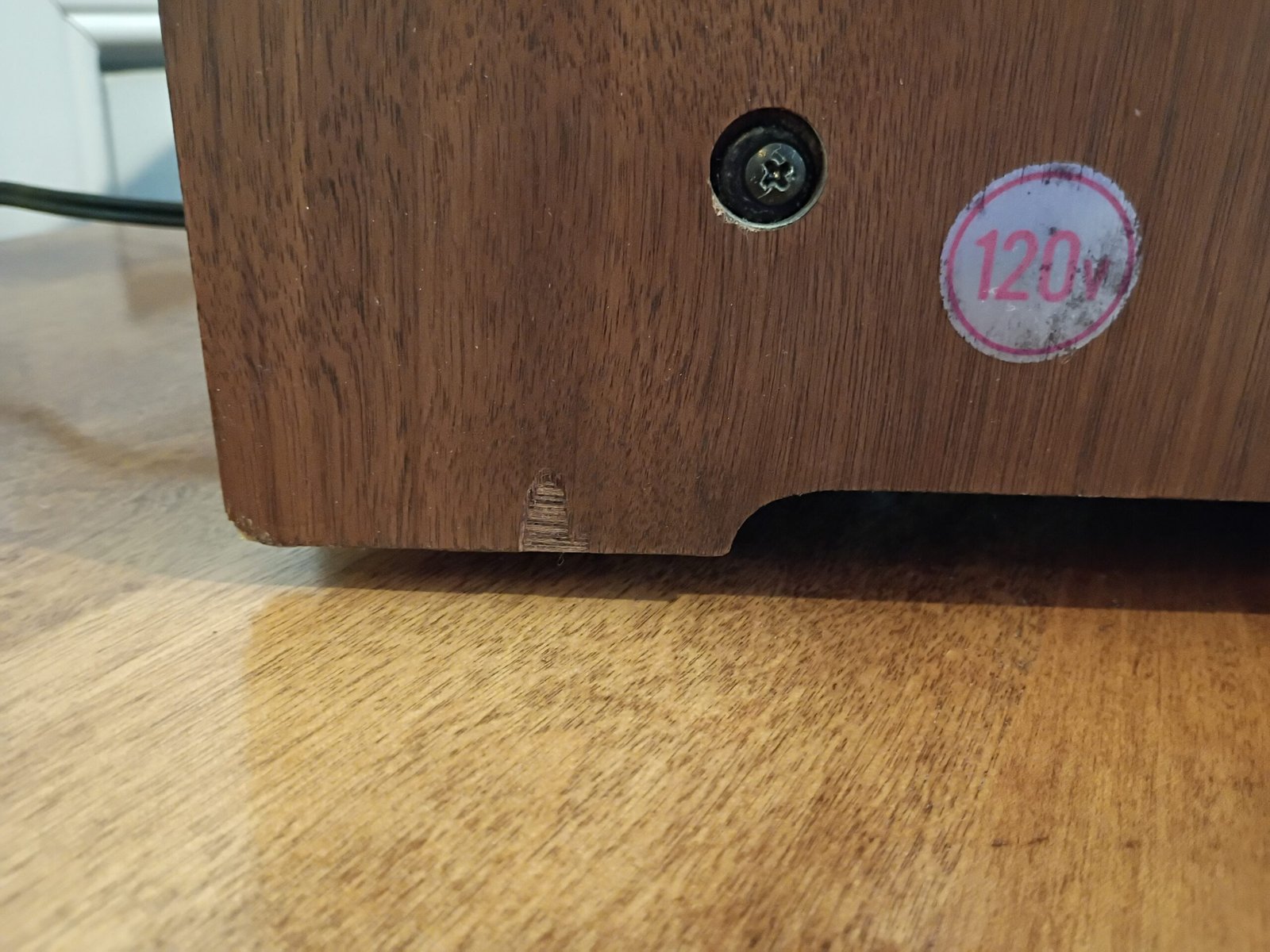
I got this from a local collector. I had previously done some light servicing on it and the owner decided my restored Sansui Eight was a better fit for him. Exterior condition was very good with 2 small chips off the bottom of each side (see last 2 exterior photos).
Background :
The Sansui 9090 is very well known in vintage circles. It was Sansui’s top-of-the-line in 1975 with features like midrange control, 2 treble/bass boost points, power meters and a real walnut veneer cabinet. The styling was classic 1970s before the shift to the “big knobs” silver/gold look of the several G series that followed.
It is rated at 110 WPC (using post-a975 real test criteria) while delivering a sound quality that had made it quite popular (with pricing to match).
There was a later 9090dB version with slightly more power. These have a somewhat tarnished reputation as they are more difficult to service due to the dB circuitry being delicate and tricky to repair. I’m not so sure this is such a big deal, but that has made the 9090 preferred/valuable than the 9090 dB. Maybe someday I will get a chance to service one with a bad dB section and see for myself.
Restoration notes :
Since I had previously serviced this receiver, I could use my notes which captured all issues that the owner had decided to leave as is.
The main cosmetic issue was the veneer chips already mentioned (see photos). I decided not to re-veneer the cabinet as these are rather minor and preserving the original grain/color is worthwhile, IMHO. I stained the exposed wood to closely match the tone of the veneer to make these less noticeable.
Then there was the tuning meter being off center and a dead pointer lamp (owner did not use the tuner, so he was OK with it as it was). I replaced the pointer lamp and recalibrated the tuning meter as part of the alignment process.
I also noted 1 of the 4 lamps illuminating the power meters had died. I replaced all 4 lamps. I had previously installed LED lamps for the tuning dial and signal/tuning meters, so those were already all set.
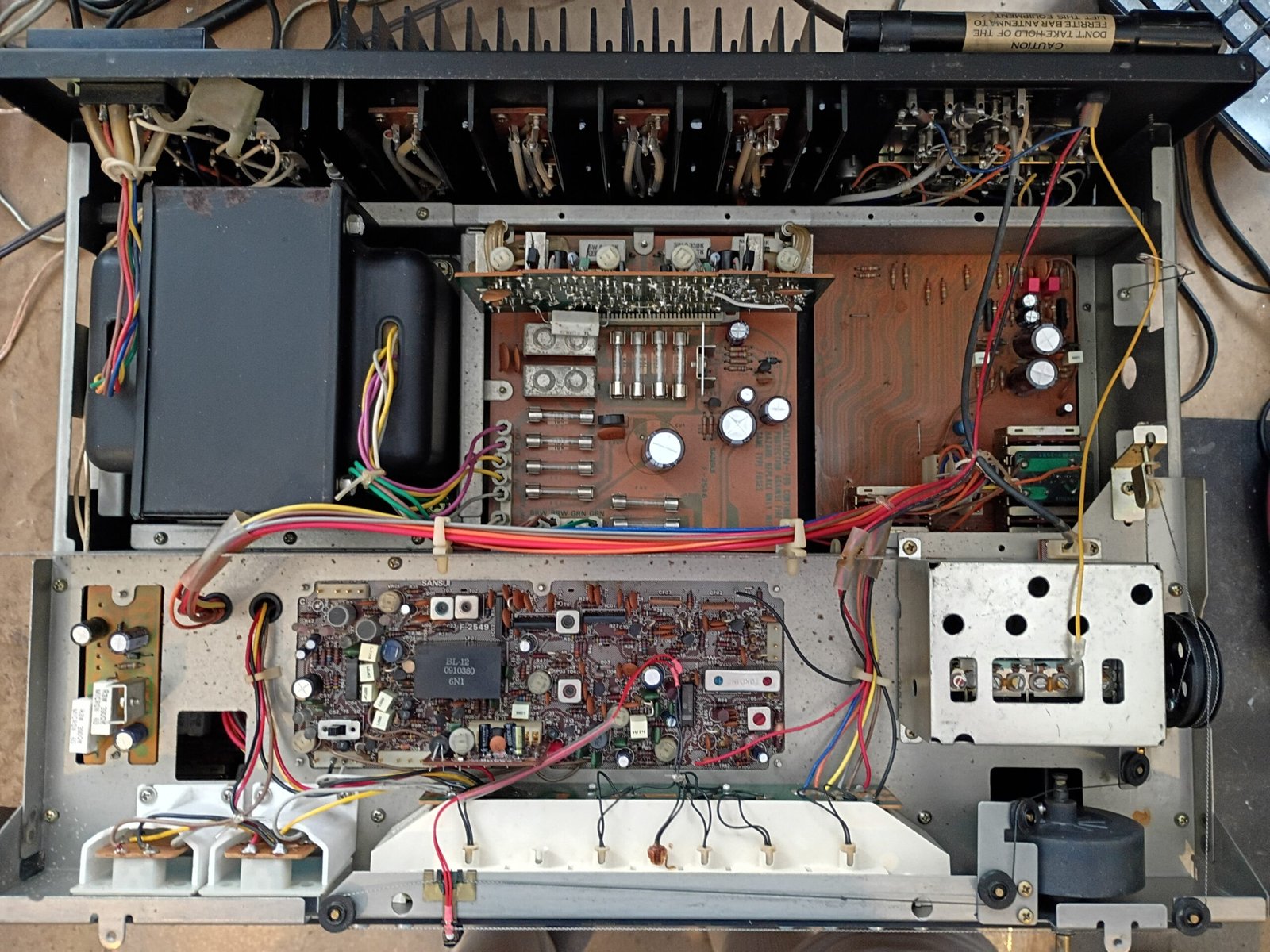
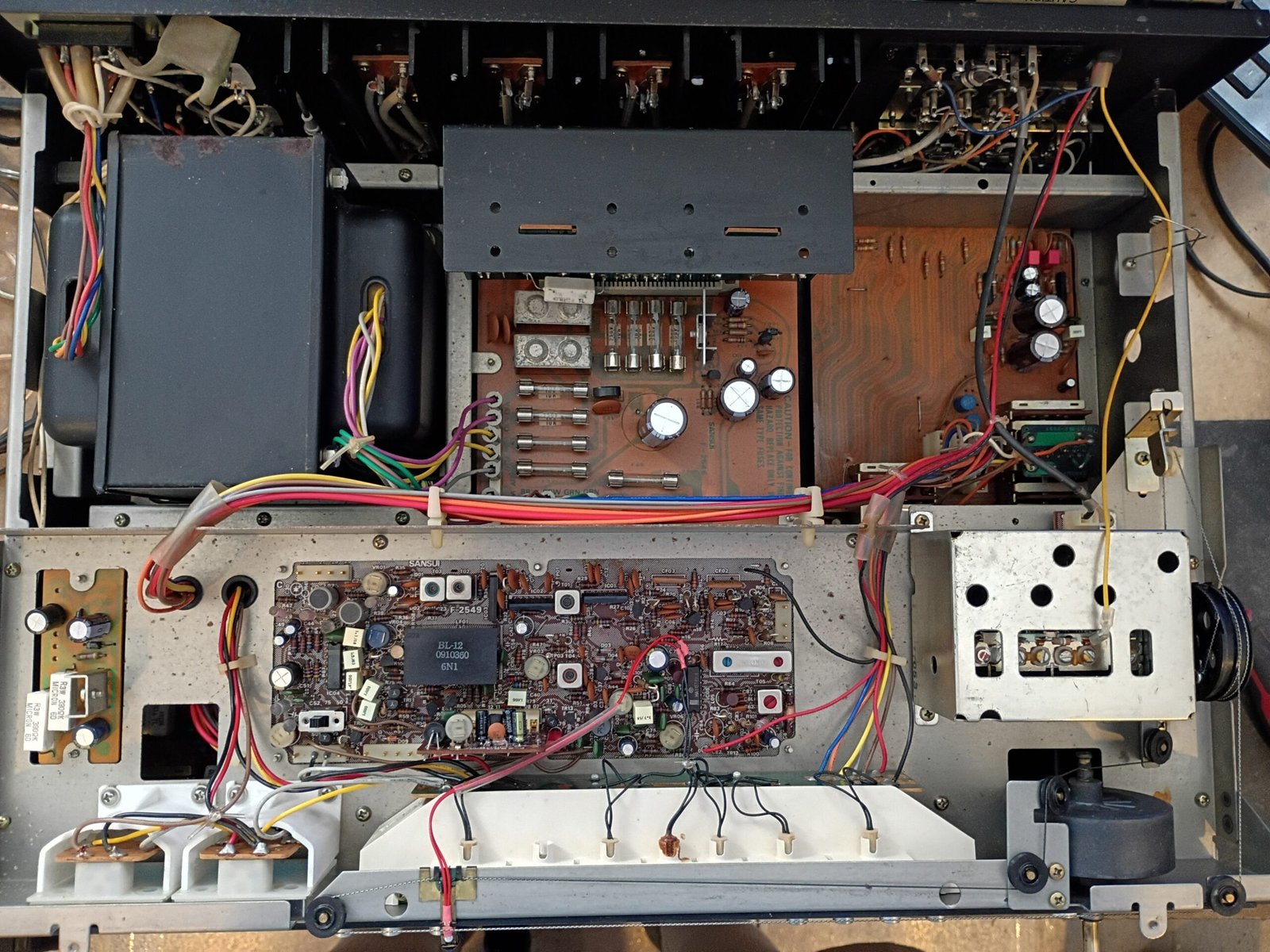
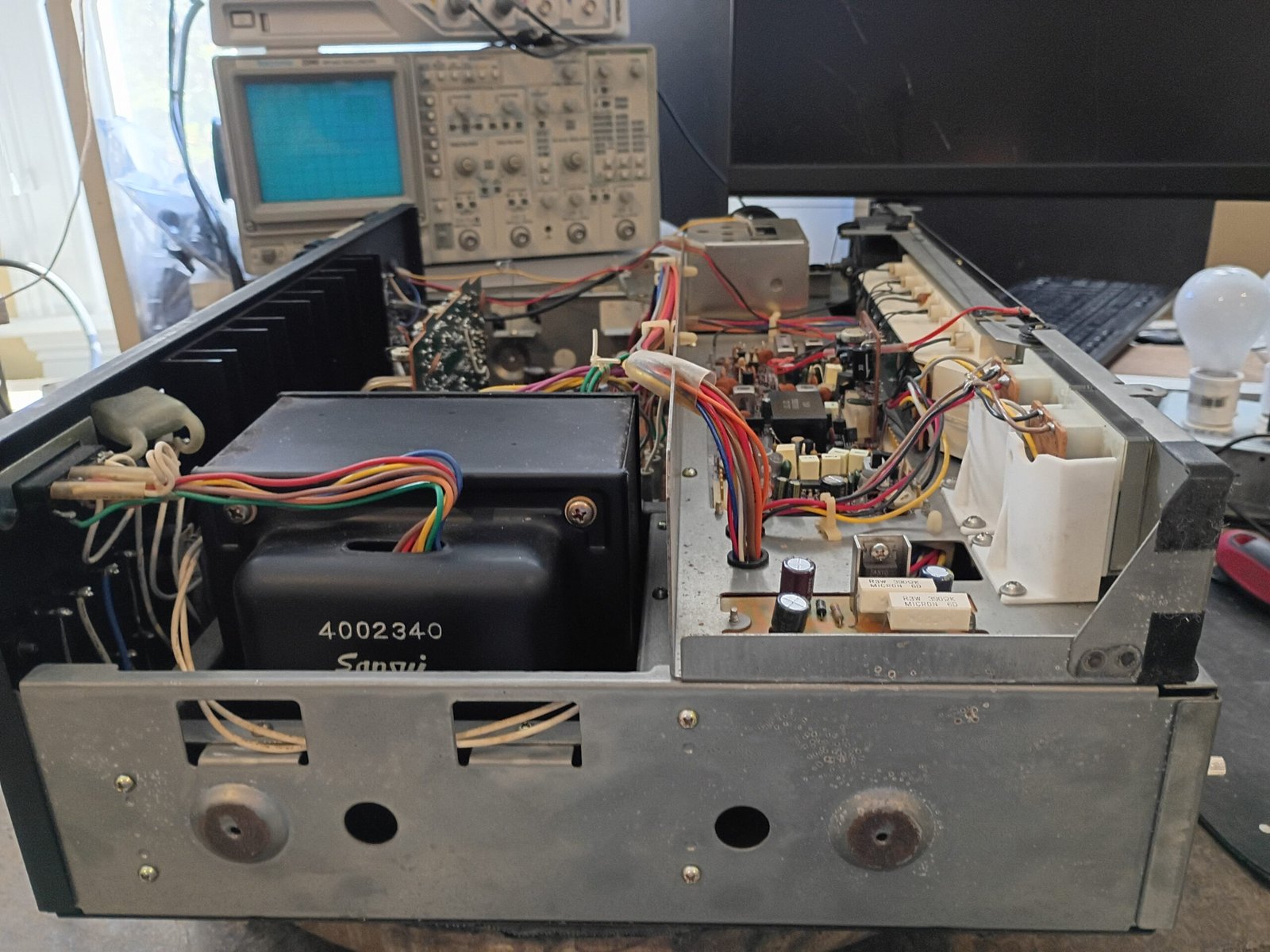
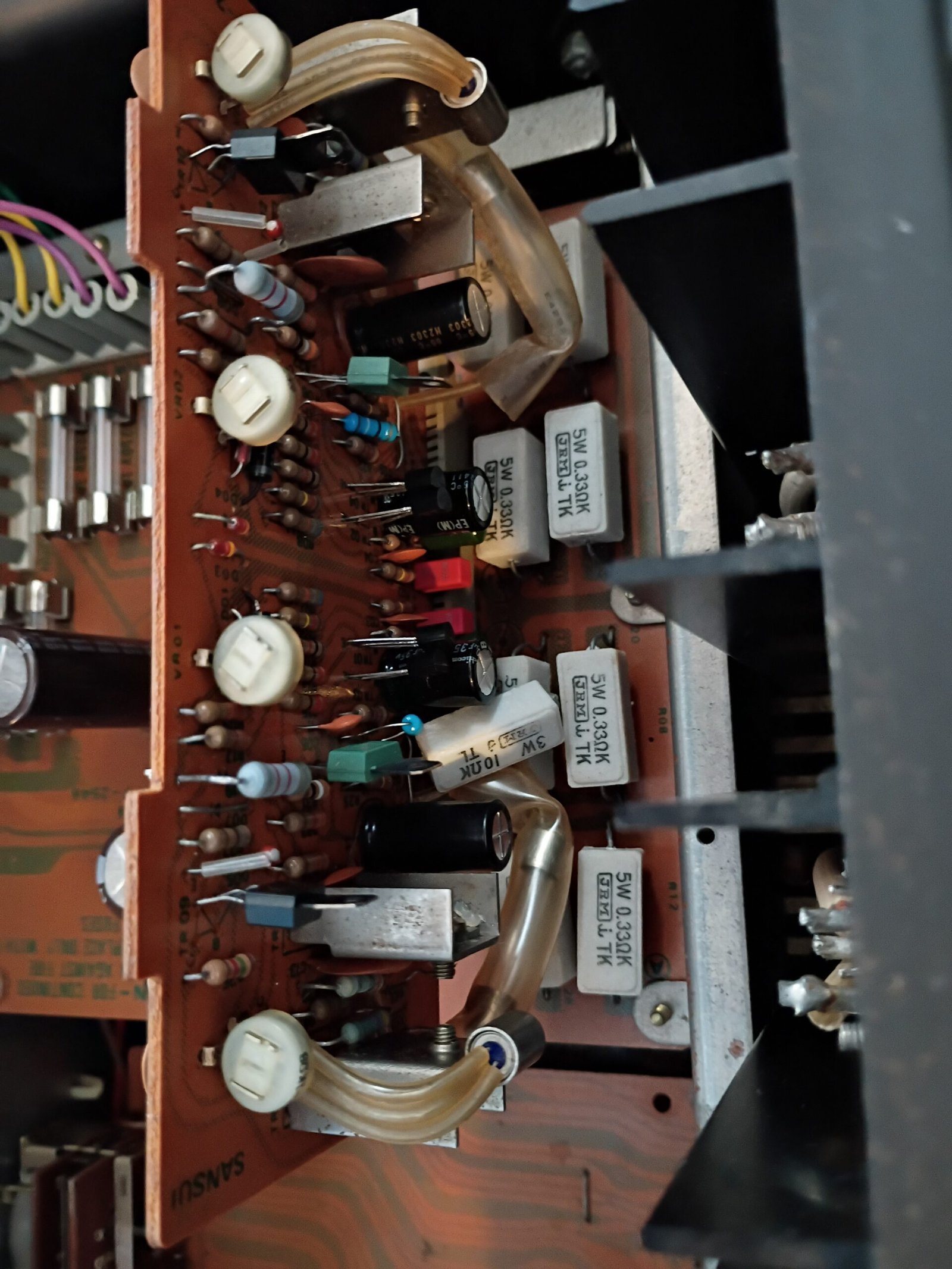
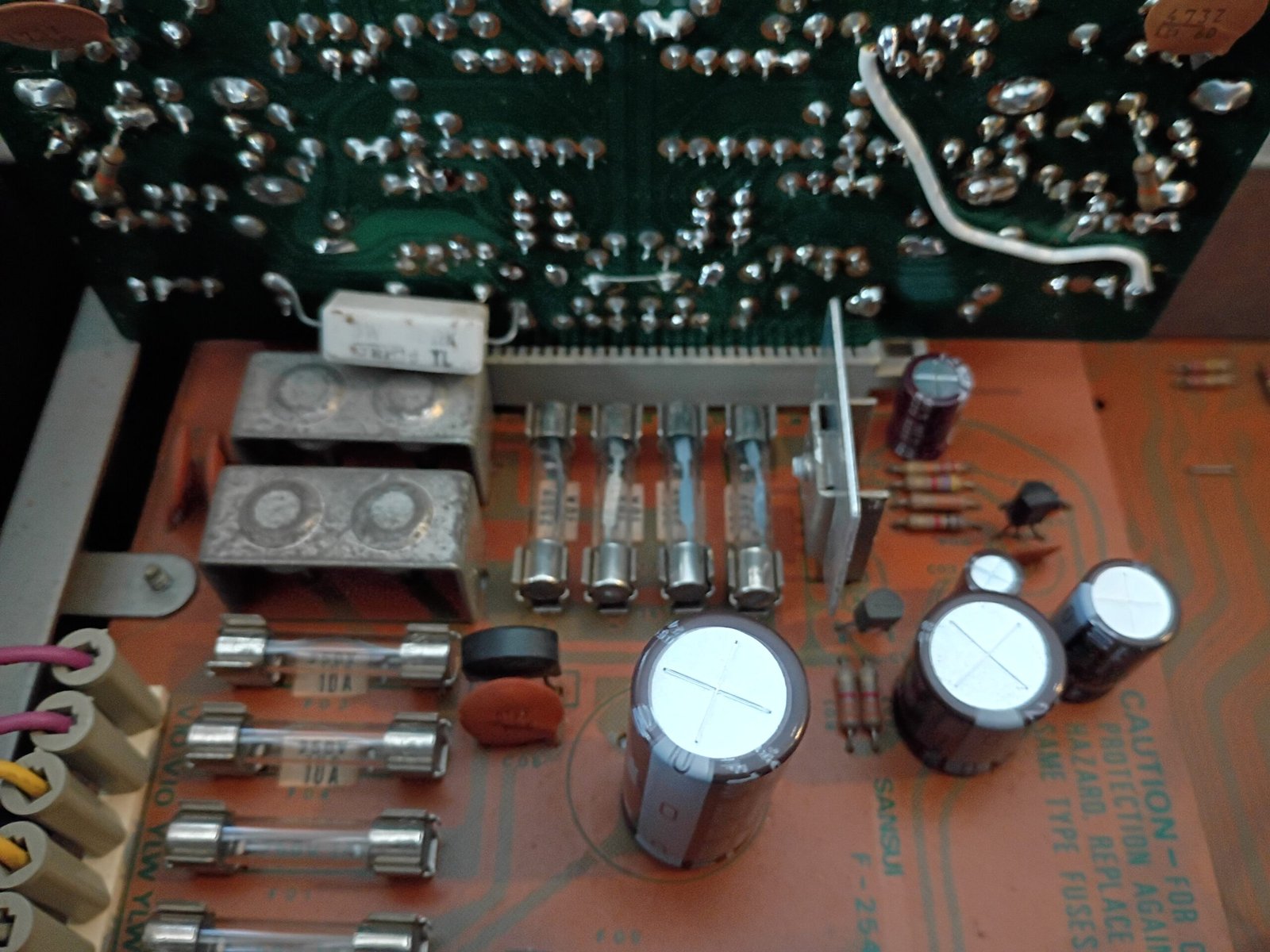
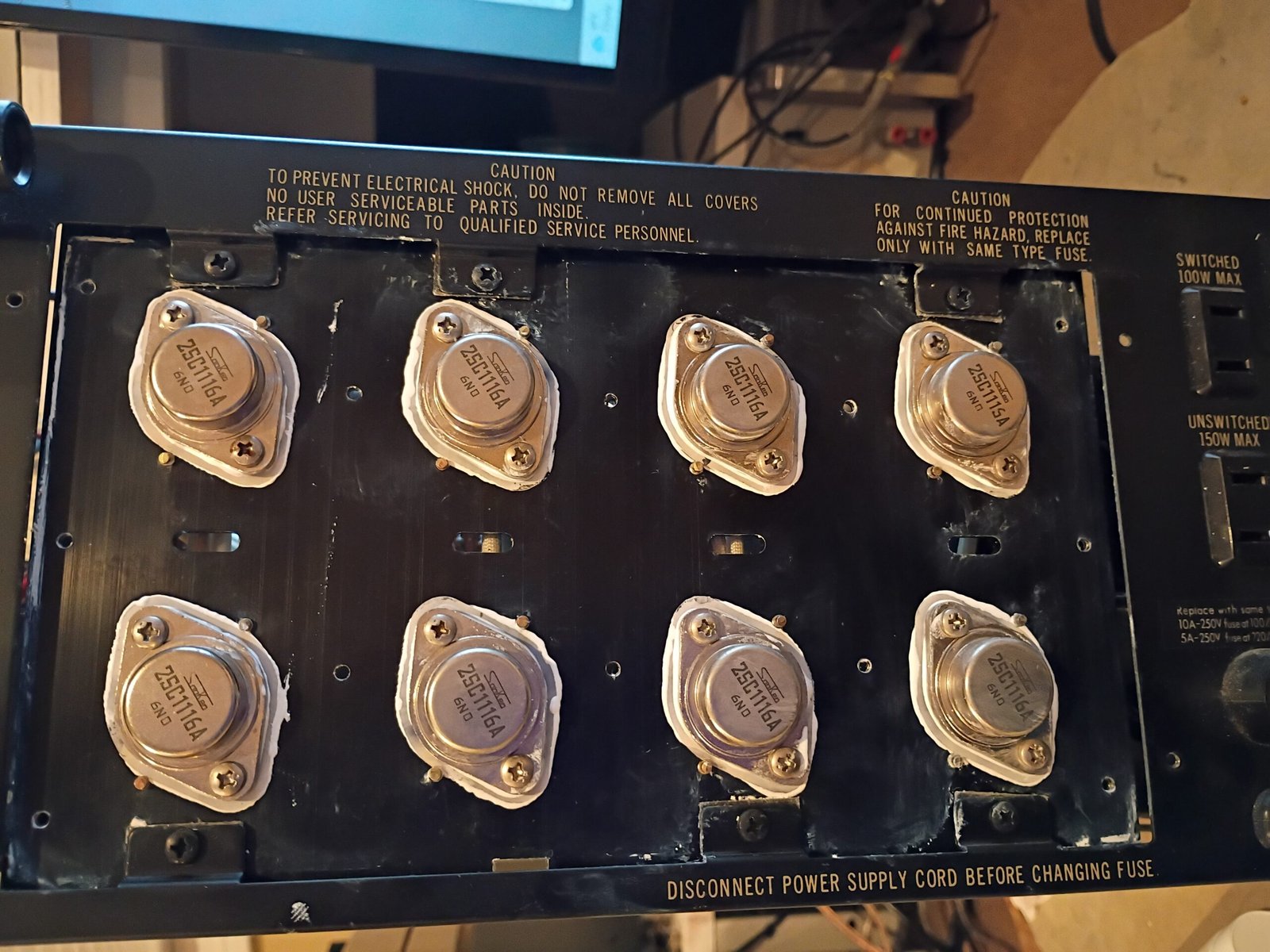
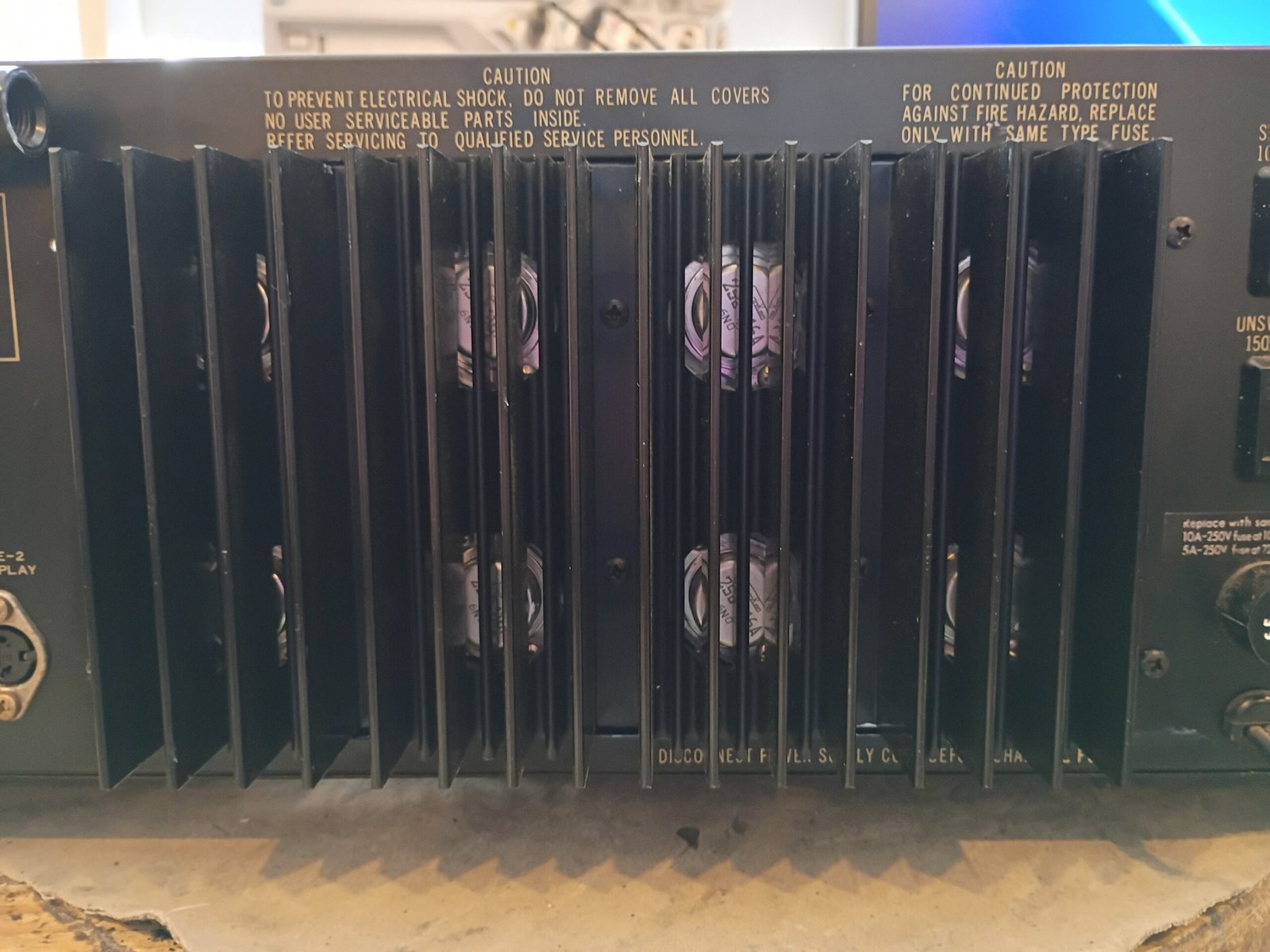
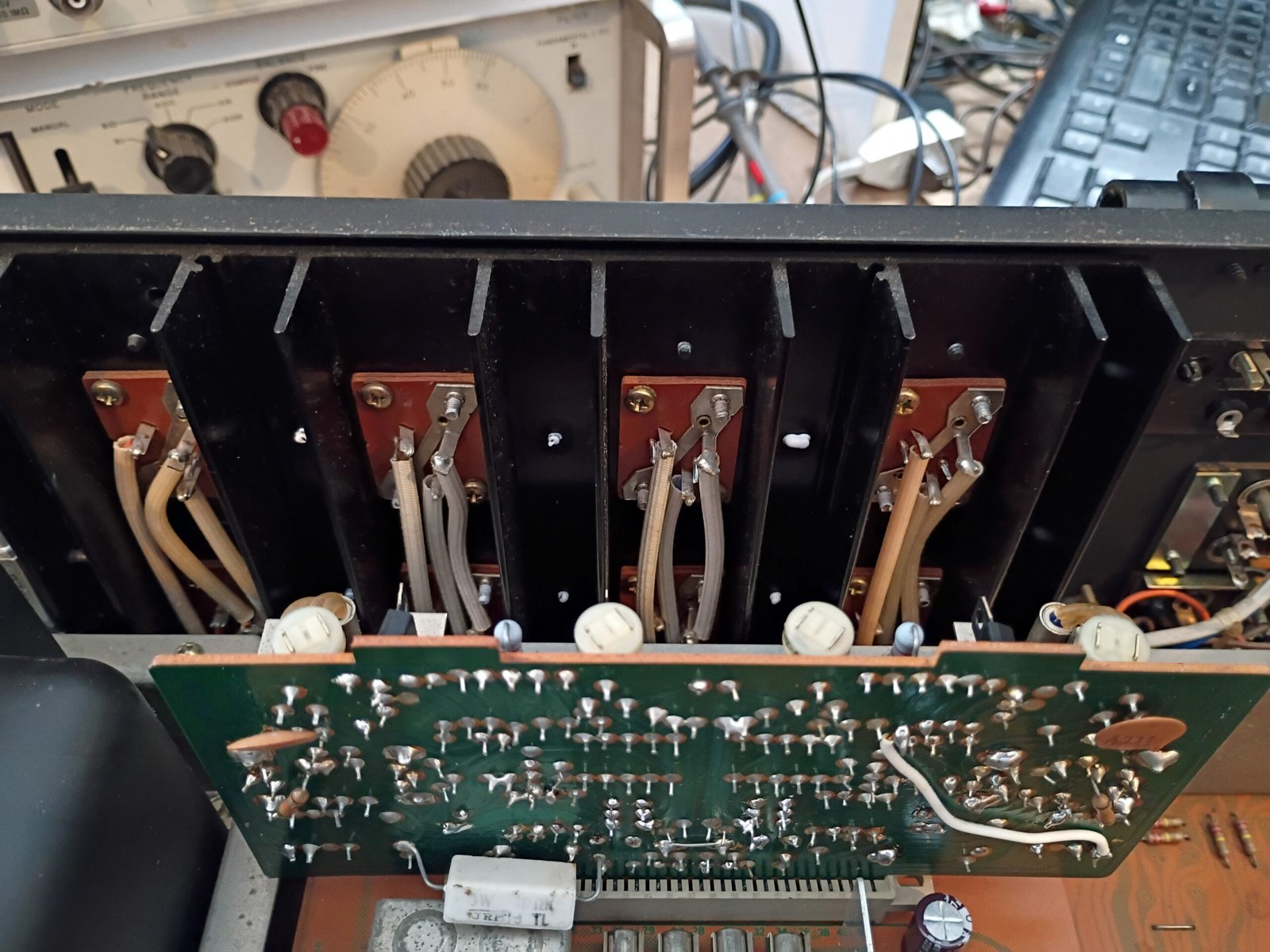
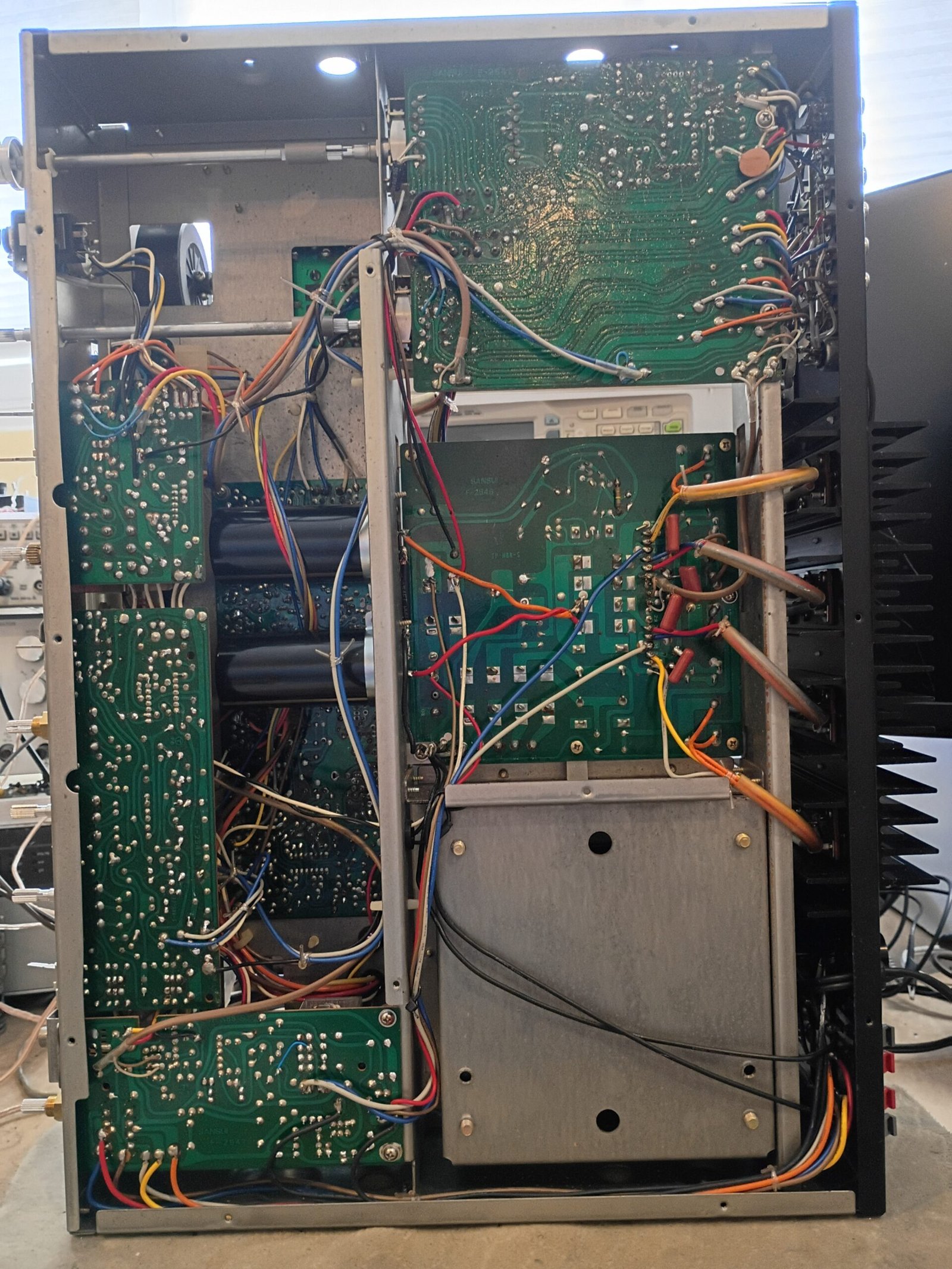
I have found Sansui products to be harder to service than most and the 9090 is a case in point. There are 13 glass fuses and another 20 or so fuse resistors sprinkled throughout which all have to be checked and replaced if out of spec. I can only assume this was an over-reaction by Sansui attorneys who were kept busy when the Sansui 5000 amplifiers were catching on fire. 2 of the 9090 glass fuses were field mods added to the main amp board (oops) and this unit has that upgrade.
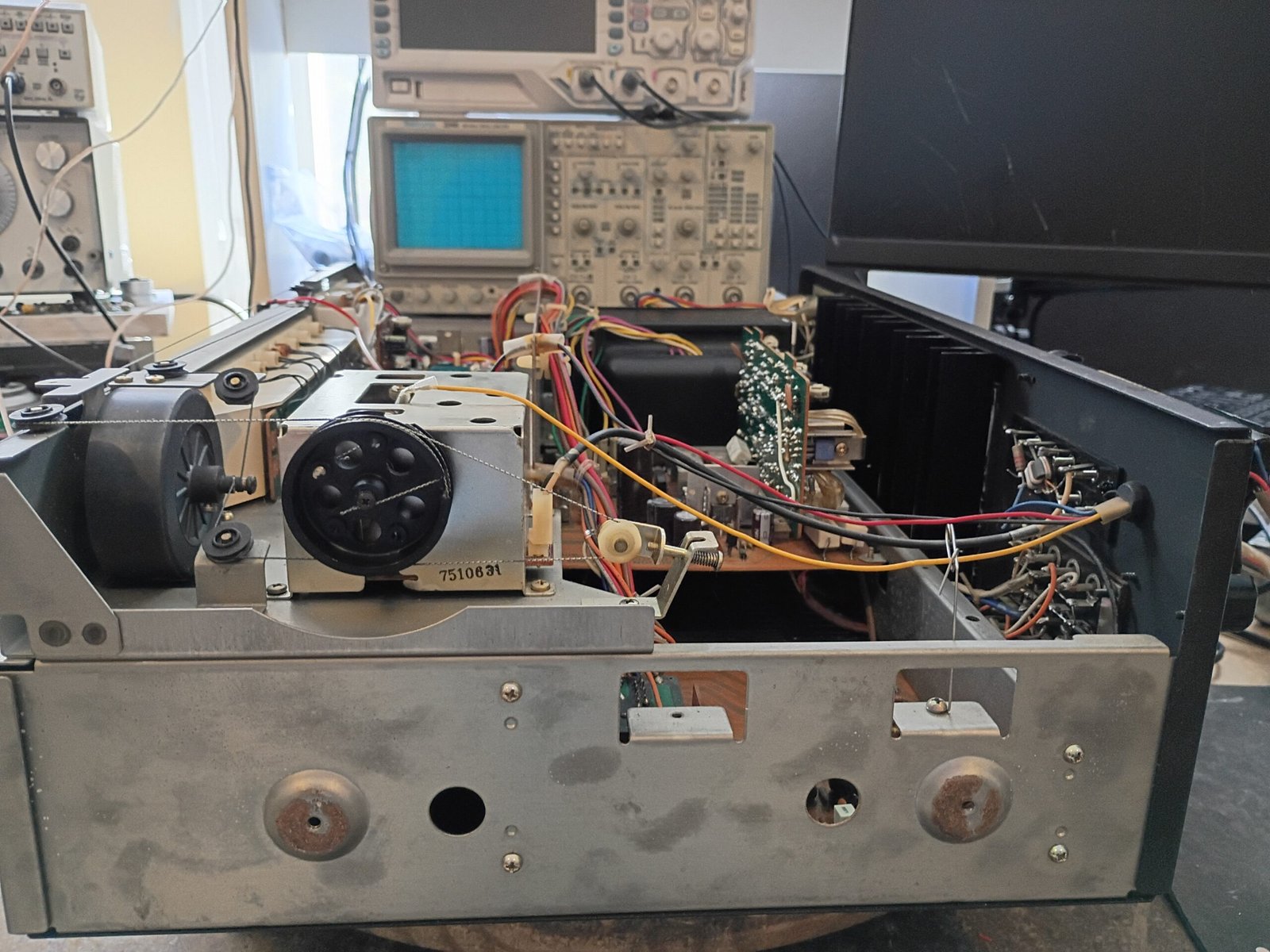
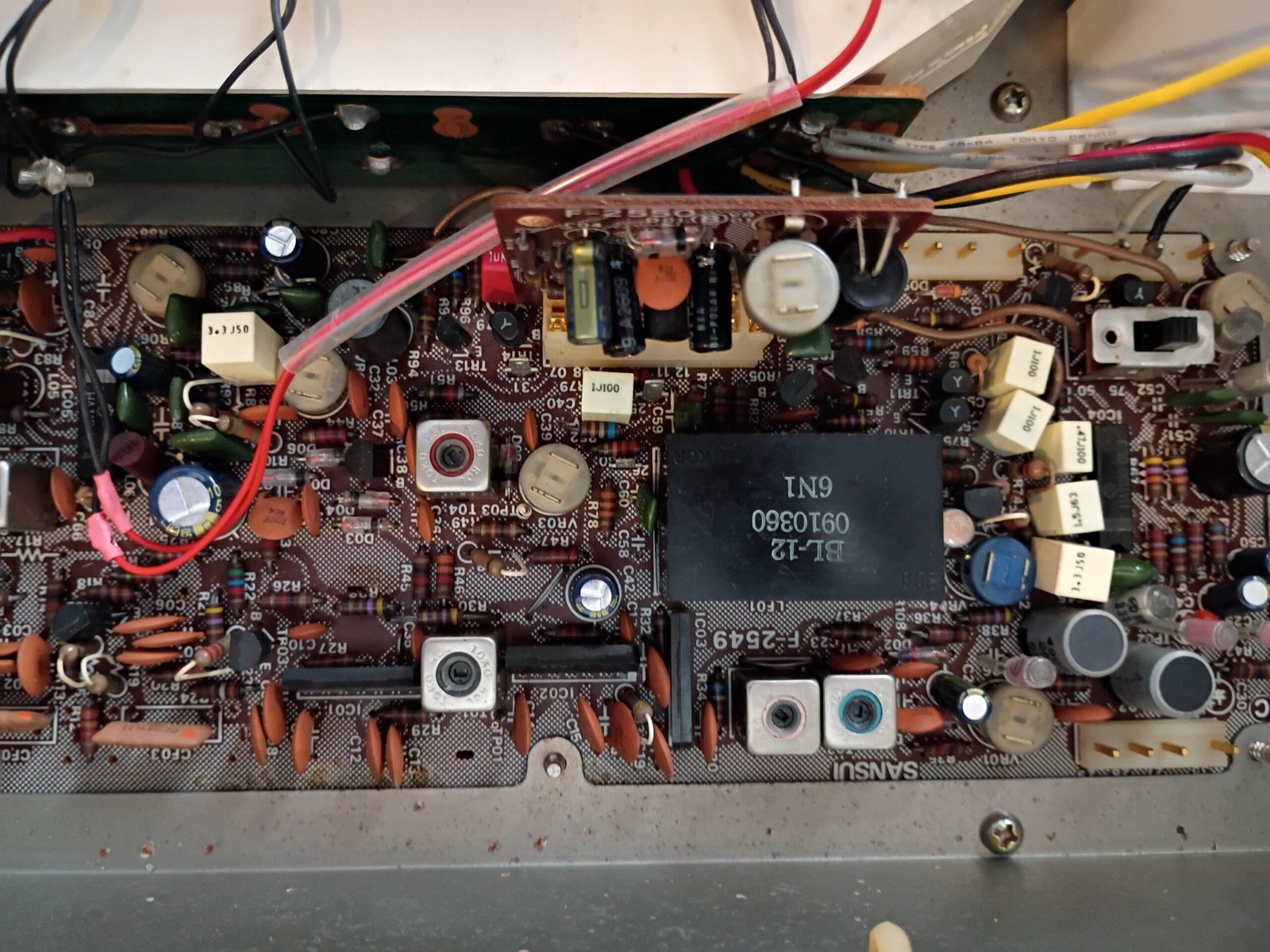
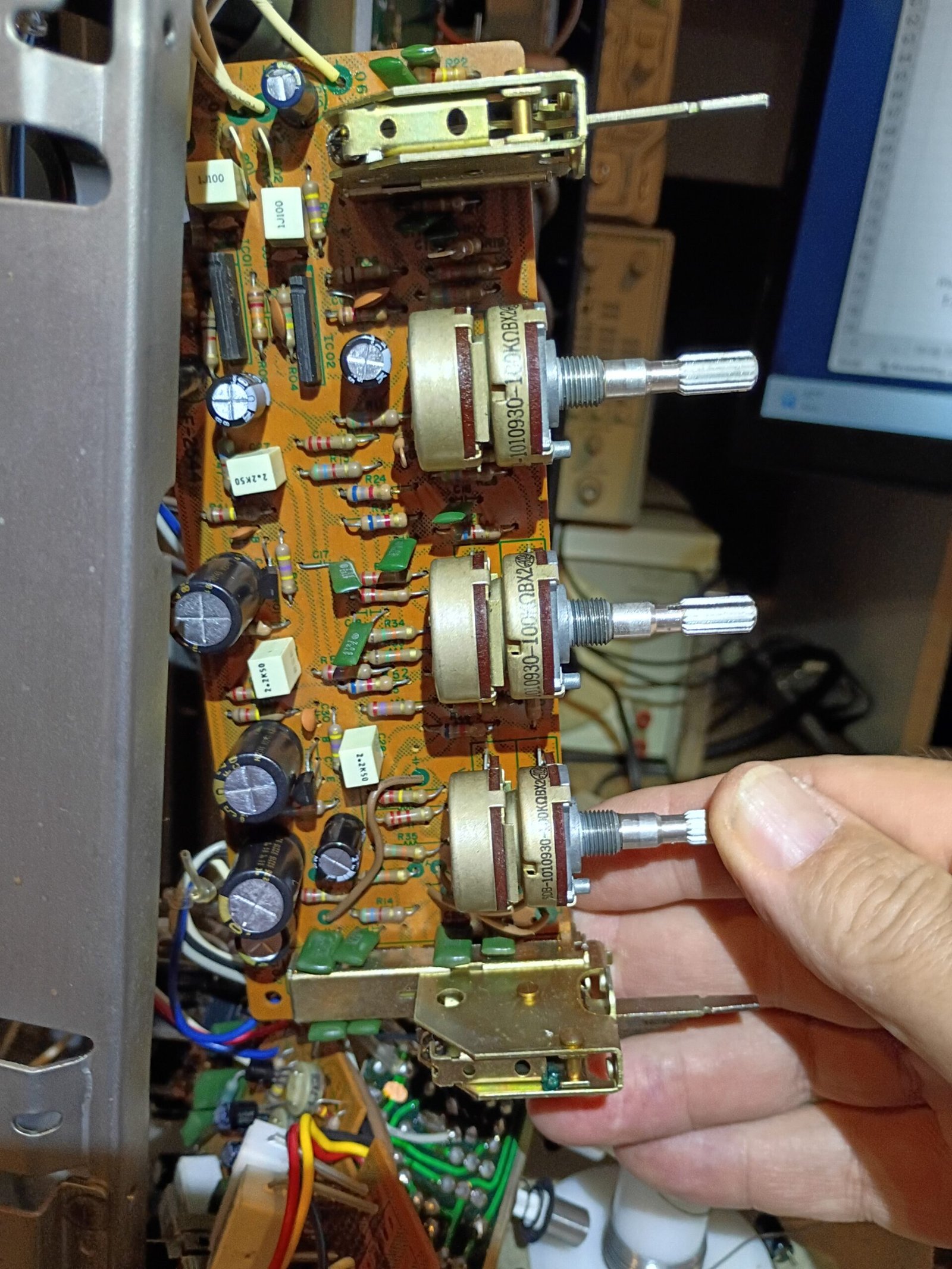
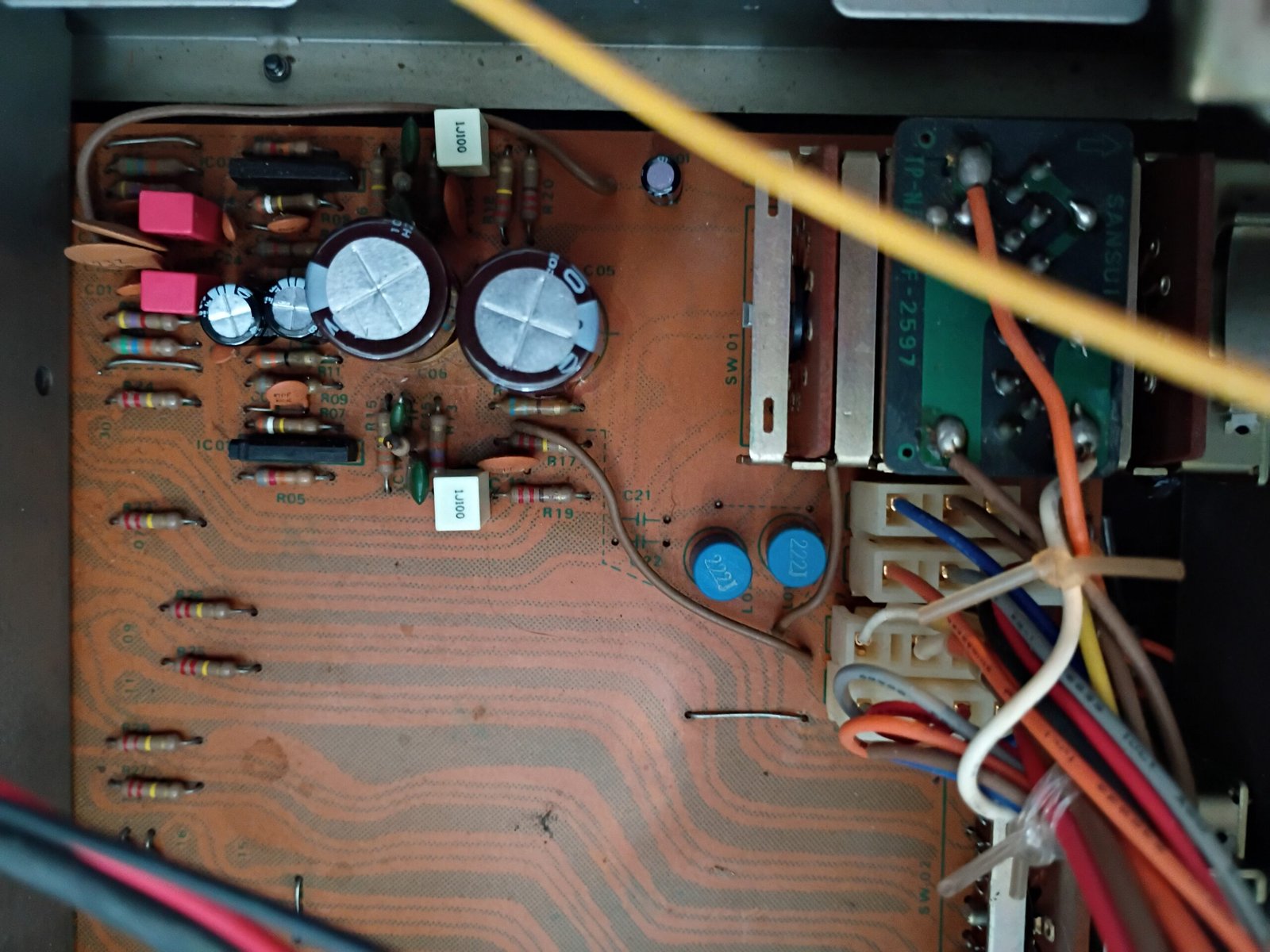
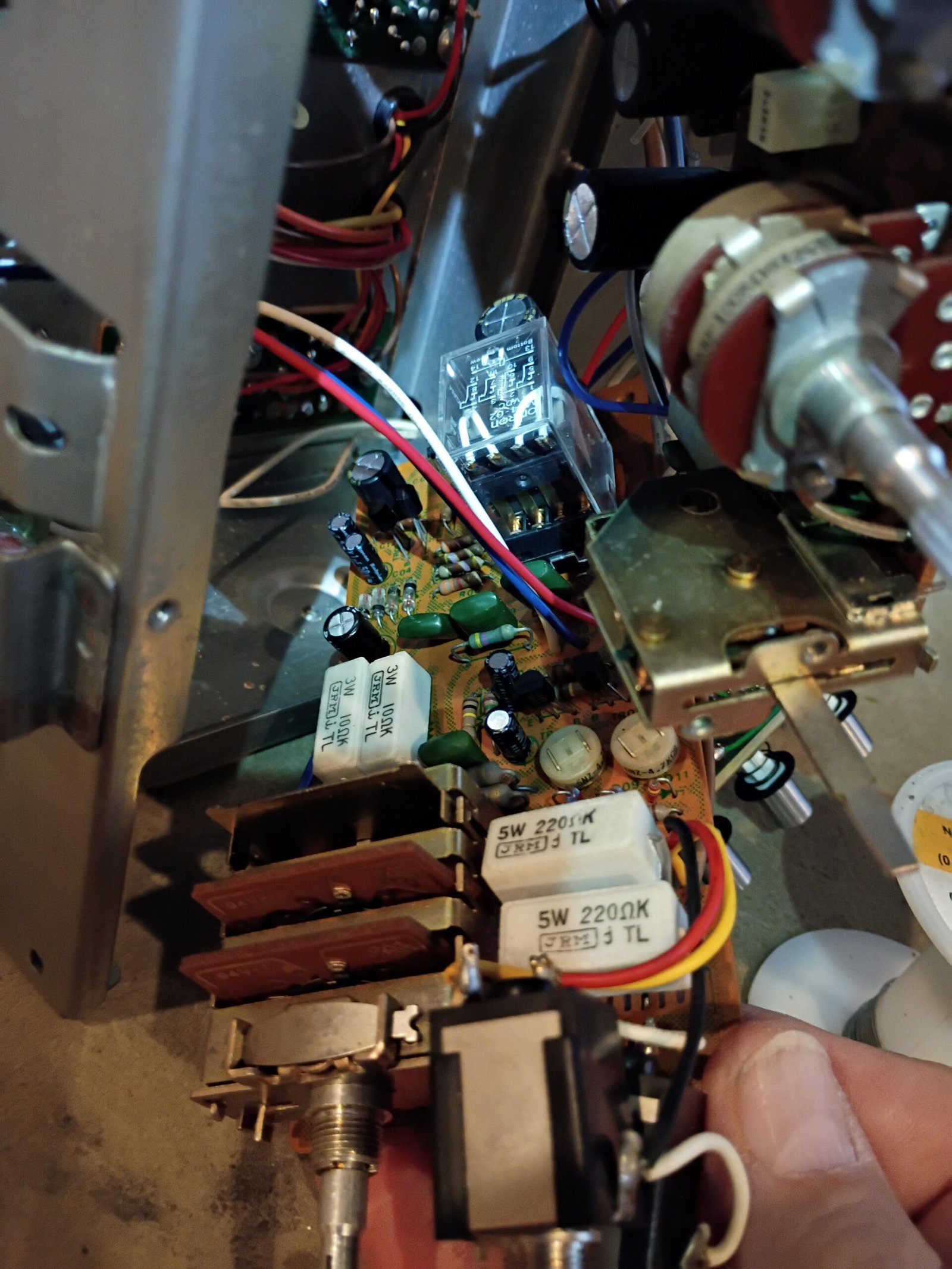
I also had to disassemble the entire front end of the unit to recap the tuner, tone amp, protection board, replace the power meter lamps and swap out the 2 large main supply caps. You have to wonder if the service manager was absent (or not invited) when the engineers presented this design for review 🙂
The recap was otherwise uneventful with the sound and performance of the tuner greatly benefiting.
This ended up being a great performing receiver. I do have to wonder how many techs take the time to do a full recap on these given the difficulty level.
Final note. I left the display illumination scheme as “classic Sansui” – which means the lamps for the dial and tuner meters are off unless in AM, FM or FM Dolby modes. Some folks wish the lamps stayed on in all modes and that is a easy wiring change to enable if a serious buyer desires this alteration.